#Product Trends
Testing child-resistant caps: torque alone tells you nothing
On a push-and-turn closure, two bottles can show the same peak torque while one is safe and the other is not. Angle is what tells them apart.
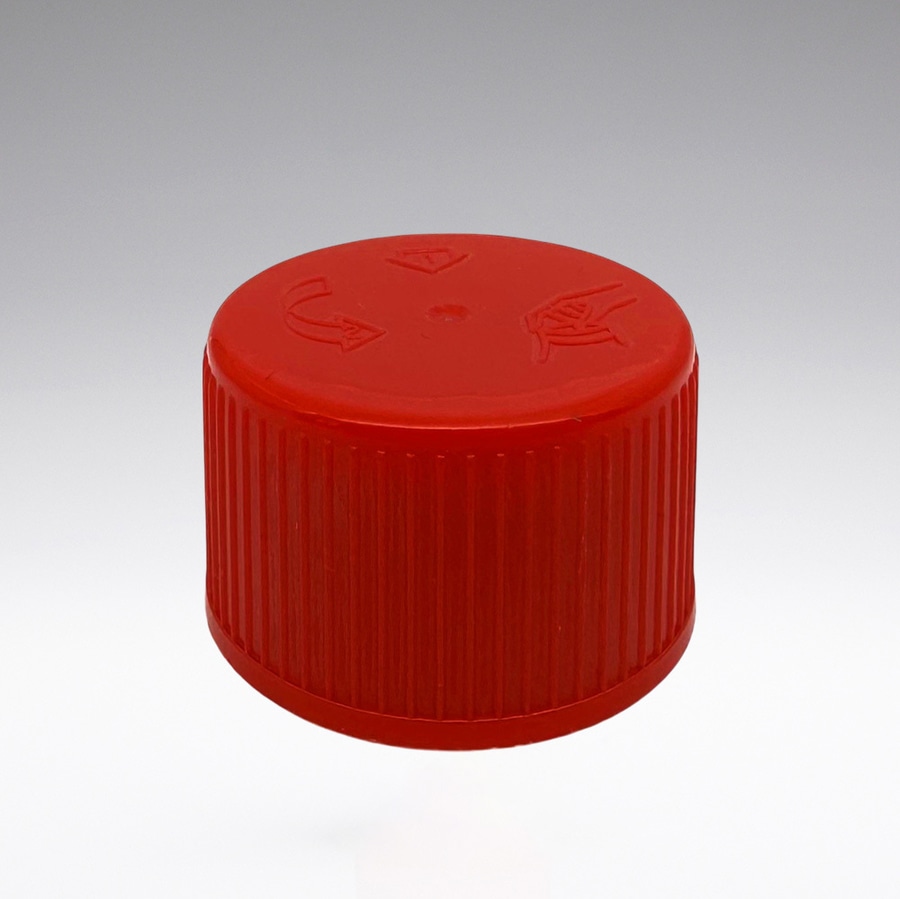
Every child-resistant closure has to solve the same contradiction on a production line: block a toddler while staying easy enough for an older adult with weak grip. That balance lives inside a dual-action mechanism, and the mistake many manufacturers make is trying to control it with a single torque reading. On a push-and-turn or squeeze-and-turn cap, torque without angle is close to meaningless.
Here is why. A dual-action closure behaves in two stages. Turn it without pressing down and the outer shell should skate over the ratchets, transmitting almost no torque to the thread. If real torque shows up in that phase, a child can open the bottle by simply twisting, and the safety function is already broken. Press down and the ratchets engage at a specific angle, then unscrewing begins. If engagement comes too late, or the opening peak sits too high, a senior can no longer open the bottle at all. A single maximum torque figure hides both failure modes, because the number only means something once you know the angle at which it occurred.
The regulatory picture reinforces this. ISO 8317 governs the panel tests behind initial certification, ASTM D3475 classifies the closure types, and ISO 13127 provides instrumented mechanical methods to prove that a minor design change has not altered the function without rerunning a full human panel. What often surprises quality teams is that ISO 13127 openly states it is not meant for routine batch control. That day-to-day check, the one confirming this week's output opens like the certified reference, is something each manufacturer has to build in-house. A torque-plus-angle test is the practical tool for it.
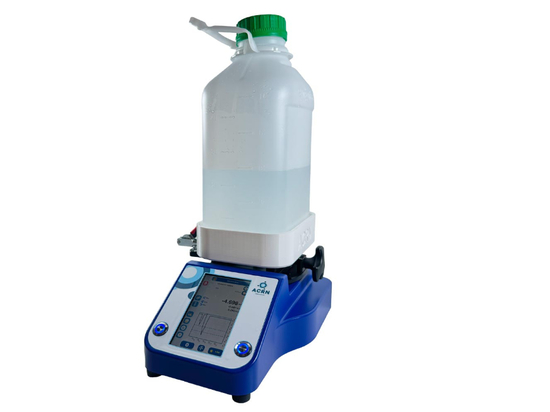
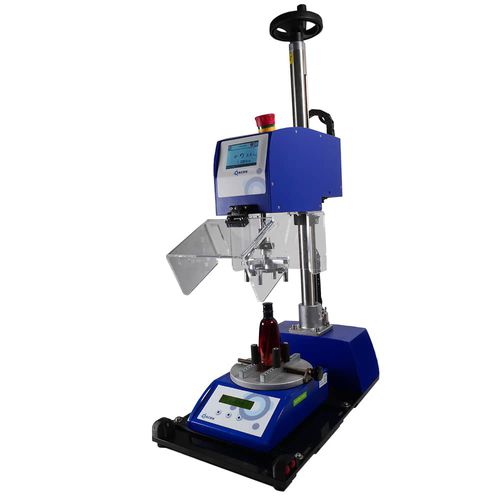
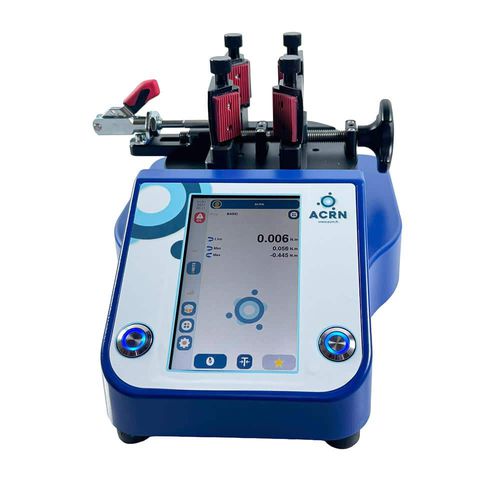
ACRN torque testers record torque and cumulative rotation angle together on a single curve. The SkillTork+ handles instrumented manual testing, while the motorised RepeaTork adds constant speed and controlled downward thrust, both critical for repeatable results on a dual-action mechanism. Each measurement returns a Pass/Fail on torque and on the angle window where the mechanical event must occur, with per-batch statistics ready for your control charts.
We have built torque instruments in Normandy, France since 1997, with mandrels machined to fit the exact geometry and gripping style of your caps. Every unit ships with a calibration certificate traceable to national standards. Tell our engineers your mechanism type, torque ranges and throughput, and we will specify the right instrument, mandrel and Pass/Fail criteria.