
#Industry News
The Importance of Dewpoint Measurement in Air Separation Units (ASUs)
How Moisture Measurement Ensures Efficiency, Safety and Product Purity
Air Separation Units (ASUs) are vital to industries that depend on high‑purity gases such as oxygen, nitrogen and argon. Accurate dewpoint measurement plays a crucial role in maintaining the efficiency, safety and reliability of these systems. Even trace moisture can freeze, corrode components or contaminate the end product, making continuous monitoring essential for both equipment integrity and gas purity.
ASUs operate by separating atmospheric air into its main components using either cryogenic distillation or non‑cryogenic methods such as pressure swing adsorption (PSA) or membrane separation. In the cryogenic process, air is first compressed to around 5–10 barg before undergoing purification to remove water, CO₂ and other impurities that could freeze in low‑temperature sections. The clean, compressed air is then cooled to cryogenic temperatures in a series of heat exchangers and refrigeration cycles until it liquefies. Inside distillation columns, the liquid air is separated into nitrogen, oxygen and argon, each extracted at specific boiling points (nitrogen −196 °C, oxygen −183 °C, argon −186 °C). The gases are then collected, stored and distributed in pressurised or cryogenic tanks to serve applications across steelmaking, healthcare, electronics and chemical processing.
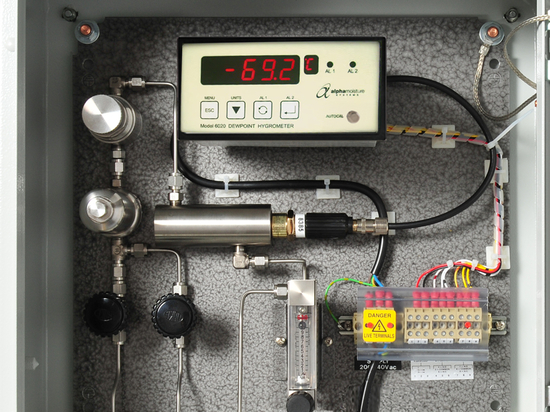
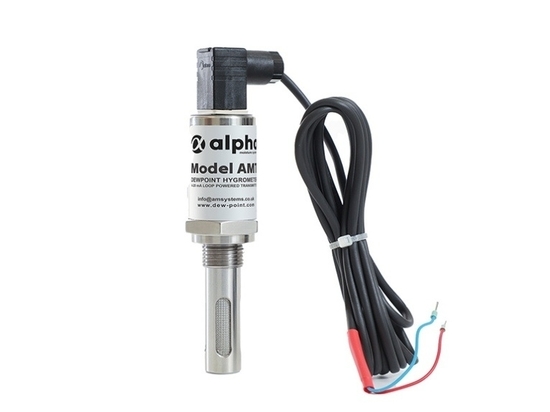
Moisture, however, poses a major operational threat. Even small amounts of water vapour can freeze into blockages, accelerate internal corrosion, reduce product purity and increase safety risks by creating pressure build‑up as ice forms. Monitoring dewpoint, the temperature at which moisture condenses, helps operators prevent ice formation, maintain product quality, plan proactive maintenance and remain compliant with gas purity standards. To achieve this, high precision dewpoint sensors should be installed at key points such as post compression and post drying stages, supported by routine calibration and automated alarm systems that detect rising moisture levels before they impact performance.
Compliance with key international standards ensures consistent quality and safe operation. These include ISO 8573‑1 (compressed air quality and moisture limits), ASTM D5464 (moisture measurement in gases) and IEC 61207‑1 (performance evaluation of process analysers). Together, they form the foundation for reliable, efficient, standard compliant ASU operation.
To find out more, please contact us.