
#Trade Shows & Events
Advantages of SMT Assembly and Key Operational Considerations
Why Surface Mount Technology Has Become the Standard in Electronics Manufacturing
Surface Mount Technology (SMT) is one of the most widely adopted assembly technologies in the electronics manufacturing industry today. SMT assembly refers to the process of placing electronic components onto a PCB coated with solder paste or adhesive using automated placement equipment, followed by soldering through a reflow oven.
Thanks to its high assembly density, compact product design, and excellent high-frequency performance, SMT assembly has been widely recognized and adopted by manufacturers worldwide.
Overview of SMT Assembly
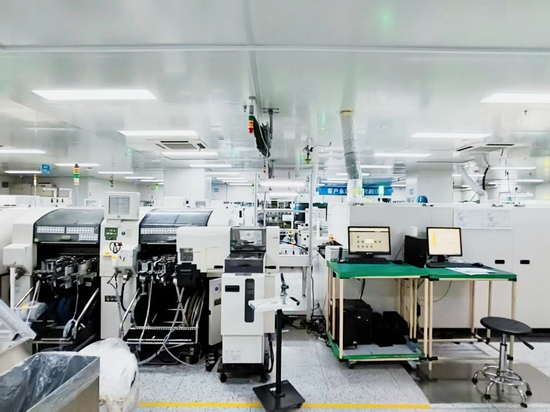
Modern SMT placement machines offer high efficiency and stable performance, bringing significant advantages to mass production. With advanced SMT equipment, manufacturers can greatly improve production efficiency while delivering high-quality and consistent products to customers.
As SMT pick-and-place machines are highly precise and automated systems, proper operation and maintenance are essential to ensure stable performance and product quality.
Key Operational Considerations for SMT Assembly
To ensure safe and efficient SMT production, the following operational guidelines should be strictly followed:
Operators must be familiar with common symbols, labels, and indicators on SMT placement machines.
A comprehensive machine inspection should be performed before powering on the equipment.
The start-up sequence must strictly follow the official SMT operating instructions and standard operating procedures (SOPs).
Regular troubleshooting, inspection, and preventive maintenance should be carried out to ensure long-term equipment stability.
Advantages of SMT Assembly
1. Compact Product Size
Surface-mount components are typically about one-tenth the size of traditional through-hole components. After SMT assembly, electronic products can be reduced in size by approximately 40%–60%.
2. High Efficiency and Lower Cost
SMT assembly is well suited for automation, significantly improving production efficiency. It reduces material usage, energy consumption, labor costs, and production time, lowering overall manufacturing costs by 30%–50%.
3. Lightweight Design
SMD components weigh only about 10% of traditional components. Products assembled using SMT can achieve a weight reduction of 60%–80%.
4. High Reliability and Strong Vibration Resistance
SMT solder joints offer excellent mechanical strength, improving reliability in vibration-prone environments.
5. Excellent High-Frequency Performance
Shorter signal paths reduce electromagnetic and radio-frequency interference, making SMT ideal for high-speed and high-frequency applications.
6. Low Solder Joint Defect Rate
Automated placement and reflow soldering help achieve consistent solder joints and reduce defect rates.
At Qingdao Ansenke Electronics Co., Ltd., we focus on standardized SMT assembly processes, equipment stability, and quality control to support reliable electronics manufacturing across various applications.