#Industry News
How to Choose a Basket Type Strainer?
Basket Type Strainer
Why Choosing the Right Basket Type Strainer Matters
Basket type strainers are vital components in filtration systems across various industries. These devices help filter out debris from liquids and gases flowing through pipelines, preventing contaminants from damaging pumps, valves, and other essential equipment. Choosing the right basket type strainer is crucial not only for maintaining the efficiency of your systems but also for ensuring long-term operational safety and cost savings.
What Is a Basket Type Strainer?
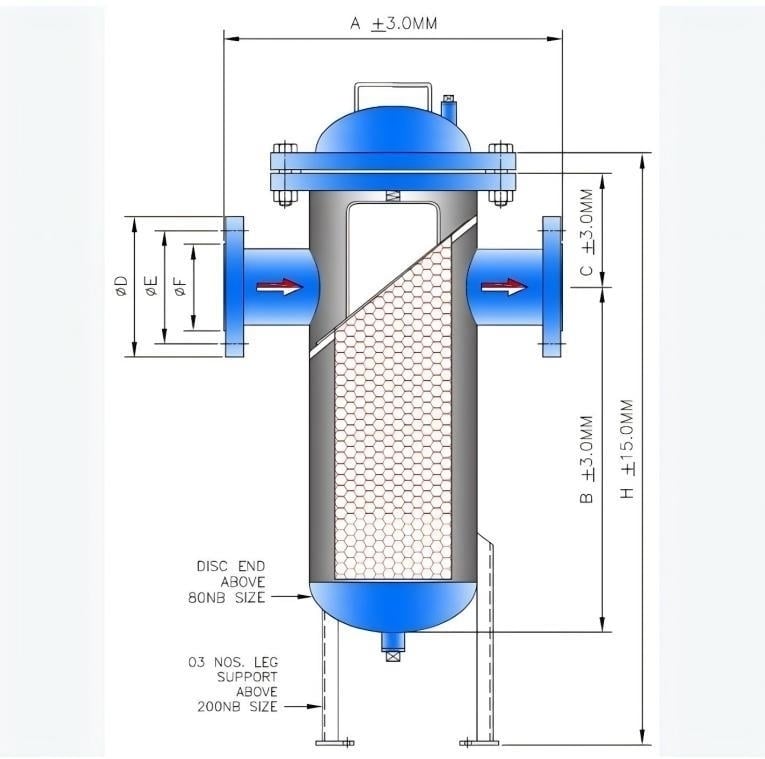
A basket type strainer is a filtration device that removes solid particles from liquids or gases flowing through horizontal pipelines. Typically, it consists of a cylindrical body that houses a mesh basket, where debris is collected during the filtration process. The strainer’s primary function is to prevent particles from entering downstream equipment, such as pumps, valves, and other sensitive components.
The key components of a basket type strainer include:
Housing: The main body that holds the mesh basket.
Mesh Basket: The filtration element where particles are trapped.
Inlet/Outlet: Points of connection for the fluid entering and exiting the strainer.
Drain Port: For cleaning or removing accumulated debris.
Think of a basket type strainer as being similar to a kitchen strainer, but designed for industrial use to handle much larger volumes and more significant debris.
How Basket Strainers Differ from Other Strainers?
While there are several types of strainers, such as Y-strainers and T-strainers, basket type strainers offer unique advantages:
Higher Debris Capacity: Basket strainers typically have a larger filtration area and can hold more debris before needing cleaning.
Horizontal Installation: Unlike Y-strainers, which can be installed both horizontally and vertically, basket strainers are usually designed for horizontal installation. This makes them ideal for certain system configurations where space constraints might limit other types of strainers.
Ease of Maintenance: Basket strainers are generally easier to clean and maintain due to their design, especially when compared to the more complex Y and T-strainers.
Key Factors to Consider When Choosing a Basket Type Strainer
Application and Fluid Type
The first consideration when choosing a basket type strainer is the type of fluid being filtered. For instance:
Water: Basket strainers used in water treatment plants often filter out larger debris.
Oil: Oil and gas pipelines require strainers made of corrosion-resistant materials like stainless steel to withstand harsh conditions.
Chemicals: For chemical processing, the strainer material must be compatible with the specific chemicals being handled.
Food and Beverage: In food processing, sanitary designs with smooth surfaces and FDA-compliant materials are required to avoid contamination.
Flow Rate and Pressure Requirements
Basket strainers come in various sizes to accommodate different flow rates. The flow rate, usually measured in gallons per minute (GPM), affects the size and design of the strainer. If the flow rate is too high for a specific model, it could lead to inefficiencies or system failure.
Pressure is another factor. High-pressure systems demand robust materials and possibly duplex designs to handle the increased stress.
Particle Size and Filtration Needs
The mesh size of a basket strainer determines the particle size it can filter out. For fine filtration, you’ll need a strainer with smaller mesh openings (e.g., 10-100 mesh). For coarser filtration, a strainer with larger openings may be more appropriate. However, keep in mind that finer filtration can increase pressure drop, making the system harder to maintain.
Material Selection
The material of the basket strainer is crucial for durability and resistance to corrosion. Common materials include:
Stainless Steel (304/316): Best for harsh or corrosive environments (e.g., food processing, pharmaceuticals).
Carbon Steel: A cost-effective option for general use.
Cast Iron: Used for heavy-duty applications.
Plastic (e.g., PVDF): Best for highly corrosive environments or non-metallic fluids.
Bronze: A popular choice for seawater applications.
Installation Space and Orientation
Basket strainers are typically installed horizontally. However, some systems may need a simplex (single) or duplex (dual) design based on available space and operational requirements. Duplex systems allow for continuous operation while one basket is cleaned, but they require more space and a higher initial investment.
Types of Basket Type Strainers
Simplex Basket Strainers
Simplex basket strainers are ideal for systems where downtime for cleaning is not a critical concern. They are compact and cost-effective but require manual cleaning and maintenance.
Pros:
Simple design
Lower upfront cost
Ideal for batch processes
Cons:
Requires downtime for maintenance
Limited debris capacity
Duplex Basket Strainers
Duplex basket strainers are designed for systems that cannot afford downtime. These strainers come with two baskets, allowing one to be cleaned while the other continues operating, ensuring uninterrupted flow.
Pros:
Continuous operation (no downtime)
Dual basket design
Cons:
Higher cost
Larger footprint
Self-Cleaning (Backwash) Strainers
Self-cleaning or backwash strainers are automated systems that use motors and scrapers to clean the mesh, making them ideal for high-debris applications.
Pros:
Minimal manual maintenance
Automated cleaning process
Cons:
More expensive
Requires more complex installation
Industry-Specific Considerations of Basket Strainers
Basket Strainers for Water Treatment
In water treatment, basket strainers are essential for removing large debris from water. Features like a high open area ratio (OAR) and easy-drain designs ensure that water flows efficiently without clogging.
Basket Strainers in Oil and Gas
In the oil and gas industry, basket strainers need to withstand high pressure and temperature. Materials like stainless steel and special coatings offer resistance to corrosion and other harsh conditions.
Basket Strainers in Food and Beverage
Food and beverage industries require strainers made from sanitary materials like stainless steel that comply with FDA regulations. These strainers help ensure product purity, particularly in juice production or brewing.
Step-by-Step Guide to Choosing Your Basket Strainer
Step 1: Assess Your System Needs
The first step is to assess your system’s requirements: What type of fluid are you filtering? How much debris is there? Can the system afford downtime for maintenance?
Step 2: Calculate Flow and Pressure
Work with your supplier or consult the manufacturer’s charts to determine the right strainer size based on your system's flow rate and pressure specifications.
Step 3: Pick the Right Material and Mesh
Choose a material that is compatible with the fluid you're filtering, and select mesh size based on the particle size you need to filter out.
Step 4: Decide Between Simplex, Duplex, or Self-Cleaning
Select between simplex, duplex, or self-cleaning strainers based on your system’s operational needs and your maintenance budget.
Step 5: Verify Installation Compatibility
Make sure that the strainer’s size, flange type, and orientation are compatible with your system’s installation space.
Common Mistakes to Avoid
Oversizing or Undersizing the Strainer
Choosing the wrong size can lead to inefficiency and poor filtration. Ensure that the strainer is neither too large (wasting energy) nor too small (clogging quickly).
Ignoring Maintenance Needs
Regular cleaning is necessary to maintain optimal performance. Ignoring maintenance schedules can lead to clogging and system downtime.
Skipping Pressure Drop Calculations
Failure to calculate the pressure drop caused by the strainer can result in excessive strain on pumps and a drop in system efficiency.
Expert Tips for Maximum Performance
Add Pressure Gauges
Install differential pressure gauges to monitor the pressure drop across the strainer and know when to clean it.
Opt for Quick-Access Covers
Quick-access covers reduce maintenance time, especially in simplex models, where cleaning is more frequent.
Consider Custom Fabrication
For unique or complex systems, consider custom-designed strainers that are more efficient and durable than off-the-shelf solutions.
Where to Buy a Basket Type Strainer
Selecting the right basket type strainer is critical to ensuring your system operates smoothly and efficiently. By considering the fluid type, flow rate, pressure requirements, and maintenance needs, you can make an informed decision. Athena Engineering offers a range of high-quality basket type strainers tailored to your specific needs. Start by assessing your system today, and you’ll be on the right path to safeguarding your equipment and ensuring long-term performance.