#Industry News
Comprehensive Insights into Partial Stroke Testing (PST) for Pneumatic ESD Ball Valves
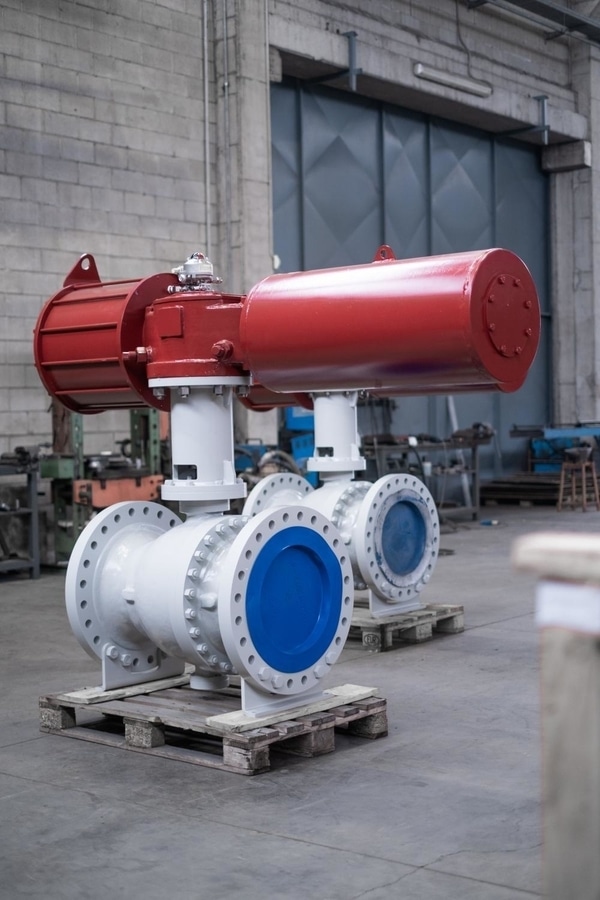
Pneumatic ESD Ball Valves
In industries where system failures can lead to catastrophic consequences—such as oil refineries, chemical plants, and nuclear power stations—Emergency Shutdown (ESD) valves are indispensable safeguards. These valves must operate flawlessly during emergencies, yet their reliability is often compromised by infrequent testing or environmental wear. Partial Stroke Testing (PST), a proactive diagnostic method, addresses this challenge by enabling routine validation of ESD valve functionality without interrupting operations.
What Is Partial Stroke Testing (PST)?
Defining PST for ESD Valves
Partial Stroke Testing (PST) is a safety procedure designed to verify the operational readiness of Emergency Shutdown (ESD) valves. Unlike traditional full-stroke testing—which requires complete valve closure and process interruption—PST involves moving the valve partially (typically 10–30% of its full travel) during normal operations. For example, a pneumatic ESD ball valve might close from 100% open to 85% open at scheduled intervals. This limited movement allows engineers to:
Assess Mechanical Integrity: Detect issues like valve stiction, actuator lag, or seal degradation.
Validate Response Time: Ensure the valve can transition from partial to full closure within critical timeframes.
Maintain Process Continuity: Avoid costly shutdowns while fulfilling safety testing requirements.
The Evolution of PST
Pre-PST Era: Reliance on manual inspections and infrequent full-stroke tests, leading to undetected failures.
Early PST Systems: Basic automated testing with limited data collection (1990s–2000s).
Modern PST: Integration with Industrial IoT (IIoT), predictive analytics, and SIL-3-certified safety systems.
How PST Works
1.Automated Actuation:
A control system triggers the pneumatic actuator to partially close the ball valve. The movement is carefully calibrated to avoid disrupting the flow process.
2.Data Collection:
Sensors embedded in the valve or actuator (e.g., position sensors, torque sensors) record critical parameters like response time, torque output, and travel deviation.
3.Diagnostic Analysis:
The data is analyzed to identify early signs of wear, misalignment, or other failures. Alerts are generated if performance falls outside predefined thresholds.
Applications of PST in Critical Industries
1. Oil & Gas
Offshore Platforms:
PST ensures subsea ESD valves can isolate hydrocarbon leaks, even in corrosive seawater environments.
Pipeline Networks:
Regular PST prevents valve seizure in remote, unmanned sections of pipelines.
2. Chemical Plants
Hazardous Material Handling:
PST verifies that valves controlling toxic or flammable fluids remain functional.
3. Power Generation
Nuclear Facilities:
PST is critical for valves managing coolant systems, where failure could lead to meltdowns.
4. LNG Terminals
Cryogenic Valves:
Athena’s PST-enabled valves withstand extreme temperatures (-196°C) while maintaining diagnostic accuracy.
Why PST Is Essential for Emergency Shutdown Valves
The Limitations of Traditional Testing
1.Full-Stroke Testing Risks:
Requires process shutdowns, leading to production losses.
Frequent full closures accelerate wear on valve components.
2.Manual Inspections:
Time-consuming, subjective, and often inadequate for detecting subtle issues.
Key Advantages of PST
1.Zero Process Disruption:
PST occurs during normal operations, eliminating downtime and maintaining productivity.
2.Early Fault Detection:
Identifies issues like sluggish actuator response or valve stem corrosion before they compromise safety.
3.Regulatory Compliance:
Meets international safety standards (e.g., IEC 61508, SIL-2/3) that mandate regular emergency shutdown valve testing.
4.Extended Valve Lifespan:
Reduces mechanical stress compared to full-stroke testing, preserving valve integrity.
Design Requirements for Pneumatic Ball Valves with PST
1.Robust Actuation:
Pneumatic actuators must deliver precise, repeatable movement for partial strokes. Athena’s ESD valves use double acting actuators with fail-safe springs to ensure consistent performance.
2.Advanced Sensors:
Position Sensors: Track valve disc or ball movement in real time.
Torque Sensors: Monitor actuator force to detect resistance from debris or corrosion.
3.Control System Integration:
PST sequences are managed by programmable logic controllers (PLCs) or safety instrumented systems (SIS), with data logged for audit trails.
PST Workflow Example
1.Initiation:
The SIS triggers a PST cycle (e.g., weekly or monthly) based on predefined schedules.
2.Partial Closure:
The pneumatic actuator moves the valve to 90% open position.
3.Performance Validation:
Response time is compared to baseline values.
Deviations >5% trigger maintenance alerts.
4.Reset:
The valve returns to its fully open position, resuming normal operation.
Limitations and Mitigations
Sensor Calibration Drift:
Regular recalibration (every 6–12 months) ensures data accuracy.
Cybersecurity Risks:
Encrypted data transmission and network segmentation protect PST systems from breaches.
Athena Engineering S.R.L. – Manufacturer of Pneumatic Ball Valve with PST
While PST technology is the focus here, it’s important to highlight how Athena Engineering S.R.L. implements this innovation in its pneumatic ball valves:
Fail-Safe Design:
Valves default to a safe position (open/closed) during power or air supply loss.
Customizable PST Protocols:
Adjust testing intervals, stroke percentages, and reporting formats to align with client needs.
Certifications:
Compliant with SIL-3, ATEX, and API 6D standards for hazardous environments.
Global Support:
Athena provides 24/7 remote monitoring services to analyze PST data and recommend proactive maintenance.
Partial Stroke Testing represents a paradigm shift in how industries approach valve reliability. By merging proactive diagnostics with operational continuity, PST not only prevents disasters but also enhances efficiency and compliance. As technologies like AI and IoT evolve, PST will become even more integral to smart, sustainable industrial ecosystems.
Athena Engineering S.R.L. remains at the forefront of this revolution, delivering PST-enabled pneumatic ball valves that combine rugged durability with cutting-edge intelligence. Partner with us to future-proof your safety systems and achieve operational excellence.
About Athena Engineering S.R.L.
Athena Engineering S.R.L., headquartered in Milan, Italy, is a globally recognized leader in industrial valve manufacturing. With over 10 years of innovation, we specialize in safety-critical solutions for the oil and gas, chemical, power, and pharmaceutical industries. Our pneumatic ball valves with PST are trusted by Fortune 500 companies to protect lives, assets, and the environment.
If you are interested in pneumatic ball valves with PST or have specific needs, feel free to contact us. Our team is here to assist you with professional advice and solutions to support your projects.
Contact Us:
Website: //www.athenavalve.com/
Email: [email protected]