#White Papers
Guide to Swing Check Type Non-Return Valves
Swing Check Valves
In the intricate tapestry of industrial processes and fluid management systems, the unsung hero of unidirectional flow control is the non-return valve, more commonly known as a check valve. Its seemingly simple mandate – to permit fluid passage in one direction while steadfastly preventing any unwelcome reversal – underpins the safety, efficiency, and integrity of countless operations. Within this diverse family of flow regulators, the swing check valve stands as a testament to the power of mechanical simplicity, offering a robust and often cost-effective solution for preventing backflow across a wide spectrum of applications. To truly harness the capabilities of swing check valves, a deep and thorough understanding of their design, operation, advantages, limitations, and proper implementation is essential.
The Fundamental Necessity: Understanding the Role of Non-Return Valves
At its core, a non-return valve (check valve) is an automatic sentinel within a fluid conduit, engineered to allow flow exclusively in a designated direction. Unlike manually operated valves that require external actuation, check valves respond autonomously to the dynamic pressures exerted by the fluid itself. Their primary and indispensable function is the prevention of backflow, a phenomenon that can trigger a cascade of detrimental consequences. Backflow can lead to damage in sensitive equipment such as pumps and compressors, contamination of upstream processes and stored fluids, inaccurate flow measurements, and even hazardous situations like the back-siphonage of toxic or corrosive substances into potable water supplies. The inherent self-acting mechanism of check valves makes them an indispensable safety and operational component in a vast array of industries.
The realm of non-return valves encompasses a diverse array of designs, each meticulously engineered to address specific operational demands and fluid characteristics. While the swing check valve represents a significant and widely employed category, it is crucial to recognize its position within this broader landscape. Other prevalent types include lift check valves (with sub-designs like ball, piston, and nozzle checks), wafer check valves (available as single plate, dual plate, and tilting disc variations), and silent check valves (distinguished by their spring-assisted closure). The selection of the most appropriate non-return valve type is a critical decision that hinges on a meticulous evaluation of the specific application parameters, including the nature of the fluid being handled, the prevailing pressure and temperature ranges, the anticipated flow rates, and the paramount importance of preventing backflow and mitigating associated issues such as damaging pressure surges.
The Elegance of Functionality: Unpacking the Design and Operation of Swing Check Valves
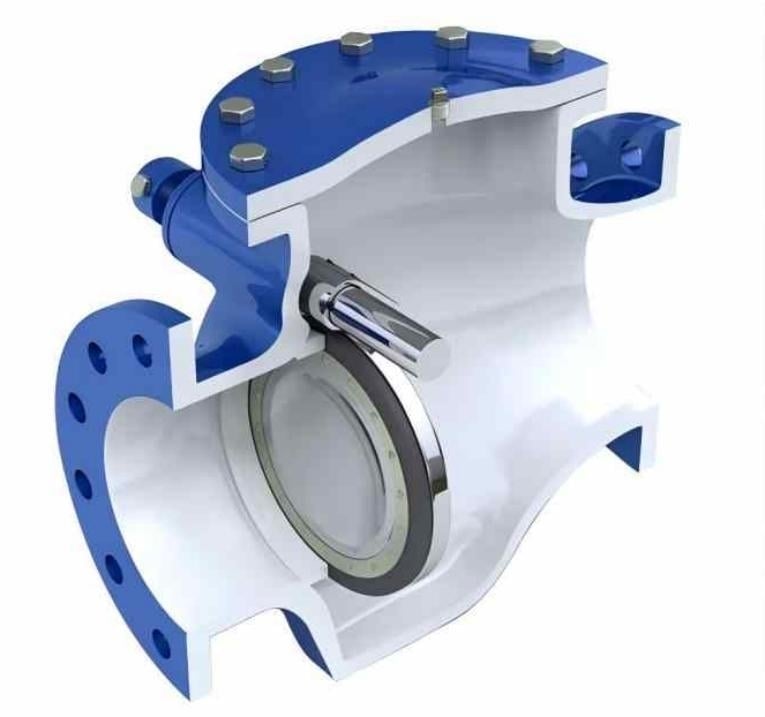
The swing check valve embodies a design philosophy that prioritizes mechanical simplicity and the provision of a relatively unobstructed pathway for fluid flow. Its fundamental construction centers around a hinged closure mechanism, a disc or clapper that pivots to permit forward movement of the fluid and then returns to its seated position to effectively block any reverse flow.
Core Components: The anatomy of a typical swing check valve comprises several key components working in concert. The valve body serves as the main structural housing, incorporating the inlet and outlet connections that facilitate integration into the pipeline. The bonnet, a removable cover, provides essential access to the internal workings of the valve, particularly the disc and the hinge mechanism. The heart of the valve is the hinged disc (or clapper), a solid component meticulously engineered to swing open under forward flow and swing closed to obstruct reverse flow. This disc is attached to the valve body via a hinge pin, a crucial pivot point that allows for the necessary rotational movement of the disc. Finally, the seat is the precisely machined internal surface within the valve body against which the disc comes into contact, forming a tight seal to prevent any backflow of the fluid. The materials employed in the construction of these components are of paramount importance, dictated by the specific service fluid and the anticipated operating conditions. Common materials include various grades of carbon steel (for general, non-corrosive applications), stainless steel (essential for corrosive environments and high-purity applications), cast iron (often used for lower pressure water and wastewater systems), and specialized plastics like PVC, CPVC, and PTFE (for specific chemical services). The judicious selection of materials directly dictates the valve's pressure and temperature rating, its resistance to corrosion and erosion, and its overall operational lifespan.
Operational Principle: The operation of a swing check valve is a testament to the elegant interplay of fluid dynamics and mechanical design. When the fluid approaches the valve from the upstream side with sufficient pressure, it exerts a dynamic force on the face of the disc. This force, overcoming the inherent weight of the disc and any minimal back pressure present, causes the disc to swing upwards and away from the valve seat. This pivotal movement creates a relatively open and unrestricted pathway, allowing the fluid to pass through the valve with minimal impedance. As long as the forward flow is maintained at an adequate velocity and pressure, the disc remains in the open position, ensuring a smooth and efficient passage of the fluid. However, the instant the forward flow ceases, or more critically, when the pressure downstream exceeds the pressure upstream, attempting to reverse the flow, the forces of gravity acting on the disc and the developing back pressure collaboratively cause the disc to swing back downwards towards the valve seat. Upon making firm contact with the seat, the disc forms a robust barrier, effectively and automatically preventing any reverse flow of the fluid through the valve. The cracking pressure is a critical operational parameter, representing the minimum upstream pressure that must be exerted to initiate the opening of the valve and overcome the combined forces of the disc's inertia and weight.
Variations in Swing Check Valve Design: While the fundamental principle of operation remains consistent, swing check valves are available in several design variations, each engineered to optimize performance for specific application requirements. Top-hinged swing check valves represent the most common and widely utilized configuration, characterized by the hinge pin being located at the top of the valve body. This design allows the disc to swing freely downwards under the influence of gravity, facilitating a reliable and consistent closure. Tilting disc check valves represent a sophisticated refinement aimed at mitigating the potentially damaging effects of water hammer. These valves feature a disc that is typically dome-shaped and mounted on a central pivot point. This design offers a significantly shorter travel distance for the disc and consequently a faster closure compared to traditional top-hinged designs, thereby reducing the magnitude of pressure surges during flow reversal. The tilting motion also contributes to a more streamlined flow path when the valve is open, potentially minimizing pressure drop across the valve. Furthermore, Y-pattern swing check valves are designed with a more oblique or angled body configuration. This design modification aims to further minimize pressure drop by providing a less tortuous and more direct flow path through the valve. These design variations underscore the continuous efforts within the valve manufacturing industry, exemplified by companies like Athena Engineering, to adapt and optimize the basic swing check principle to enhance performance, address specific operational challenges, and meet the evolving demands of diverse industrial applications. Athena Engineering, like many reputable valve manufacturers, likely offers a range of swing check valve designs tailored to different pressure ratings, materials, and service conditions, reflecting the industry's commitment to providing versatile and reliable flow control solutions.
Highlighting the Strengths of Swing Check Valves
Swing check valves offer a compelling array of advantages that contribute to their widespread adoption across a multitude of industries. Their primary strength lies in their inherent low pressure drop. When the hinged disc is fully swung open by the forward flow, it typically presents a near full-bore opening, minimizing the obstruction to the fluid stream and consequently reducing energy losses within the system. This characteristic makes them particularly well-suited for applications involving the transport of large volumes of fluid, where minimizing pressure loss translates directly into significant energy savings and improved system efficiency. Furthermore, swing check valves exhibit remarkable versatility in fluid handling, capable of effectively managing a wide range of liquids and gases. While generally best suited for relatively clean fluids, certain robust designs can also handle some slurries and fluids containing particulate matter, depending on the consistency and abrasive nature of the solids. Their suitability for large diameter pipelines is another significant advantage. The simple yet robust design of swing check valves scales well to larger sizes, making them a common and reliable choice in main pipelines for water distribution networks, oil and gas transmission lines, and wastewater management systems. The relatively simple construction and maintenance of swing check valves are also appealing to end-users. With fewer moving parts compared to more complex check valve designs, they are generally easier to install and maintain, often requiring less specialized knowledge and tools for routine upkeep. Finally, for basic backflow prevention in less demanding applications where stringent sealing is not paramount and water hammer is less of a concern, swing check valves can often offer a more cost-effective solution compared to more sophisticated and specialized check valve types.
Limitations and Potential Issues with Swing Check Valves
Despite their numerous advantages and widespread utility, swing check valves are not without their limitations and can be susceptible to certain operational issues if they are not carefully selected, properly installed, and operated within their design parameters. One of the most significant concerns associated with swing check valves is their inherent susceptibility to water hammer (slamming). This potentially damaging phenomenon occurs when the flow of fluid in a pipeline suddenly stops or abruptly reverses direction. The relatively heavy disc of a swing check valve, with its inherent inertia and often longer travel distance to the seat, continues to move under its own momentum and then slams forcefully against the valve seat. This rapid and forceful closure generates a high-pressure surge, often accompanied by significant and potentially damaging noise and vibration, which can lead to premature failure of the valve itself, rupture adjacent piping, and damage connected equipment. The likelihood and severity of water hammer are influenced by a complex interplay of factors, including the speed at which the flow changes, the overall length of the pipeline, and the specific size and weight of the valve disc.
Another potential operational issue is disc chattering. This occurs when the flow of fluid through the valve is unstable or exhibits pulsating characteristics, particularly at low flow velocities or when the valve is oversized for the specific application. The fluctuating pressure can cause the disc to repeatedly and rapidly open and close against the valve seat, generating undesirable noise and leading to accelerated wear and tear on critical components such as the hinge pin, the disc itself, and the seating surfaces. This chattering can compromise the valve's ability to seal effectively and significantly reduce its operational lifespan. Standard swing check valves, with their typical metal-to-metal seating, may also exhibit sealing limitations compared to other check valve designs that incorporate resilient seating materials. Achieving a bubble-tight seal can be challenging, especially at low back pressures or in the presence of even small amounts of particulate matter that can become trapped on the seating surfaces. Furthermore, swing check valves demonstrate a degree of sensitivity to installation orientation. For optimal performance and reliable gravity-assisted closure, they are generally designed to be installed in horizontal pipelines with the hinge pin oriented horizontally and typically above the centerline of the pipe. Vertical installation, particularly with downward flow, can impede the proper and timely closing of the disc, potentially compromising the valve's effectiveness in preventing backflow. Finally, the inherent swinging motion that defines their operation can, over extended periods, lead to wear and tear on the moving parts, most notably the hinge pin and the disc's pivot point. This gradual wear can eventually result in increased leakage, sticking of the disc, or other forms of mechanical malfunction.
Factors Influencing Swing Check Valve Selection
Selecting the most appropriate swing check valve for a specific application demands a meticulous consideration of several critical factors. The type of fluid being handled and its inherent properties, including its viscosity, operating temperature, chemical compatibility with the valve's materials of construction, and the presence of any suspended solids or abrasive particles, are of paramount importance. The anticipated operating pressure and temperature of the system must be well within the valve's specified pressure and temperature ratings to ensure safe and reliable long-term operation. The expected flow rate and velocity of the fluid through the valve are crucial for proper sizing, ensuring that the disc opens fully without causing excessive pressure drop and closes effectively without inducing slamming or chattering. The acceptable pressure drop across the valve must be carefully balanced against the primary need for effective backflow prevention and the overall energy efficiency of the system. A thorough assessment of the potential for water hammer within the system is critical, particularly in systems characterized by long pipelines or the potential for rapid flow changes. The specific sealing requirements of the application will dictate whether a standard swing check valve with metal-to-metal seating is sufficient or if a tighter sealing design, perhaps with a resilient seat, is necessary. The physical installation orientation of the pipeline and any space constraints in the installation environment can also influence the suitability of a swing check valve. Finally, cost considerations, balancing the initial purchase price with the anticipated long-term operational and maintenance costs, and strict adherence to relevant industry standards and specifications are also integral aspects of the valve selection process.
Conclusion
In conclusion, swing check type non-return valves, with their fundamental yet effective design and inherent simplicity, remain a cornerstone in the vast landscape of fluid handling systems. Their ability to provide reliable backflow prevention with minimal obstruction to flow makes them a preferred choice in numerous applications, particularly those involving large diameter pipelines and relatively clean fluids. However, their inherent susceptibility to water hammer and potential limitations in achieving absolute bubble-tight sealing necessitate careful consideration during the selection and implementation phases. By diligently adhering to best practices for installation and maintenance, and by developing a thorough understanding of their operational nuances and potential pitfalls, engineers and technicians can effectively harness the enduring utility of swing check valves to ensure the long-term integrity and efficiency of their critical fluid systems. While other non-return valve designs offer specific advantages tailored to particular application demands, the swing check valve, when judiciously applied and meticulously maintained, continues to play a vital and indispensable role as a fundamental guardian of unidirectional flow control across a wide spectrum of industrial endeavors.