#Industry News
Automotive SerDes Camera Systems: Technical Guide for Vision Applications
Enabling Long-Distance, High-Speed Video Transmission for ADAS and Autonomous Driving
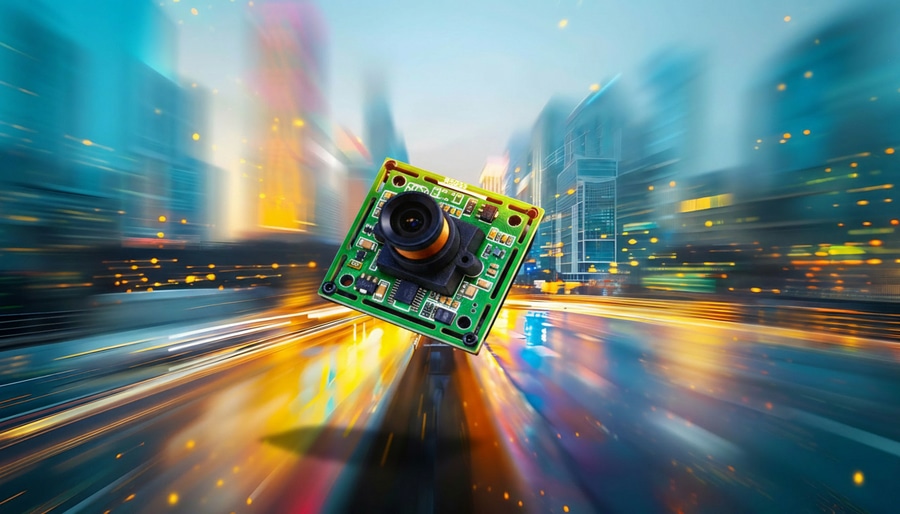
When autonomous vehicles travel at highway speeds, camera systems must transmit high-resolution imagery within milliseconds for AI decision-making. Achieving stable data transmission in environments with electromagnetic interference, vibration, and extreme temperatures requires specialized technology—this is where SerDes camera systems excel.
The Automotive Vision Challenge
Traditional MIPI CSI-2 interfaces, designed for short-reach interconnection within consumer devices, face a critical limitation in vehicles: transmission distance. While CSI-2 excels for compact electronics, automotive applications demand long-distance cable runs—from windshield-mounted cameras to trunk-located ECUs, often spanning the entire vehicle length. Parallel interfaces require extensive wiring and lack EMI shielding, making them unsuitable for electrically-dense vehicle environments. This is where long-reach physical layer technologies like SerDes and MIPI A-PHY become essential.
What is SerDes?
SerDes (Serializer-Deserializer) is a point-to-point communication architecture that enables long-distance video transmission in automotive environments. The technology works in three stages:
Serialization: A serializer IC at the camera module converts parallel data from the image sensor (typically 8-16 lanes) into a high-speed serial bitstream
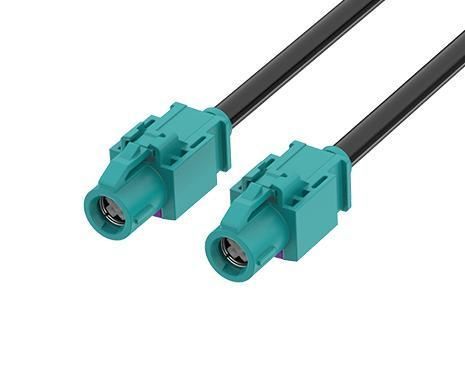
Transmission: The serial data travels through a single shielded cable (coaxial or twisted pair), with typical reach around 15 meters—actual distance depends on data rate, cable quality, equalization capability, and chipset channel budget
Deserialization: A deserializer IC at the ECU reconstructs the original parallel data format for processor input