
#Industry News
Industrial Arancini Production: High-Performance Automated Solutions for Traditional Savories
How advanced encrusting technology standardizes and scales the manufacturing of authentic Italian rice balls.
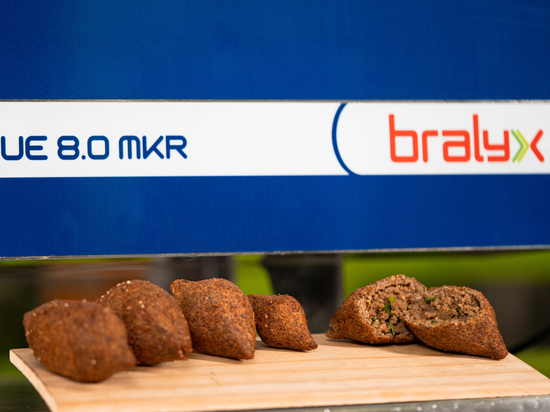
In the industrial food processing sector, automation must balance high-volume efficiency with the preservation of product integrity. For traditional Italian arancini (or arancine), replicating the delicate balance of a rice-based outer layer and a well-distributed filling at a commercial scale presents unique engineering challenges.
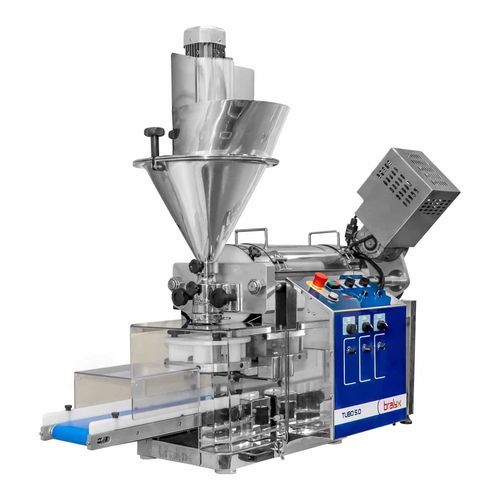
Industrial forming and encrusting equipment, such as the Bralyx BIG 6.0 MKR, provides a precise technological answer. Engineered with an advanced MK propulsion system, this machine smoothly processes denser mixtures and grain-based formulations without breaking the rice structure, ensuring that the final product retains its traditional texture and premium quality.
Technical Highlights for Industrial Lines:
- Scalable Output: Delivers a continuous production rate of up to 6,000 pieces per hour, easily adapting to varying sizes, from cocktail-sized catering appetizers to large, traditional industrial portions.
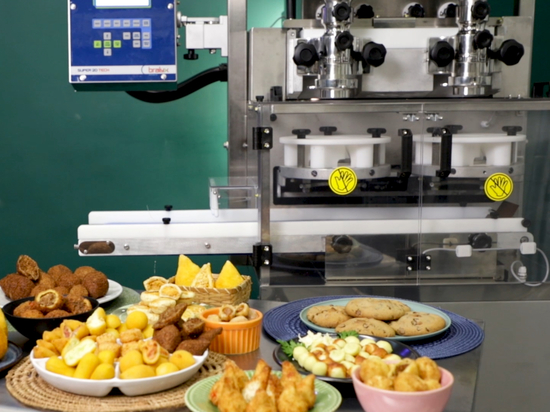
- Structural Consistency: Precision portioning systems guarantee exact weight control and perfect centering of the filling (such as ragù, mozzarella, or peas), maximizing product uniformity and minimizing operational waste.
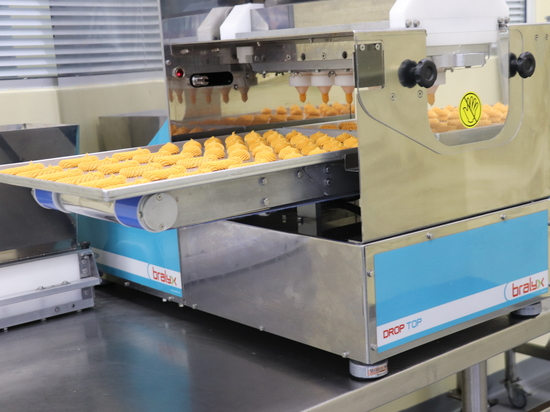
- Flexible Tooling: Features interchangeable molding sets (including drop, ball, and conical shapes typical of Sicilian arancini) to diversify product portfolios on a single manufacturing line.
- Sanitary Construction: Built entirely from heavy-duty stainless steel, compliant with CE, UL, and NSF standards to meet the strictest global food safety and hygiene protocols.
About Bralyx:
With over 35 years of engineering expertise and a commercial presence in more than 80 countries, Bralyx is a global leader in food automation solutions. By pioneering versatile encrusting and forming technologies, Bralyx enables food manufacturers—from expanding regional producers to large-scale industrial plants—to transition from manual methods to highly efficient, standardized, and cost-effective automated operations.