#Product Trends
CASE STUDY | Beware the False Negative: 39 Leak Paths Missed During Initial Geomembrane Testing
Independent testing with the Buckleys Geo Pro2 identified critical defects after previous testing reported zero leak paths.
A recent geomembrane integrity testing project on a 35 million litre water storage tank in South Australia revealed how incorrect testing methodology can produce dangerously misleading results.
Following an initial survey that reported no defects, independent testing carried out by GeoQ using the Buckleys Geo Pro2 identified 39 leak paths across the installed liner system. All defects were verified on site and confirmed as mechanical damage, including knife cuts and preheat welding damage.
The discrepancy was traced to incorrect earthing methodology used during the original testing process, preventing a valid electrical circuit from being established through the conductive layer beneath the geomembrane.
This case study highlights the importance of:
• Correct earthing procedures
• Proper understanding of conductive pathways
• Competent equipment operation
• Reliable voltage selection and testing methodology
• Independent verification of liner integrity
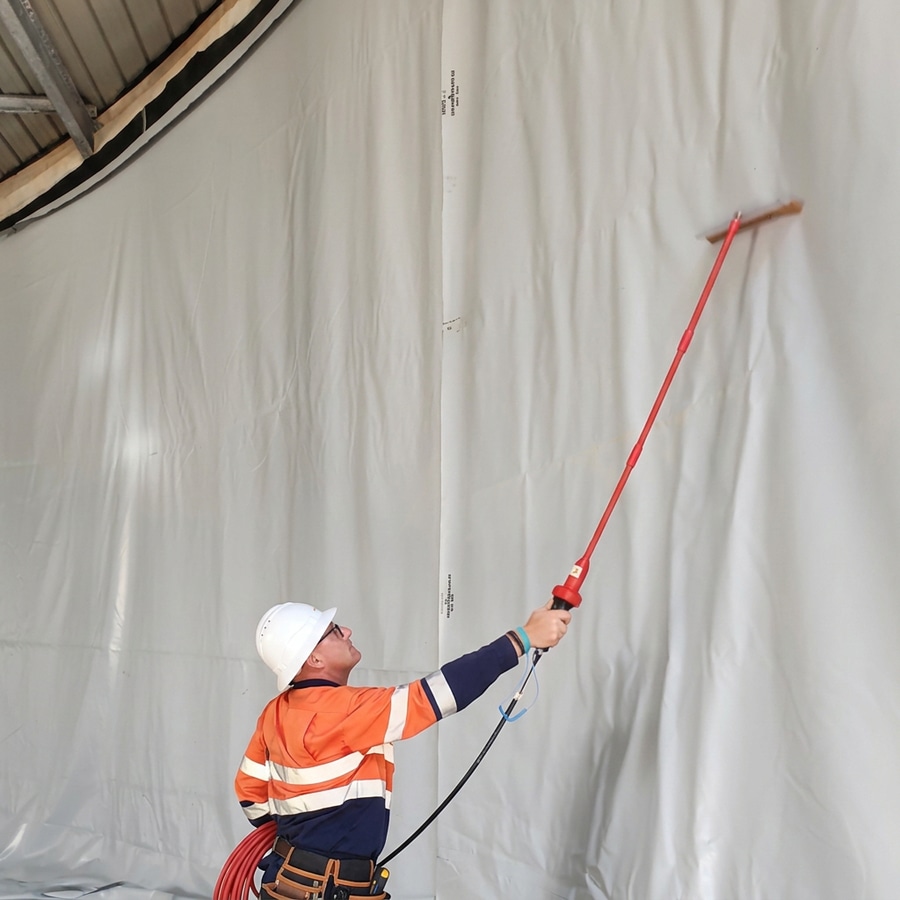
The Geo Pro2 delivered stable arc performance across both vertical and horizontal surfaces, enabling reliable defect detection without damaging the geomembrane.
Read the full case study to discover how false negatives occur - and why testing methodology matters as much as the equipment itself.