#Trade Shows & Events
Automa Chem 2026
Automation and AI in Chemical Manufacturing: Four Fronts Moving at Once
Chemical manufacturing doesn't have one automation story right now, it has several, running on different parts of the value chain at once. Robots are being tested in hazardous production zones. A separate robotics effort is underway during plant construction itself. Underneath both, engineers are still working out how to get the data flowing in the first place. And AI methods built for other industries are starting to show up in chemical and pharmaceutical operations. None of these threads are the same story, and treating them as one risks missing what's actually happening in each.
Robots in the plant
In April, BASF and Sevnce Robotics signed a memorandum of understanding that marked a shift in how the chemical industry treats robotics. Rather than a pilot tucked away in an innovation lab, the agreement points at something more structural: robots patrolling BASF's production sites and BASF's own materials science going into building them.
"BASF looks forward to deepening strategic cooperation with Sevnce Robotics, focusing on digital transformation and safe production scenarios in the chemical industry," said Dr. Jeffrey Lou, Chairman and President of BASF Greater China, when the agreement was announced.
The MoU runs in both directions. BASF and Sevnce will explore deploying Sevnce's robotic and intelligent inspection systems, including quadruped platforms, across BASF sites, with an explicit focus on safety-critical applications, the zones where sending a person is either impractical or genuinely risky. At the same time, BASF is contributing materials expertise that robotics companies don't usually get from a chemical supplier, working on lightweight design for quadruped and humanoid robots using its engineering plastics, thermoplastic polyurethanes and polyurethane systems.
It's worth being precise about what has and hasn't happened yet. The agreement covers
exploring these applications, not a completed rollout, and BASF has not announced how many robots are deployed or on what timeline. That doesn't make the announcement less significant. A major chemical producer publicly committing materials R&D to robotics hardware is a different kind of signal than a single-site trial.
Research from McKinsey helps explain why this matters. Generative AI touches just 14% of activities in the energy and materials sector, against a 23% average across other industries, and chemicals sits on the slower end of a technology curve that automotive and electronics manufacturing climbed years ago. Part of the reason is structural: chemical plants run continuous processes in explosive-atmosphere zones, where equipment has to be certified for hazardous environments before it can operate at all. A robot that works fine on a factory floor elsewhere often can't simply be wheeled into a chemical facility, which is exactly why a materials-science partnership matters here in a way it might not in a less hazardous industry.
Robots before the plant even runs
Operations aren't the only place robotics is showing up. At the Chemical Automation and Digitalisation Congress (Automa Chem) 2026 taking place in Berlin this October, Antonio Schiavone, Head of Construction Home Office Department at Tecnimont, will present on robotics, AI and sustainability planning during the construction phase itself, before a plant ever starts producing.
Tecnimont is part of MAIRE, an engineering group working across nitrogen, hydrogen, circular carbon, fuels and chemicals and polymers, with roughly 6,500 employees and over 20,000 people engaged across its projects in around 45 countries. Tecnimont itself delivers integrated engineering and construction services for complex plants in the natural resources transformation industry. Bringing robotics and AI into the construction phase, rather than only into finished operations, points at a part of the automation conversation that gets far less attention than plant-floor robots: the years-long build process that precedes them.
The layer underneath both
Robots, wherever they sit in the process, depend on something less visible: the data infrastructure that actually connects sensors, systems and plants. Benedikt Bijick, Senior Engineer at LyondellBasell, is presenting at Automa Chem 2026 on exactly that layer.
Bijick's presentation looks at Advanced Physical Layer, an Ethernet-based standard built specifically for the process industry that allows continuous, two-way data communication even in hazardous zones. APL lets sensors and actuators connect directly to an Ethernet-based infrastructure without the additional signal converters and gateways that older fieldbus systems required, feeding data in real time into SCADA, MES or cloud platforms and laying the groundwork for predictive maintenance and asset management.
The technology's current status echoes the BASF and Sevnce story more than it might first appear. Bijick describes APL as still in an evaluation and pilot phase across the industry, LyondellBasell included, with genuine potential already visible but widespread deployment still ahead. Higher bandwidth, longer range than conventional fieldbus and simplified
architecture make the outlook positive, but initial investment costs, integration into existing systems and staff training remain real obstacles.
AI arriving from elsewhere
The same session at Automa Chem, on smart and autonomous operations, also features Solvay, a chemical company with roots tracing back to Ernest Solvay's soda ash process in 1863, whose Alba Carrero and Dawood Abdul Wajid will speak on unlocking value through industrial digital transformation. Bayer brings a different angle again, with Devmallya Karar presenting on agentic AI in pharmaceutical manufacturing, a method that has developed further in pharma and software than in chemical production, and is now starting to cross over.
Taken together, these threads describe where chemical manufacturing actually stands with automation and AI right now. Not one robotics story, but four separate fronts moving in parallel: robots in hazardous operating zones, robotics reaching back into construction, the data infrastructure that everything else depends on and AI approaches migrating in from adjacent industries. Each is at a different stage of maturity, and each will likely determine how fast the others can actually scale.
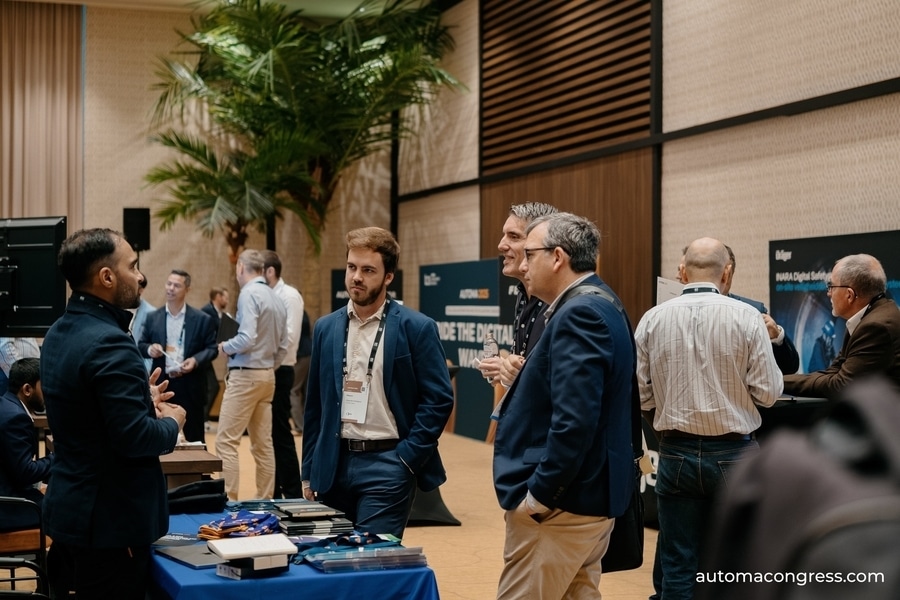
Automa Chem 2026 runs on 26-27 October in Berlin, bringing together chemical producers, EPCs, automation providers and technology companies working through these questions in a closed-door format built around structured sessions and networking.