
#Product Trends
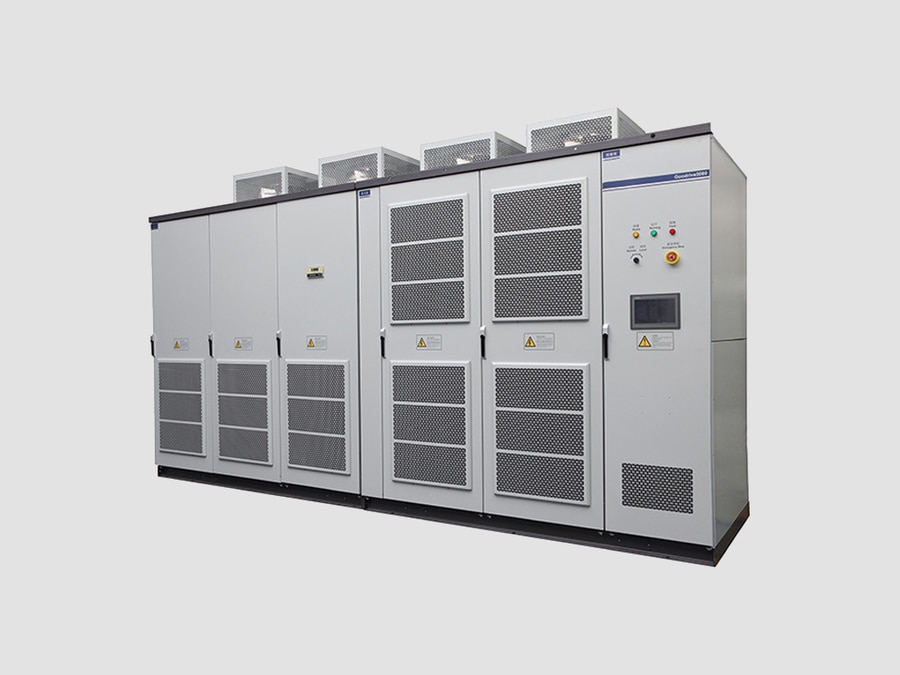
Medium Voltage Variable Frequency Drive (MV VFD)
MV AC Drive
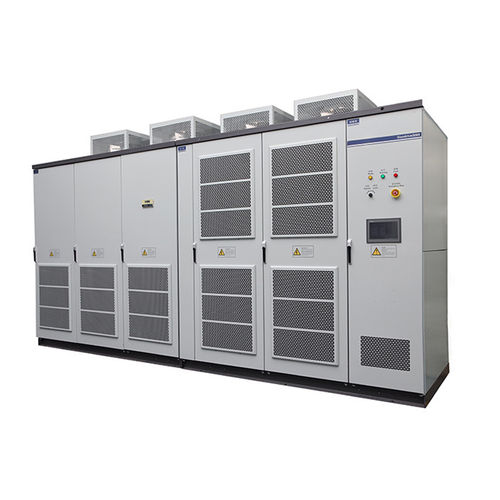
A Medium Voltage AC Drive (MV AC Drive), also called a Medium Voltage Variable Frequency Drive (MV VFD) or Medium Voltage Adjustable Speed Drive, is a power electronic device used to control the speed, torque, and power consumption of medium-voltage AC motors by varying the output voltage and frequency. It is widely used for large motors in industrial and utility applications.
1. Typical Ratings
·Voltage Class: 2.3 kV, 3.3 kV, 4.16 kV, 6.6 kV, 10 kV, 11 kV, 13.8 kV
·Power Range: Hundreds of kW to tens/hundreds of MW
·Output Frequency: 0–50/60 Hz (commonly higher for special applications)
·Motor Types: Induction motor, synchronous motor, permanent magnet motor
·Cooling: Air-cooled or liquid-cooled
Modern MV drives are available from several hundred kW to over 100 MW depending on application.
2. Main Components
1) Input Transformer
·Steps down the incoming MV supply.
·Provides electrical isolation.
·Often uses multiple secondary windings for low-harmonic operation.
2) Rectifier / Converter Section
·Converts incoming AC power into DC power.
·May use diode, thyristor, or active front-end (AFE) technology.
3) DC Link
·Stores and smooths DC energy.
·Contains capacitors and filtering components.
4) Inverter Section
·Converts DC back into variable-frequency AC.
Uses power semiconductor devices such as:
·IGBT
·IGCT
·SiC devices (newer designs)
5) Control System
Controls:
·Motor speed
·Torque
·Acceleration/deceleration
·Protection functions
·Communication with PLC/DCS systems
3. Common MV Drive Topologies
A.) Cascaded H-Bridge (CHB)
·Most common MV drive topology.
·Uses multiple low-voltage power cells connected in series.
Advantages:
·Low harmonic distortion
·Good motor waveform quality
·High reliability
B.) Three-Level NPC (Neutral Point Clamped)
·Uses multilevel inverter technology.
·Suitable for high-power applications.
C.) Flying Capacitor Converter
·Uses multiple capacitor voltage levels.
·Provides good waveform quality but more complex control.
4. Advantages of MV AC Drives
Energy Saving
Especially effective for:
·Pumps
·Fans
·Compressors
·Variable speed control avoids energy losses from throttling valves or dampers.
Soft Starting
·Reduces motor starting current.
·Minimizes mechanical stress.
·Reduces impact on the electrical network.
Process Control
Provides accurate control of:
·Flow
·Pressure
·Speed
·Production rate
Reduced Maintenance
·Lower mechanical wear.
·Reduced thermal stress on motors.
5. Typical Applications
·Power Generation: Boiler feed pumps, ID fans, FD fans
·Oil & Gas: Compressors, pumps, ESP systems
·Mining: Crushers, conveyors, mills
·Cement : Kiln drives, fans, grinding mills
·Water Treatment: Large pumps, blowers
·Marine: Propulsion systems
·Metals: Rolling mills, process lines
6. Protection Functions
Typical MV AC drives include:
·Overcurrent protection
·Overvoltage protection
·Undervoltage protection
·Ground fault protection
·Motor overload protection
·Semiconductor thermal protection
·Input/output phase loss protection
·Cell bypass (for CHB designs)
7. Major Manufacturers
Examples include:
ABB — ACS580MV and other MV drive platforms
Siemens — SINAMICS medium-voltage drive systems
GE Vernova — MV6 medium voltage drives
Schneider Electric — medium-voltage motor control solutions
In a power system, an MV AC Drive is essentially a high-power electronic speed controller that allows large MV motors to operate efficiently, smoothly, and with precise process control.