
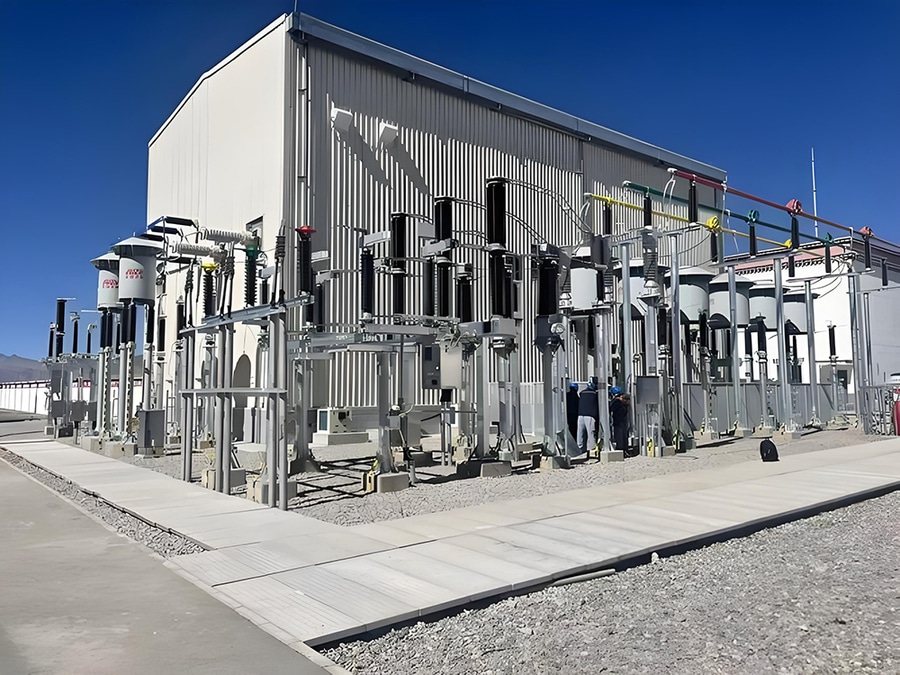
#Product Trends
Static Var Generator (SVG / STATCOM) leading to a high-performance industrial power system
Static Var Generator (SVG / STATCOM)
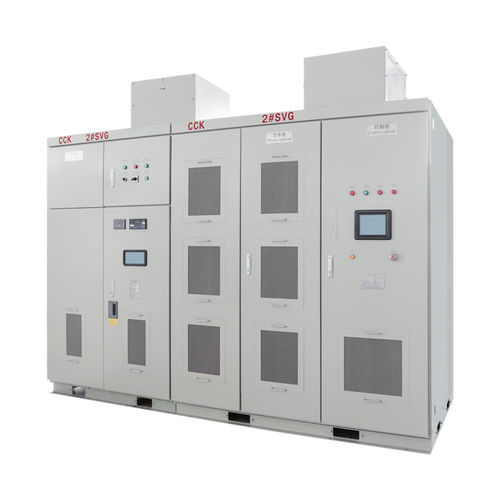
A Static Var Generator (SVG), also known as a STATCOM (Static Synchronous Compensator), is a power electronic-based FACTS (Flexible AC Transmission System) device used for dynamic reactive power compensation, voltage regulation, power factor correction, and harmonic mitigation.
Unlike an SVC, which uses thyristor-controlled reactors and capacitor banks, an SVG uses a voltage source converter (VSC) with high-speed semiconductor switches (IGBT/IGCT/SiC) to generate or absorb reactive current continuously.
1. Working Principle
An SVG operates by controlling the magnitude and phase angle of its converter output voltage relative to the grid voltage.
Capacitive Operation (Reactive Power Generation)
When the grid voltage is low:
·SVG injects leading current into the system
·Supplies reactive power
·Raises system voltage
Inductive Operation (Reactive Power Absorption)
When the grid voltage is high:
·SVG absorbs lagging current
·Consumes reactive power
·Reduces system voltage
2. Main Components
A.) Voltage Source Converter (VSC)
The core component of SVG.
Functions:
·Converts DC power to AC compensation current
·Generates controlled reactive current
Technology:
·IGBT modules
·IGCT devices
·SiC semiconductor modules
B.) DC Link Capacitor
Functions:
·Stores DC energy
·Maintains stable converter voltage
·Supports fast transient response
C.) Coupling Transformer / Reactor
Functions:
·Connects SVG to the power system
·Provides voltage matching
·Limits current ripple
D.) Control System
Includes:
·DSP/FPGA controller
·PLL synchronization
·Current control loop
·Voltage regulation
·Protection logic
E.) Cooling System
Depending on rating:
·Air cooling
·Forced air cooling
·Water cooling
3. SVG Operating Functions
A.) Dynamic Reactive Power Compensation
Provides:
·Capacitive reactive power
·Inductive reactive power
Response time:
·< 1 cycle (typically milliseconds)
B.) Voltage Regulation
Maintains:
·Transmission voltage stability
·Distribution voltage quality
Applications:
·Weak grids
·Renewable energy connections
C.) Power Factor Correction
SVG compensates:
·Lagging reactive power from motors
·Transformer magnetizing current
·Industrial loads
Improves:
·Power factor
·System efficiency
·Available capacity
D.) Harmonic Compensation
SVG can compensate:
·3rd harmonic
·5th harmonic
·7th harmonic
·Higher-order harmonics
Reduces:
·Current THD
·Voltage distortion
E.) Load Balancing
Corrects:
·Three-phase current imbalance
·Negative sequence current
Used in:
·Welding systems
·Electric furnaces
·Railway systems
4. SVG Configurations
A.) Low Voltage SVG
Typical:
·220 V / 380 V / 690 V
Applications:
·Buildings
·Data centers
·Industrial plants
B.) Medium Voltage SVG
Typical:
·3.3 kV
·6.6 kV
·10 kV
·35 kV
Applications:
·Factories
·Mining
·Renewable energy plants
C.) High Voltage STATCOM
Typical:
·66 kV
·110 kV
·220 kV
·500 kV+
Applications:
·Transmission networks
·HV substations
5. Typical Specifications
·Voltage level: 0.4 kV – 765 kV
·Capacity: ±50 kVAR to ±1000+ MVAR
·Response time: <10 ms
·Technology: IGBT / IGCT / SiC
·Connection: Shunt
·Reactive power: Continuously variable
·Cooling: Air/water cooling
·Control: Digital converter control
6. Advantages
·Extremely fast response: Millisecond compensation
·Full four-quadrant operation: Generates or absorbs reactive power
·Excellent low-voltage performance: Maintains output during voltage dips
·Compact size: Smaller than SVC
·No harmonic resonance: Unlike passive filters
·Multi-function: Reactive power + harmonics + imbalance correction
·High accuracy: Precise current control
7. Applications
Renewable Energy
·Solar PV plants
·Wind farms
·Battery energy storage systems
Transmission Networks
·Voltage stability
·Grid strengthening
·Power oscillation damping
Industrial Facilities
·Arc furnaces
·Rolling mills
·Large motors
·Cranes
Commercial Buildings
·Data centers
·Hospitals
Large HVAC systems
·Railway Systems
·Traction load balancing
·Voltage stabilization
8. Typical Installation Arrangement
Grid Bus → Circuit Breaker → Coupling Transformer → Converter Unit → DC Capacitor → Control System
The SVG continuously monitors the grid and injects the required compensation current.
Static Var Generator (SVG/STATCOM) summary:
An SVG/STATCOM is an advanced FACTS device based on voltage source converter technology that provides fast, precise, and continuous reactive power compensation. Compared with SVC, it offers faster response, better voltage support during disturbances, smaller size, and multifunctional power-quality improvement, making it a key technology for modern smart grids, renewable energy integration, and high-performance industrial power systems.