
#Product Trends
Capacitor Units offering solution to compensate inductive loads
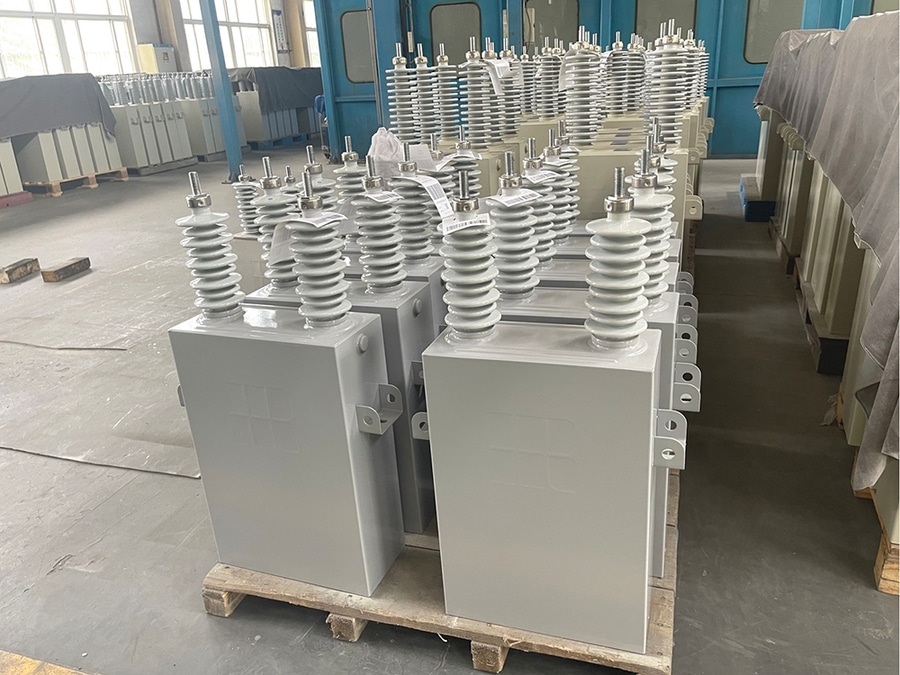
Capacitor Units
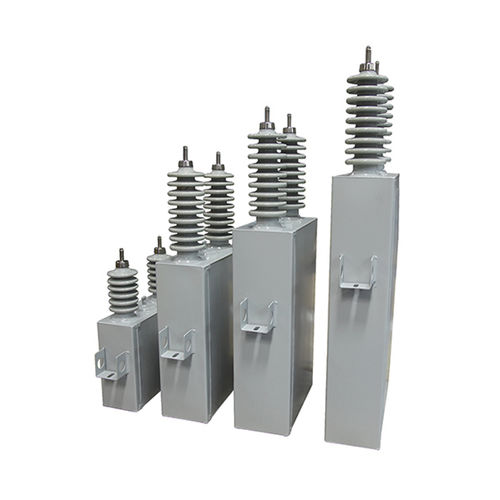
A Capacitor Unit is a power system component used to supply reactive power (kvar), improve power factor, regulate voltage, and increase the efficiency and stability of electrical networks. Multiple capacitor units are typically connected together to form a capacitor bank installed in substations, distribution networks, industrial plants, and renewable energy systems.
Capacitor units are commonly applied in medium-voltage and high-voltage power systems to compensate inductive loads such as motors, transformers, furnaces, and industrial equipment.
Main Functions
Capacitor units provide:
·Reactive power compensation
·Power factor improvement
·Voltage support
·Reduction of transmission losses
·Increased system capacity
·Improved power quality
·Reduced demand charges in industrial systems
Working Principle
Electrical loads such as motors and transformers consume both:
·Active power (kW) – performs useful work
·Reactive power (kvar) – maintains magnetic fields
·Capacitors supply leading reactive power to offset inductive reactive power.
Main Components of a Capacitor Unit
1.) Capacitor Element
The basic energy storage component consists of:
·Aluminum foil electrodes
·Polypropylene film dielectric
·Insulating oil or dry dielectric material
·Internal discharge resistors
2.) Capacitor Case
Provides:
·Mechanical protection
·Electrical insulation
·Environmental sealing
Common materials:
·Stainless steel
·Aluminum alloy
3.) Internal Fuse (Optional)
Functions:
·Protects individual capacitor elements
·Isolates failed elements
·Improves system reliability
4.) Discharge Resistor
Purpose:
·Reduces residual voltage after disconnection
·Ensures safe maintenance operation
5.) Bushings and Terminals
Provide:
·Electrical connection
·Insulation between conductor and enclosure
Types of Medium Voltage Capacitor Units
Typical voltage:
·3.3kV
·6.6kV
·10kV
·12kV
·24kV
·35kV
Applications:
·Distribution substations
·Industrial plants
·Renewable energy systems
Capacitor Bank Configurations
1.) Shunt Capacitor Bank
Most common type.
Function:
·Connected in parallel with the system
·Provides reactive power compensation
Applications:
·Substations
·Industrial networks
2.) Series Capacitor Bank
Function:
·Connected in series with transmission lines
·Reduces line impedance
·Improves power transfer capability
Applications:
·Long transmission lines
·High-voltage networks
3.) Automatic Switched Capacitor Bank
Features:
·Automatic kvar adjustment
·Controller-based switching
·Maintains target power factor
Applications:
·Variable industrial loads
Capacitor Unit Ratings Example
·LV 400V: 5–50 kvar
·MV 6.6kV: 100–600 kvar
·MV 10kV: 100–1000 kvar
·35kV: 200–1500 kvar
·HV 110kV+: Several Mvar per bank
Protection Methods
Capacitor banks typically include:
·Overcurrent Protection
Protects against:
·Short circuits
·Internal failures
·Unbalance Protection
Detects:
·Failed capacitor elements
·Unequal voltage distribution
·Overvoltage Protection
Protects against:
·System voltage rise
·Switching transients
·Surge Protection
Uses:
·Metal Oxide Surge Arresters (MOA)
·Discharge Protection
·Ensures safe maintenance conditions.
Advantages
·Improved Power Factor
·Reduces reactive power consumption
·Improves electrical efficiency
·Voltage Improvement
·Supports voltage levels
·Reduces voltage drop
·Reduced Losses
·Lowers current flow
·Reduces cable and transformer losses
·Increased System Capacity
·Releases network capacity
·Allows additional loads
·Economic Benefits
·Reduces electricity penalties
·Improves operational efficiency
Typical Applications
Utility Systems
·Transmission substations
·Distribution substations
·Grid voltage regulation
Industrial Facilities
·Steel plants
·Cement plants
·Mining operations
·Chemical plants
·Manufacturing facilities
Renewable Energy
·Solar PV plants
·Wind farms
·Battery energy storage systems
Commercial Buildings
·Shopping centers
·Data centers
·Large office complexes
Applicable Standards
·IEC 60871 – Shunt capacitors for AC power systems above 1kV
·IEC 60143 – Series capacitors for power systems
·IEEE Std 18 – Standard for shunt power capacitors
·IEC 60099 – Surge arresters
·IEC 62271 – High-voltage switchgear and controlgear
A Capacitor Unit is a fundamental component for modern power systems, providing reactive power compensation, voltage stabilization, and improved energy efficiency. By combining multiple units into capacitor banks, utilities and industries can enhance grid performance, reduce losses, and improve the reliability of electrical networks.