
#Product Trends
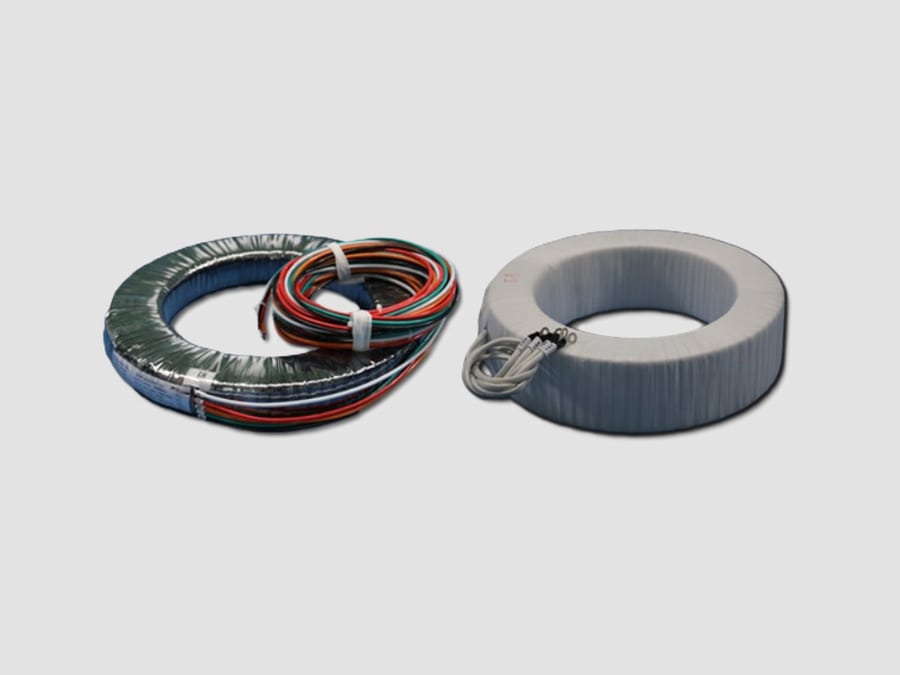
Bushing Current Transformer (BCT)
BCT
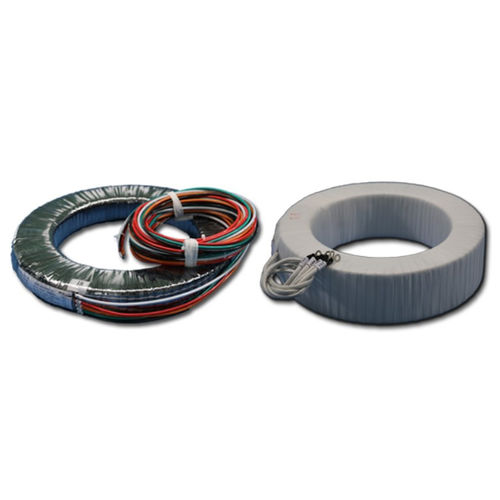
Bushing Current Transformer (BCT) is a type of current transformer installed around the bushing of a power transformer, circuit breaker, or switchgear. It is designed to measure current or provide protection signals by using the existing high-voltage bushing as the primary conductor.
Unlike standalone CTs, a BCT does not require a separate primary structure. Instead, it is mounted directly on the transformer or circuit breaker bushing, making it compact, cost-effective, and widely used in high-voltage and extra-high-voltage substations.
Main Functions
·Measures current flowing through transformer or breaker bushings
·Provides input to protection relays (differential, overcurrent, earth fault)
·Supports metering and energy monitoring
·Enables transformer protection schemes (e.g., differential protection)
·Reduces need for separate CT installations in EHV equipment
Construction
A typical Bushing Current Transformer consists of:
Toroidal Magnetic Core
-High-permeability silicon steel or nanocrystalline material
-Ensures accurate flux coupling around the bushing conductor
Secondary Windings
-Metering cores for accuracy
-Protection cores for fault detection
-Multiple cores may be stacked in one unit
Epoxy Resin or Insulated Housing
-Provides mechanical support and insulation
-Designed for high-voltage environments
Installation Position
-Mounted around transformer or breaker bushing insulation cylinder
-Primary conductor is the bushing conductor itself
Working Principle
The working principle is similar to a conventional CT:
1.The load current flows through the bushing conductor (primary conductor)
2.The current creates a magnetic field around the bushing
3.The BCT core captures this magnetic flux
4.A proportional current is induced in the secondary winding
5.This secondary output is sent to meters or protection relays
Typical Technical Specifications
·Parameter: Typical Value
·Rated Voltage: Up to 245 kV (application dependent)
·System Use: 33 kV to EHV substations
·Secondary Current: 1 A or 5 A
·Accuracy Class: 0.2, 0.5, 5P10, 5P20, PX
·Frequency: 50/60 Hz
·Burden: 5–30 VA
·Insulation: Epoxy / oil-paper (depending on design)
·Installation: Mounted on transformer/breaker bushing
Advantages
·No need for separate primary conductor installation
·Compact and space-saving design
·Ideal for high-voltage transformers and GIS/AIS equipment
·Cost-effective for multi-core protection schemes
·High accuracy for both metering and protection
·Easy integration into transformer design
Typical Applications
·Power transformer differential protection
·Generator and transformer protection systems
·Circuit breaker current measurement
·High-voltage substations (110 kV to 245 kV and above)
·GIS (Gas Insulated Substation) equipment
·Utility transmission networks
·Industrial EHV substations
Common Types
·Ring-type BCT Installed around porcelain or composite bushing
·Split-core BCT Can be installed without removing bushing
·Multi-core BCT Separate cores for metering and protection
·GIS-integrated BCT Built into gas-insulated equipment
Key Features
·Uses transformer/breaker bushing as primary conductor
·Highly reliable for protection applications (especially differential protection)
·Available with multiple secondary cores in one assembly
·Designed for high short-circuit withstand capability
·Suitable for both AIS and GIS substations
·Long service life with minimal maintenance
A Bushing Current Transformer (BCT) is an essential component in modern substations, especially in power transformer protection schemes, where it provides accurate current measurement directly from the equipment bushing while saving space and improving system integration.