
#Product Trends
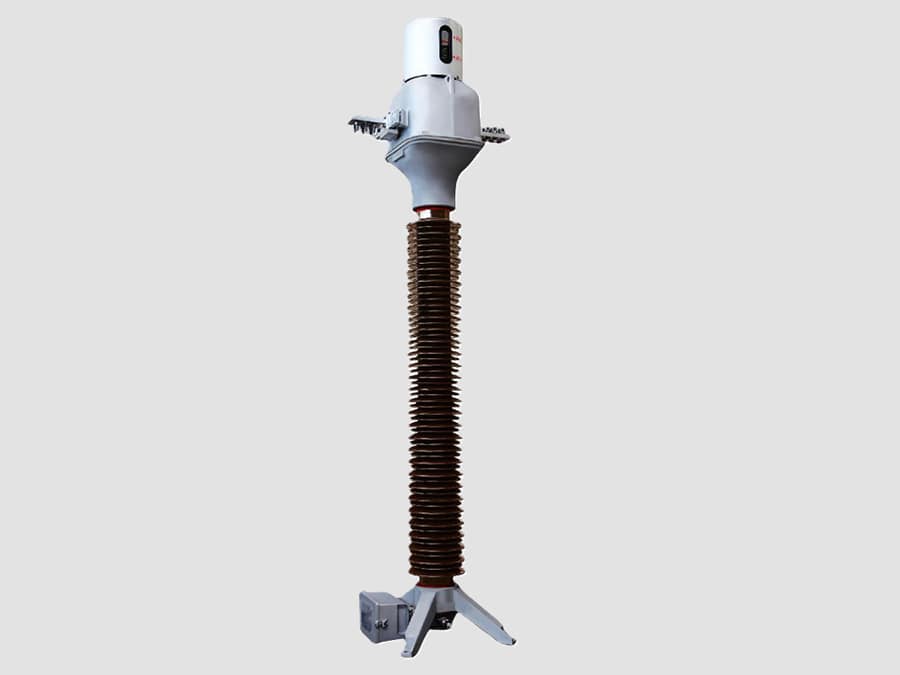
245kV Current Transformer (Top-core type)
245kV Current Transformer
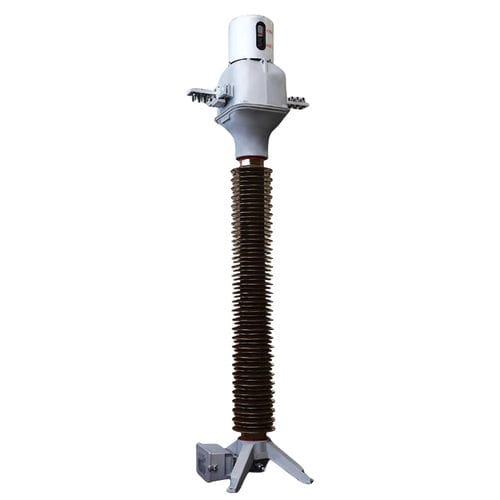
245 kV Current Transformer (Top-core Type) is an extra-high-voltage (EHV) outdoor instrument transformer designed for 245 kV systems, commonly used on 220 kV transmission networks. It accurately converts high primary current into a standardized secondary current (typically 1 A or 5 A) for metering, protection, monitoring, and control while providing complete electrical isolation between the high-voltage primary circuit and the low-voltage secondary equipment.
In the top-core type configuration, the magnetic core and secondary windings are housed within the upper head of the transformer. The primary conductor passes through the magnetic core, while the porcelain or composite insulator supports the active section and provides the required insulation to ground. This arrangement offers excellent insulation performance, high measurement accuracy, and outstanding reliability for long-term outdoor service.
Main Functions
·Accurately measures transmission line current.
·Supplies current signals to protective relays.
·Provides electrical isolation between primary and secondary circuits.
·Supports revenue metering, SCADA, and power quality monitoring.
·Detects overloads, short circuits, and earth faults for system protection.
Construction
A typical 245 kV top-core current transformer consists of:
Primary Conductor
-Carries the full transmission current.
-Passes through the magnetic core located in the upper head.
Magnetic Core
-Constructed from high-permeability silicon steel or nanocrystalline material.
-Optimized for low excitation current, high accuracy, and low core losses.
Secondary Windings
-Metering windings for precision measurement.
-Protection windings for relay operation under fault conditions.
-Multiple independent secondary cores for different applications.
Top-Core Assembly
-Contains the magnetic core and secondary windings.
-Hermetically sealed to prevent moisture ingress and contamination.
Insulation System
-Oil-paper insulation for air-insulated substations (AIS).
-SF6 gas insulation for gas-insulated substations (GIS).
-Composite insulation for highly polluted or coastal environments.
Porcelain or Composite Insulator
-Provides external insulation and mechanical support.
-Designed to withstand electrical, mechanical, and environmental stresses.
Oil Expansion System
-Conservator or stainless-steel bellows for thermal oil expansion compensation.
Terminal Box
-Houses secondary terminals, grounding facilities, and test links.
-Weatherproof enclosure for outdoor installation.
Typical Technical Specifications
·Rated Voltage: 245 kV
·Highest System Voltage: 245 kV
·Nominal System Voltage: 220 kV
·Frequency: 50/60 Hz
·Primary Current: 100–5000 A
·Secondary Current: 1 A or 5 A
·Accuracy Class: 0.1, 0.2, 0.2S, 0.5, 5P10, 5P20, 10P20, PX
·Rated Burden: 10–30 VA
·Short-Time Thermal Current: Up to 63 kA (1 s)
·Dynamic Current: Up to 160 kA peak
·Insulation Type: Oil-paper, SF6, or composite
·Installation: Outdoor AIS or GIS
Working Principle
1.The primary conductor carries the transmission current through the top-mounted magnetic core.
2.The primary current produces magnetic flux proportional to the line current.
3.The magnetic flux induces a proportional current in the secondary windings according to the rated transformation ratio.
4.The standardized secondary current (1 A or 5 A) is delivered to metering instruments, protective relays, and monitoring systems.
5.Complete electrical isolation between the primary and secondary circuits ensures the safe operation of secondary equipment.
Advantages
·High metering and protection accuracy.
·Excellent dielectric performance for extra-high-voltage applications.
·Compact and robust top-core construction.
·High thermal and dynamic short-circuit withstand capability.
·Multiple independent metering and protection cores.
·Reliable performance in severe outdoor environments.
·Low maintenance requirements with a service life typically exceeding 30 years.
·Suitable for both AIS and GIS substations.
Typical Applications
·220 kV transmission substations
·Extra-high-voltage utility networks
·Power generation switchyards
·Industrial EHV substations
·Renewable energy grid interconnection projects
·HVDC converter stations
·Gas-insulated substations (GIS)
Applicable Standards
·IEC 61869-1 – Instrument Transformers – General Requirements
·IEC 61869-2 – Current Transformers
·IEEE C57.13 – Instrument Transformers
·IEC 60044-1 – Legacy standard (superseded by IEC 61869-2)
Typical Ratings
·Voltage Class: 245 kV
·System Voltage: 220 kV
·Current Ratio: 300/1 A, 600/1 A, 1200/1 A, 2000/1 A, 3000/1 A, 4000/1 A
·Metering Accuracy: Class 0.2S
·Protection Accuracy: 5P20, 10P20, or PX
·Rated Burden: 15–30 VA
·Installation: Outdoor AIS / GIS
Key Features
·Top-core design enhances insulation coordination and simplifies maintenance.
·Available with porcelain or silicone rubber composite insulators.
·Supports multiple metering and protection cores within a single unit.
·High resistance to seismic loads, pollution, UV radiation, and harsh weather conditions.
·Designed for long-term reliability with hermetically sealed insulation systems.
·Fully compliant with the latest IEC and IEEE standards for extra-high-voltage instrument transformers.
A 245 kV Current Transformer (Top-core Type) is a high-performance instrument transformer engineered for 220 kV transmission systems. Its top-core construction delivers excellent insulation, precise current transformation, superior fault withstand capability, and long service life, making it an ideal solution for utility transmission networks, power plants, industrial EHV substations, and renewable energy grid connections.