#Product Trends
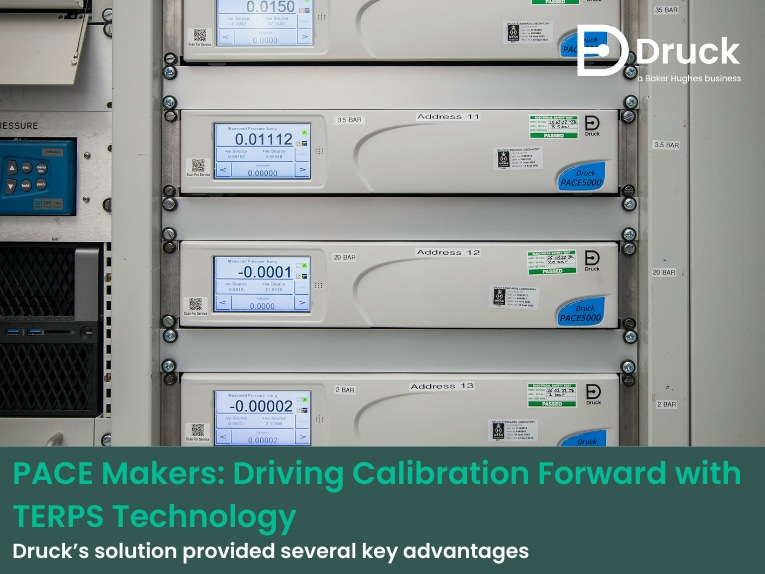
PACE Makers: Driving Calibration Forward with TERPS Technology
Druck’s solution provided several key advantages
Druck’s Customer
A leading calibration laboratory
Customer Challenge
The customer. which specialises in accredited calibrations of portable instruments and pressure controllers, was seeking a new pressure controller to support its growing workload. The lab had been evaluating a competitor’s solution that offered a number of features aligned with their operational needs, and they were close to finalising the purchase.
However, the lab had not yet considered Druck’s PACE system as an alternative. The challenge was to introduce a technically superior solution that could meet the lab’s performance expectations and long-term calibration goals, while also addressing their concerns around usability and integration.
The Solution
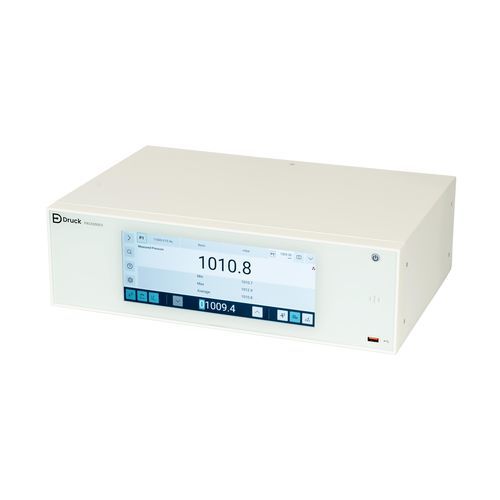
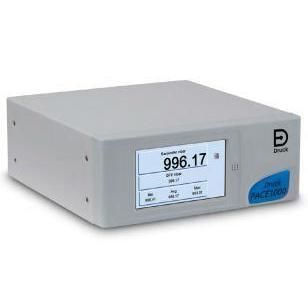
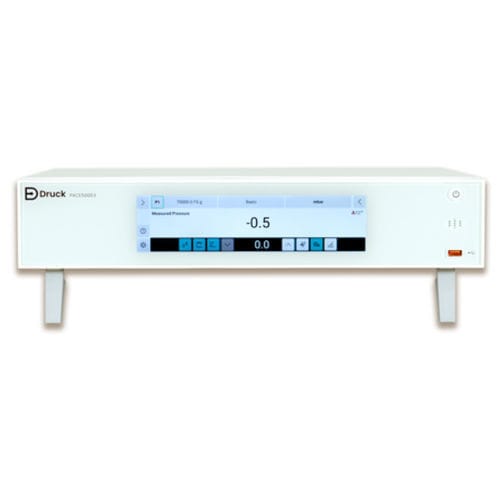
Druck proposed a solution built around the PACE 6000 modular pressure controller platform, paired with CM3-B control modules. This configuration offered a flexible and scalable approach to pressure calibration, with the added advantage of leveraging TERPS (Trench Etched Resonant Pressure Sensor) technology.
Two key elements helped secure the lab’s decision:
Technical Validation: Druck’s team provided detailed uncertainty graphs and performance calculations that demonstrated the superior long-term stability and accuracy of TERPS sensors compared to the competitor’s offering. These insights were backed by the lab’s own historical calibration data, which had shown better performance from Druck instruments over time.
Hands-On Support: A trial was arranged, allowing the lab to evaluate a CM3 module in their own environment. Technical experts were available to assist with demonstrations and answer in-depth questions, ensuring the lab had full confidence in the solution.
The Benefits
The lab ultimately selected the Druck PACE solution, recognizing several key advantages:
1. Superior Sensor Technology
TERPS sensors offer exceptional long-term stability, low hysteresis, and minimal drift—critical factors for maintaining tight uncertainty budgets in accredited calibration environments. This performance translates into fewer recalibrations, reduced downtime, and higher confidence in measurement traceability.
2. Modular Flexibility
The PACE system’s modular design allows labs to scale and adapt their setup over time. Unlike fixed or front-loading systems, PACE enables easy swapping and upgrading of control modules, supporting a wider range of pressure ranges and calibration scenarios.
3. Future-Proof Investment
While the competitor’s solution may have met short-term needs, Druck’s offering provides a pathway to improve uncertainty budgets over time—a key objective for UKAS-accredited labs. This future-proofing supports long-term ROI through enhanced measurement capability and reduced operational risk.
4. Technical & Commercial Partnership
The success of this engagement also highlights the importance of collaborative support. Druck’s technical and commercial teams worked closely with the lab to tailor the solution, provide transparent performance data, and ensure a smooth evaluation process.
5. Enhanced Efficiency and Productivity
By adopting the Druck PACE system with TERPS technology, the lab significantly improved its operational efficiency. The system’s stability and accuracy reduced the frequency of recalibrations and minimized downtime, allowing technicians to focus on high-value tasks. The modular architecture also streamlined workflows, enabling faster setup and changeover between calibration ranges. Together, these benefits contributed to a more productive and cost-effective calibration process, aligning with the lab’s long-term strategic goals.