#Industry News
Data Center Liquid Cooling, System Types and the Central versus Distributed Choice
PUE 1.18 Centralized Against PUE 1.2 Per-Rack Modules: The Two Architectures Split by Scale, Uptime and Expansion Style
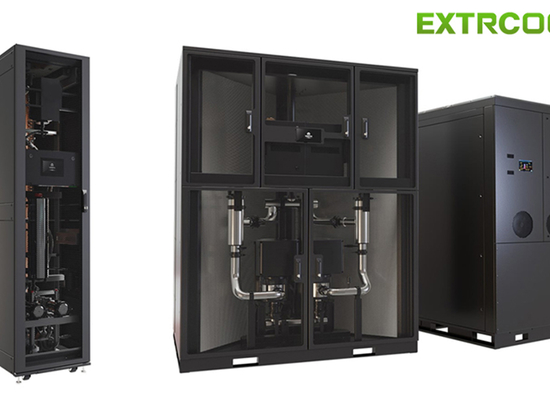
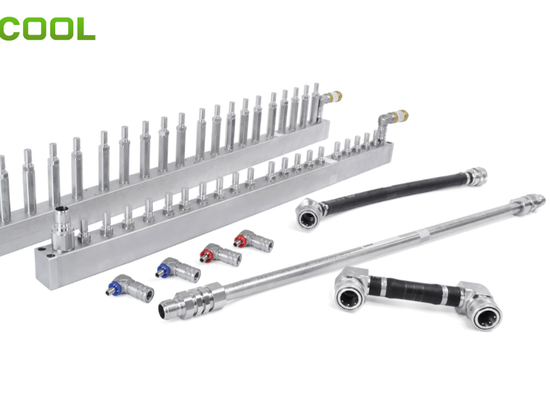
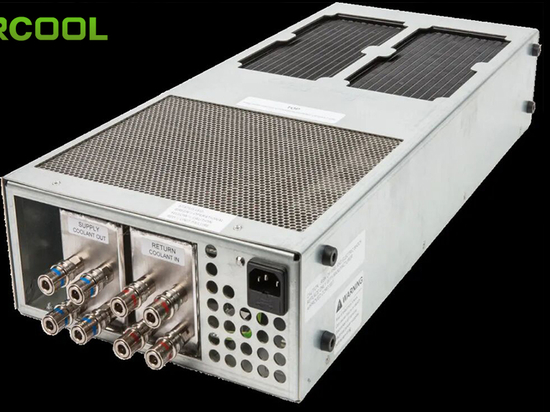
All-liquid cooling has become the new paradigm for data centers under density and energy pressure, with cold plate holding about 70 percent of the market: plates fix onto heat-generating components with coolant that never touches electronics, immersion sinks the components directly into fluid for extreme exchange efficiency and low noise at higher deployment cost, and spray hits hot parts through in-server modules but keeps a small share. Central architecture splits the cold plate system around the CDU into a primary high-temperature loop between unit and cooling tower and a secondary glycol loop between racks and unit, concentrating exchangers in the chiller room and reaching an annual average PUE of 1.18 in a supercomputing center project. Distributed architecture adds a plate exchanger into the high-temperature loop with a modular CDU cabinet beside the racks, so a single-point fault touches almost nothing, racks expand by module and the system still reaches a PUE no higher than 1.2. Central layouts suit large national computing hubs while distributed fits financial facilities and high-availability platforms. EXTRCOOL provides one-stop liquid cooling solutions.