#Product Trends
How to Choose a Vacuum Insulation Solution? From Thermal Conductivity to Real‑World Conditions: The Engineering Application Differences Between M‑VIP and MLI (Part 2)
Lab performance vs real‑world engineering limits: vacuum‑dependency analysis and scenario‑based selection guidance for M‑VIP and MLI vacuum insulation materials.
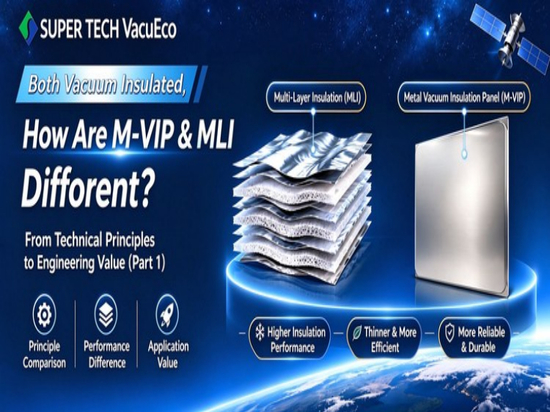
This Part‑2 article continues comparing M‑VIP and MLI, focusing on practical engineering gaps beyond laboratory thermal‑conductivity figures. M‑VIP delivers thermal conductivity ≤2 mW/(m·K) at 25°C and 0.6 mW/(m·K) under cryogenic‑170°C, outperforming conventional insulation materials by an order of magnitude. The core distinction lies in vacuum‑dependency: MLI demands sustained high‑vacuum external systems and suffers sharp performance degradation once vacuum fails; self‑sealed M‑VIP tolerates pressure fluctuation and works stably under ambient atmosphere. It provides clear selection advice covering aerospace, vacuum‑jacketed cryogenic tanks, battery packs, building retrofits and industrial kilns. M‑VIP brings vacuum‑grade insulation to non‑vacuum environments with A1 non‑combustibility, mechanical strength and slim profile. Select insulation solutions based on actual working conditions rather than isolated lab parameters for high‑efficiency extreme‑temperature projects.