#Product Trends
How Multibeam USV Technology Transforms Bridge Inspection
14 Broken Bridge Piles Detected Underwater: How Multibeam USV Technology Transforms Bridge Inspection
Introduction: The Hidden Risk Beneath Every Bridge
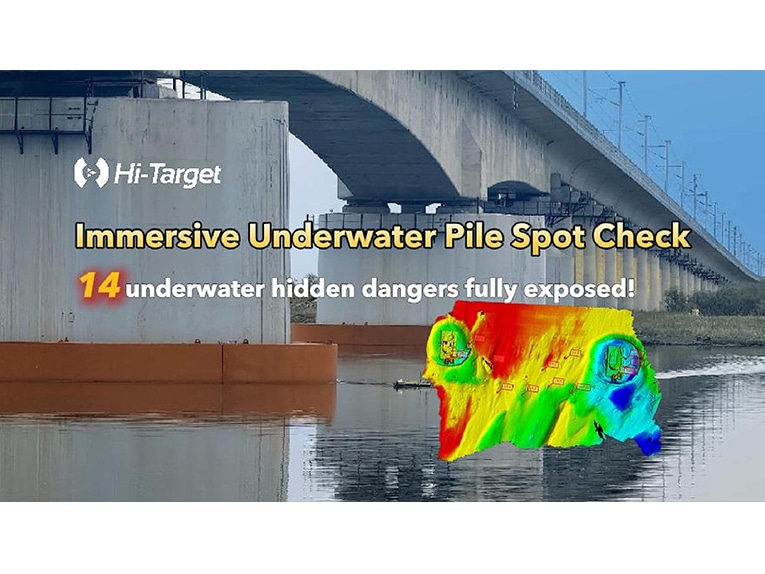
Underwater bridge structures are often the most critical—and the least visible—components of infrastructure. In a recent project, 14 damaged piles were detected beneath a bridge, not by divers, but through advanced underwater bridge inspection technology.
When visibility drops to zero, traditional methods fail. But modern multibeam survey systems mounted on USV (Unmanned Surface Vessel) platforms are changing how engineers approach bridge health monitoring.
Why Underwater Bridge Inspection Matters
The structural integrity of a bridge depends heavily on its submerged components, including piles, piers, and foundations. These elements are constantly exposed to:
1. Scour and sediment erosion
2. Corrosion and material degradation
3. Structural displacement or cracking
4. Debris impact and hydraulic forces
Without proper underwater structural inspection, these issues can remain undetected until they become critical failures.
This is why underwater bridge inspection is a key part of modern infrastructure maintenance strategies.
Limitations of Traditional Bridge Inspection Methods
Conventional bridge inspection sonar methods and diver-based inspections present several challenges:
1. Limited visibility in turbid water
2. High safety risks for divers
3. Incomplete or sparse data collection
4. Lack of 3D visualization
5. Difficulty in long-term monitoring
These limitations make it difficult to achieve accurate and repeatable bridge health monitoring.
Multibeam Survey System: A Breakthrough in Underwater Inspection
A multibeam survey system uses sonar arrays to scan underwater structures and generate high-resolution 3D point cloud data. This technology enables:
1. Full-coverage underwater bridge inspection
2. High-density spatial data acquisition
3. Accurate 3D modeling of bridge foundations
4. Quantitative damage assessment
5. Time-series comparison for monitoring changes
Unlike traditional methods, multibeam sonar for bridge inspection provides a complete digital representation of submerged structures.
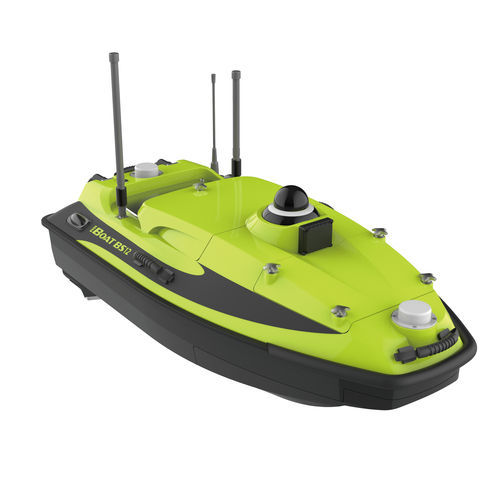
BS12 USV Multibeam Survey System for Bridge Inspection
This advanced USV unmanned surface vessel integrates multibeam sonar with autonomous navigation to deliver efficient and safe underwater bridge inspection.
Key Features
1. Autonomous Operation
The USV performs automated survey missions, reducing human risk and improving efficiency in bridge inspection projects.
2. High-Precision Positioning
Integrated GNSS and inertial navigation ensure accurate georeferencing of all sonar data.
3. Multibeam Sonar Integration
The system captures ultra-detailed point clouds for precise bridge inspection sonar analysis.
4. Adaptability to Complex Environments
Designed for rivers, coastal zones, and high-current bridge areas.
Case Study: Detecting 14 Damaged Bridge Piles
In a real-world underwater bridge inspection project, the BS12 system was deployed to scan bridge foundations.
Results included:
Detection of 14 suspected damaged piles
High-resolution 3D visualization of the entire foundation
Accurate location and measurement of structural defects
Clear identification of scour and deformation zones
This demonstrates how multibeam USV technology enables precise and reliable bridge health monitoring even in zero-visibility conditions.
Standard Workflow for Underwater Bridge Inspection
Using a USV multibeam survey system, a typical inspection process includes:
Survey planning for bridge areas
Autonomous data collection using USV
Multibeam sonar scanning
Point cloud generation and processing
3D modeling of bridge structures
Damage detection and analysis
Reporting for maintenance decisions
This workflow ensures consistent and repeatable underwater structural inspection.
Benefits of Using USV Multibeam Systems for Bridge Inspection
Compared to traditional methods, USV-based multibeam survey systems offer:
Safer operations (no divers required)
Faster data acquisition
Complete structural coverage
High-accuracy measurements
Digital and visual outputs
Long-term monitoring capability
These advantages make them essential tools for modern bridge health monitoring systems.
Conclusion: Data Reveals the Truth Beneath the Surface
When underwater visibility is zero, only data can provide clarity.
The combination of multibeam survey systems and USV unmanned surface vessels represents the future of underwater bridge inspection. By enabling accurate detection of structural issues—such as the 14 damaged piles in this case—these technologies transform how engineers assess and maintain critical infrastructure.
In today’s world, effective bridge inspection sonar solutions are not optional—they are essential for ensuring safety, reliability, and long-term performance.