#Product Trends
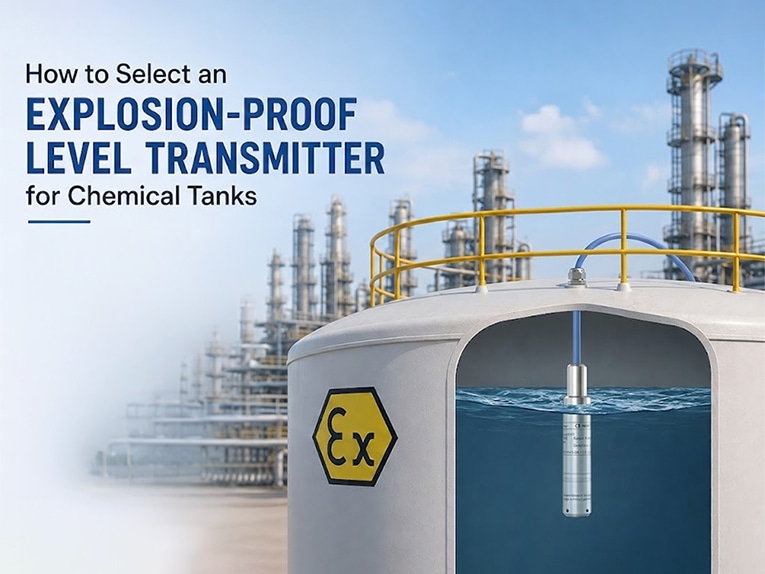
How to Select an Explosion-Proof Level Transmitter for Chemical Tanks
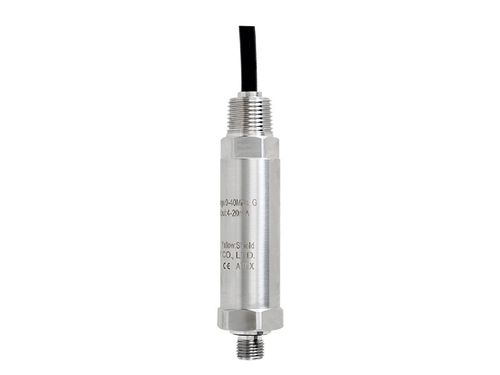
ATEX IECEx Pressure Transmitter
Chemical storage tanks are used to store a wide range of hazardous liquids, including acids, alkalis, solvents, fuels, and other flammable chemicals. Accurate level measurement is essential for inventory management, process control, overflow prevention, and personnel safety.
However, selecting a level transmitter for chemical tanks involves more than simply choosing a measurement range. Chemical compatibility, explosion protection, installation conditions, and environmental factors all play a critical role.
This guide explains the key considerations to help you select the right explosion-proof level transmitter for your application.
Why Explosion-Proof Level Measurement Matters
Many chemicals stored in industrial tanks release flammable gases or vapors that can form explosive atmospheres. A conventional level transmitter may become an ignition source if electrical sparks or excessive surface temperatures occur.
Explosion-proof level transmitters are specifically designed and certified for hazardous areas, helping ensure safe operation while complying with international standards such as ATEX and IECEx.
Typical industries include:
Chemical processing
Petrochemical plants
Oil & gas terminals
Pharmaceutical manufacturing
Paint and coating production
Fuel storage facilities
Solvent storage systems
Step 1: Identify the Hazardous Area Classification
Before selecting any instrument, determine the hazardous area where it will be installed.
Typical gas hazardous areas include:
Zone Description
Zone 0 Explosive atmosphere is present continuously or for long periods.
Zone 1 Explosive atmosphere is likely during normal operation.
Zone 2 Explosive atmosphere is unlikely and only occurs occasionally.
The transmitter’s explosion-proof certification must match or exceed the hazardous area classification.
Step 2: Understand the Chemical Properties
Different chemicals require different wetted materials. Before choosing a transmitter, consider:
Is the liquid corrosive?
Does it contain acids or alkalis?
Is it conductive?
Is it viscous or sticky?
Does it produce foam?
Does it crystallize?
Does it contain suspended solids?
Selecting chemically compatible materials significantly extends sensor life and improves measurement reliability.
Step 3: Choose the Right Measurement Technology
Different tank conditions require different sensing technologies.
Hydrostatic Level Transmitters
Best for:
Water and fuel
Underground tanks
Open tanks
Deep storage tanks
Advantages
Cost-effective
High accuracy
Simple installation
Stable long-term performance
Hydrostatic sensors are affected by liquid density changes and require direct contact with the medium.
Radar Level Transmitters
Best for:
Corrosive chemicals
Volatile liquids
Toxic media
High-temperature applications
Advantages
Non-contact measurement
High accuracy
Unaffected by density or conductivity
Minimal maintenance
Radar is often the preferred solution for demanding chemical storage applications.
Ultrasonic Level Transmitters
Best for:
Water treatment chemicals
Open tanks
Non-corrosive liquids
Advantages
Non-contact measurement
Easy installation
Economical
Performance may be affected by foam, vapor, condensation, or temperature variations.
Step 4: Verify Explosion-Proof Certification
Not all explosion-proof certifications are the same. For international projects, look for products certified to recognized standards such as ATEX, IECEx. Also verify:
Explosion protection type (Ex ia, Ex d, etc.)
Equipment Group
Equipment Category
Temperature Class (T1–T6)
Gas Group (IIA, IIB, IIC)
These markings ensure the transmitter is suitable for your hazardous environment.
Step 5: Check Process Conditions
Environmental and process conditions directly affect transmitter selection.
Key parameters include:
Measuring range
Tank height
Operating pressure
Process temperature
Ambient temperature
Installation location
Required accuracy
IP protection rating
For outdoor chemical tanks, selecting an IP67 or IP68-rated transmitter provides additional protection against water, dust, and harsh weather.
Step 6: Select the Appropriate Output Signal
Choose an output signal compatible with your existing control system.
Step 7: Consider Long-Term Maintenance
Beyond initial purchase cost, consider the total lifecycle cost. Features that reduce maintenance include:
Automatic temperature compensation
Surge and lightning protection
Corrosion-resistant construction
Digital signal processing
Stable long-term calibration
Low-power wireless design for extended battery life
These features improve reliability while reducing maintenance frequency and operating costs.
Common Selection Mistakes
Many users focus only on measuring range and overlook other critical factors. Common mistakes include:
Choosing incompatible wetted materials
Ignoring hazardous area classification
Selecting the wrong explosion-proof protection type
Forgetting temperature classification
Underestimating vapor or foam interference
Overlooking communication compatibility
Avoiding these issues can prevent premature sensor failure and costly downtime.
Conclusion
Selecting an explosion-proof level transmitter for chemical tanks requires balancing safety, compatibility, measurement performance, and long-term reliability.
A well-selected level transmitter not only improves measurement accuracy but also enhances plant safety, minimizes maintenance, and supports reliable operation in hazardous chemical environments.