#Industry News
End-to-end solutions for vertical indoor farming
How to (partially) feed 8 billion people
Urban Crop Solutions and PLNT are cutting supply chains with indoor farming.
On 15 November 2022 the time had come: The world population has officially passed the 8-billion mark and the trend is rising. Feeding humanity is a constantly growing challenge. Also, a challenge that innovative companies are increasingly taking on. Urban Crop Solutions with headquarters in Waregem, Belgium, is one of them.
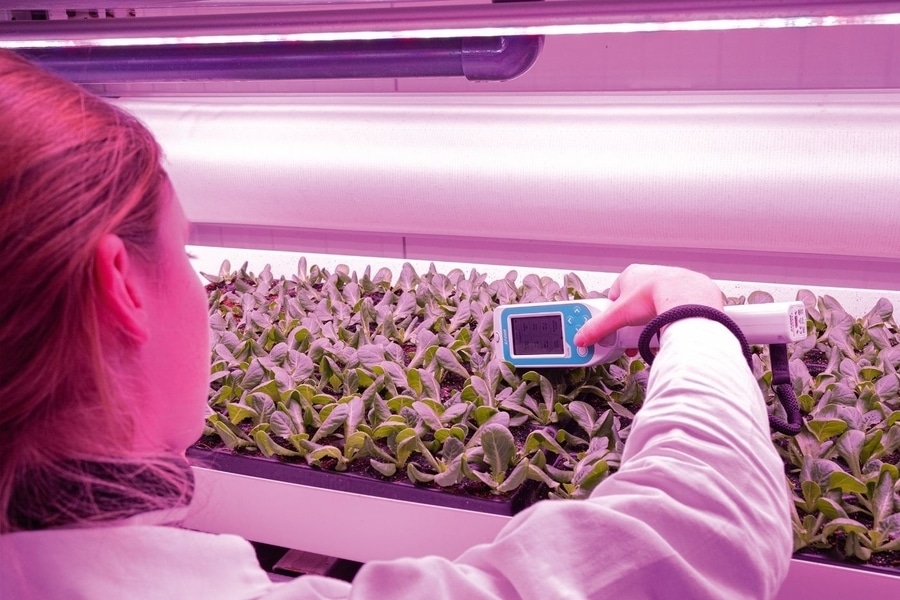
“We see ourselves as an end-to-end solution provider for vertical indoor farming”, says Maarten Vandecruys, founder and CTO of Urban Crop Solutions. What this means in detail is that Urban Crop Solutions offers not only the technical hardware and software for optimised growing of plants, it also identifies in its own research centre each of the parameters that affect the growth of plants: temperature, light conditions, watering and fertilization. For optimum plant growth, the individual requirements must be determined and met exactly.
Only five per cent of conventional water consumption
If this is the case, indoor farming can be carried out extremely efficiently. “Plants can be grown with water consumption equivalent to five percent of the water consumed when growing plants conventionally. Plants can also be produced close to the end consumer, thereby further reducing stress on the environment. Finally, indoor farming can also be done without using pesticides, which increases the nutritional value of the product considerably”, says Vandecruys.
Factors that determine plant quality: Quantity and temperature of the water
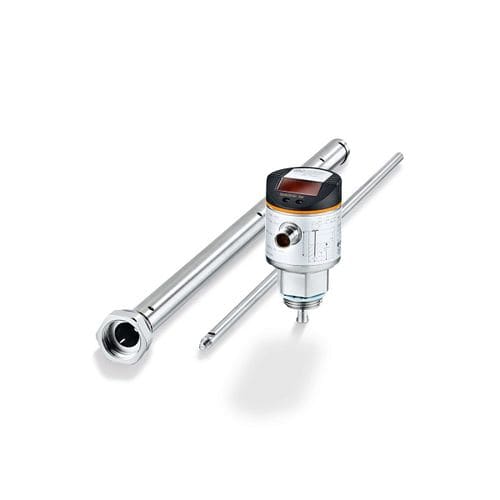
A flow meter measures the flow of water to ensure selective watering of the plants. “In this manner we can also determine whether the pump is functioning as required or whether maintenance is necessary”, explains Devos. Since the water temperature also affects growth and quality, it is continuously monitored by a temperature sensor. A level sensor also measures the water level in the tank.
“We recycle the water to minimize consumption. But of course, we still need to make sure there is enough water available at all times to prevent the plants from drying out.”
Conscious decision for ifm
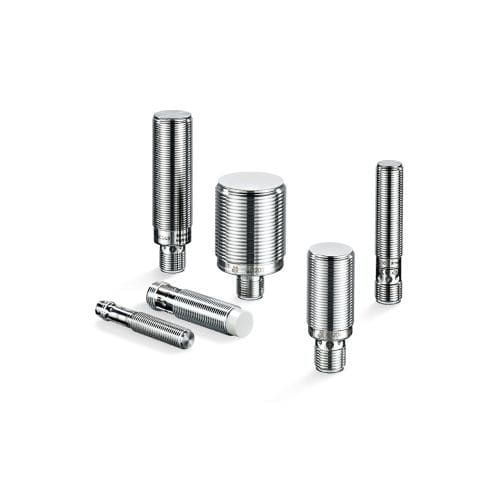
“We made a very conscious decision in choosing ifm as our partner for the sensor system. The sensors have proven themselves in intensive tests and as of today we have never experienced a failure. But if we ever should be in the position of needing to replace a sensor in a customer’s system, we know we will receive replacement parts very quickly. And that’s not just here in Belgium, but everywhere in the world. We were impressed by this outstanding service in addition to the product quality.”
Is vertical farming the future of the agricultural sector?
The product quality of plants grown in indoor farming is right – this is demonstrated by the popularity of PLNT’s offer. The company wants to expand and make the locally produced quality goods available in other urban centres as well. Hans Snijder gives his estimate of the situation: “Indoor farming in general is just getting started.
We see ourselves as pioneers – a role that suits us well. And even if the technology continues to improve, I don’t think indoor farming will replace traditional agriculture any time soon. It’s not efficient enough for that yet. And at least at our latitudes, the climate is still good enough to ensure successful crops and meet the basic demand using conventional methods.”
Maarten Vandecruys sees it the same way: “On the one hand, indoor farming will be a key element when it comes to shortening supply chains and producing healthy, nutritious food locally and thus independently of global trends. At the same time, we will also continue to need the traditional agricultural sector to cover the rising demand for food. Indoor farming can play a role here in growing seedlings, which can then be planted in the field. To ensure that plants provide a good yield even under increasingly stressful climatic conditions, we at Urban Crop Solutions are incorporating our know-how in research and development of more robust plant types for outdoor farming.”
Conclusion
With reliability and quality, ifm sensors contribute to efficient, economical indoor farming solutions.
They show their strengths in sustainable local supply, but in the future, they could also take on an important role in growing seedlings for traditional outdoor farming – and thus also in ensuring nutrition for the global population.