
#Product Trends
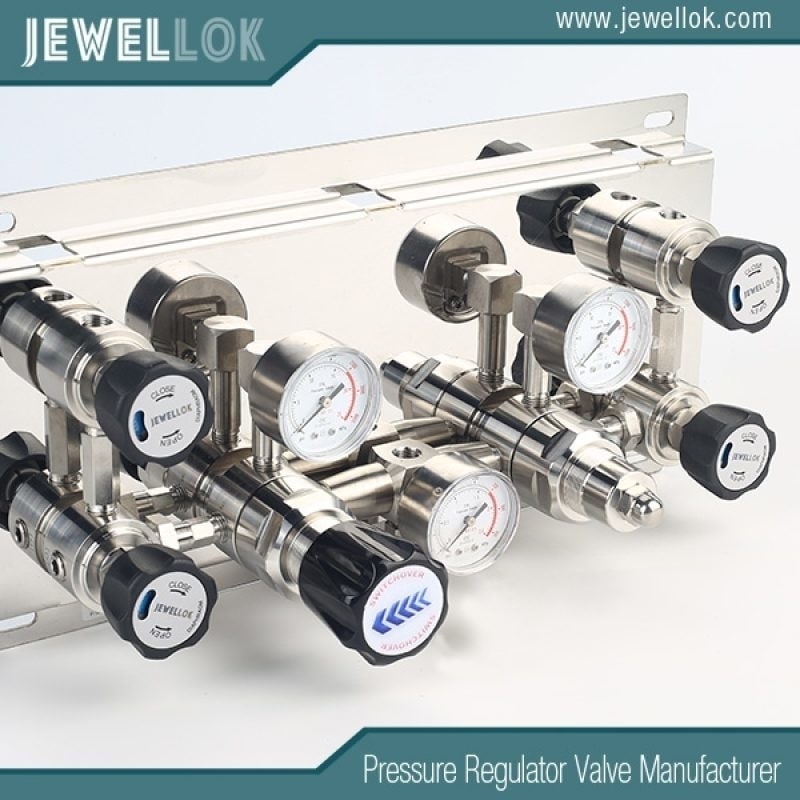
OEM Pressure Control Panels with High Purity Gas Regulators and Valves
OEM Pressure Control Panels with High Purity Gas Regulators and Valves
Introduction
As semiconductor manufacturing, biotechnology, pharmaceuticals, hydrogen energy, specialty chemicals, and advanced research laboratories continue to evolve, the demand for ultra-clean and highly reliable gas delivery systems has never been greater. Even microscopic contamination or unstable gas pressure can reduce product yield, damage sensitive equipment, or compromise production safety. Consequently, OEM Pressure Control Panels equipped with high purity gas regulators and valves have become an indispensable component in modern gas distribution systems.
These engineered assemblies provide accurate pressure regulation, safe gas isolation, leak-tight performance, and contamination-free gas delivery for high-purity and hazardous process gases. Designed specifically for Original Equipment Manufacturers (OEMs), these panels can be integrated into semiconductor tools, gas cabinets, chemical delivery systems, analytical instruments, laser equipment, and industrial automation systems.
This article explains the design principles, critical components, materials, manufacturing standards, applications, customization options, and future trends of OEM pressure control panels for high purity gas systems.
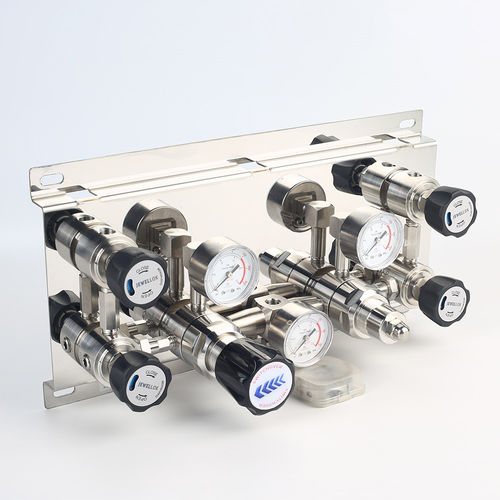
Single-Stage Ultra High-Purity Semiconductor Grade Regulator
Single-Stage Ultra High-Purity Semiconductor Grade Regulator
What Are OEM Pressure Control Panels?
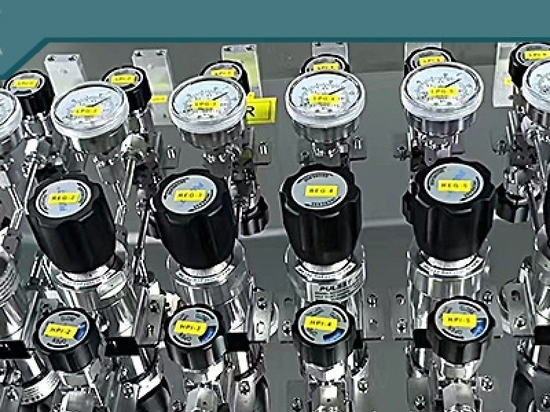
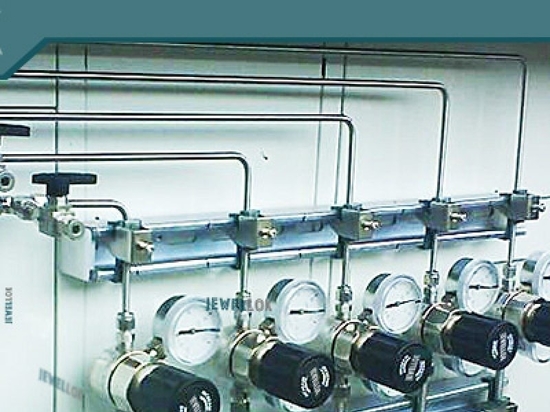
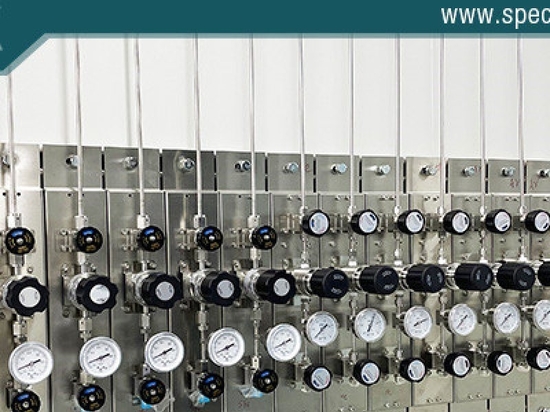
An OEM Pressure Control Panel is a factory-assembled gas control module designed to regulate, monitor, and distribute process gases from high-pressure cylinders or bulk gas supplies to downstream equipment.
Instead of purchasing individual regulators, valves, gauges, fittings, and tubing separately, equipment manufacturers receive a fully integrated and tested gas panel that is ready for installation.
Typical functions include:
Gas pressure reduction
Stable pressure regulation
Gas isolation
Gas switching
Purging
Venting
Flow control
Leak prevention
Process monitoring
Emergency shutoff
OEM panels significantly reduce installation time while improving reliability, consistency, and system safety.
Why High Purity Gas Control Matters
Many industrial gases are used in environments where contamination levels must be measured in parts per billion (ppb) or even parts per trillion (ppt).
Examples include:
Nitrogen (N₂)
Argon (Ar)
Helium (He)
Hydrogen (H₂)
Oxygen (O₂)
Silane (SiH₄)
Ammonia (NH₃)
Chlorine (Cl₂)
Hydrogen Chloride (HCl)
Boron Trichloride (BCl₃)
Tungsten Hexafluoride (WF₆)
These gases are widely used for:
Semiconductor wafer fabrication
Thin-film deposition
Etching
Ion implantation
Photolithography
Medical equipment
Pharmaceutical production
Research laboratories
Any contamination introduced by poor-quality regulators or valves can lead to:
Particle generation
Moisture contamination
Oxygen contamination
Corrosion
Unstable process pressure
Product defects
Reduced equipment lifetime
Therefore, every component inside a pressure control panel must be designed specifically for ultra-high purity applications.
Major Components of an OEM Pressure Control Panel
A complete pressure control panel normally includes several precision-engineered components working together.
High Purity Pressure Regulators
The regulator is the heart of the pressure control system.
Its purpose is to reduce high cylinder pressure to a stable downstream operating pressure.
Key features include:
High pressure stability
Low droop characteristics
Low internal volume
Metal diaphragm construction
Electropolished internal surfaces
Minimal dead space
Low leakage rate
Two-stage regulators are often preferred because they maintain a more consistent outlet pressure even as cylinder pressure decreases.
High Purity Diaphragm Valves
Diaphragm valves provide reliable shutoff while preventing contamination.
Compared with conventional ball valves, diaphragm valves offer:
Metal-to-metal sealing
Zero dead volume
Particle-free operation
Low leakage
Excellent cycle life
High corrosion resistance
They are widely used in semiconductor gas delivery systems.
Pressure Gauges and Transmitters
Pressure monitoring devices provide real-time system information.
Modern OEM panels often integrate:
Analog pressure gauges
Digital pressure transmitters
Electronic pressure sensors
Remote monitoring capability
These devices improve process control and predictive maintenance.
Stainless Steel Tubing
Most high purity gas panels utilize seamless stainless steel tubing.
Typical specifications include:
316L stainless steel
Low sulfur content
Electropolished interior
High corrosion resistance
Orbital welding compatibility
The tubing maintains gas purity while minimizing particle generation.
High Purity Tube Fittings
Leak-tight tube fittings ensure reliable gas connections.
Premium fittings feature:
Double ferrule design
Precision machining
High vibration resistance
Excellent pressure sealing
Repeatable installation
Filters
Inline filters remove microscopic particles before gas reaches the process.
Common filtration ratings include:
0.003 μm
0.01 μm
0.1 μm
These filters significantly reduce contamination risks.
Materials Used in High Purity Pressure Panels
Material selection directly affects corrosion resistance, cleanliness, and service life.
Common materials include:
316L Stainless Steel
The industry standard for most semiconductor gas systems.
Advantages:
Excellent corrosion resistance
Low sulfur content
High weldability
Low outgassing
Electropolishing compatibility
Hastelloy
Used for aggressive corrosive gases.
Suitable for:
Chlorine
Hydrogen chloride
Fluorine compounds
Acid gases
Nickel Alloys
Selected for extremely corrosive chemical environments where stainless steel may not provide adequate protection.
PCTFE and PTFE Components
Used as seat materials for specific valve designs because of their outstanding chemical compatibility.
Surface Treatment Requirements
Surface finish is one of the most important quality indicators.
Typical internal surface roughness:
Ra 25 μin
Ra 15 μin
Ra 10 μin
Electropolishing provides:
Lower particle generation
Improved corrosion resistance
Reduced moisture adsorption
Easier cleaning
Better gas purity
Panels are usually cleaned according to semiconductor-grade cleaning procedures before packaging.
Welding Technology
Most high purity panels use automatic orbital welding.
Advantages include:
Consistent weld penetration
Minimal contamination
Excellent repeatability
High mechanical strength
Leak-free connections
Every weld is inspected before shipment.
Leak Testing and Quality Assurance
Every OEM pressure control panel undergoes rigorous testing.
Typical tests include:
Helium Leak Testing
Leak rates may reach:
1 × 10⁻⁹ atm·cc/sec
1 × 10⁻¹⁰ atm·cc/sec
Such extremely low leak rates ensure system integrity.
Pressure Testing
The assembly is tested above its operating pressure to verify structural safety.
Functional Testing
Engineers verify:
Regulator accuracy
Valve operation
Pressure stability
Purge sequence
Flow direction
Sensor calibration
Cleanliness Verification
Panels are inspected for:
Particle contamination
Hydrocarbon residue
Moisture
Internal cleanliness
Single Stage vs Two Stage Pressure Panels
Single Stage Panels
Advantages:
Lower cost
Simple design
Compact size
Suitable for:
Laboratory systems
Non-critical industrial applications
Utility gases
Two Stage Panels
Advantages:
Superior pressure stability
Better flow consistency
Reduced supply pressure effect
Improved process repeatability
Recommended for:
Semiconductor manufacturing
Analytical instruments
Research laboratories
High precision manufacturing
Custom OEM Design Options
OEM customers often require customized solutions.
Common options include:
Gas Types
Panels may be designed for:
Inert gases
Oxidizers
Toxic gases
Flammable gases
Corrosive gases
Specialty gases
Pressure Range
Typical inlet pressure:
3,000 psi
4,500 psi
6,000 psi
Typical outlet pressure:
Vacuum
15 psi
50 psi
100 psi
250 psi
Mounting Configuration
Options include:
Wall-mounted
Rack-mounted
Gas cabinet installation
Equipment skid integration
Tool-mounted configuration
Automation
Modern panels may include:
Pneumatic valves
Solenoid valves
PLC control
Pressure switches
Flow sensors
Ethernet communication
Remote diagnostics
Automation improves both safety and manufacturing efficiency.
Typical Applications
OEM pressure control panels are used across numerous industries.
Semiconductor Manufacturing
Applications include:
CVD
PVD
ALD
Etching
Diffusion
Ion implantation
Wafer cleaning
These processes demand exceptional gas purity and precise pressure control to maintain wafer yield.
Pharmaceutical Manufacturing
High purity gases support:
Fermentation
Sterile filling
Process analytical technology (PAT)
Cleanroom production
Reliable gas control helps ensure compliance with stringent quality standards.
Biotechnology
Biotech laboratories require accurate gas regulation for incubators, analytical instruments, and bioprocessing equipment where stable operating conditions are essential.
Hydrogen Energy
Hydrogen fuel cell systems depend on leak-tight pressure control because hydrogen molecules are extremely small and prone to leakage if inferior components are used.
Analytical Laboratories
Mass spectrometers, gas chromatographs, and spectroscopy systems require exceptionally stable gas pressure for repeatable analytical results.
Advantages of OEM Integrated Pressure Panels
Compared with field assembly, OEM pressure panels provide many advantages.
These include:
Faster installation
Reduced labor cost
Factory-tested reliability
Consistent manufacturing quality
Lower leak risk
Easier maintenance
Better documentation
Higher safety
Improved appearance
Simplified procurement
For equipment manufacturers, integrated panels also shorten production cycles and reduce assembly complexity.
Industry Standards
Quality manufacturers design panels according to recognized international standards.
Common standards include:
SEMI standards
ISO 9001
CE compliance
PED
ASME B31.3
CGA guidelines
ASTM material specifications
Compliance ensures safety, performance, and global market acceptance.
Future Trends
As semiconductor nodes continue to shrink and industrial automation advances, gas control systems are becoming increasingly sophisticated.
Future developments include:
Smart pressure monitoring
Digital pressure regulators
IIoT connectivity
Predictive maintenance
AI-assisted diagnostics
Integrated gas analytics
Remote equipment management
Modular panel architecture
Higher purity manufacturing processes
Enhanced cybersecurity for connected systems
These innovations will enable higher uptime, improved process consistency, and more efficient facility management.
Best high purity stainless steel gas fittings in the oil & gas industry
Best high purity stainless steel gas fittings in the oil & gas industry
Conclusion
OEM Pressure Control Panels with High Purity Gas Regulators and Valves play a critical role in modern high-purity gas delivery systems. By integrating precision regulators, diaphragm valves, pressure sensors, filters, and electropolished stainless steel tubing into a single factory-tested assembly, these panels provide stable pressure control, contamination-free gas distribution, and exceptional operational safety.
Whether deployed in semiconductor fabrication, pharmaceutical manufacturing, hydrogen energy, biotechnology, or advanced analytical laboratories, a well-engineered OEM pressure control panel enhances process reliability, reduces installation time, minimizes maintenance, and supports consistent production quality. As industrial processes continue to demand higher purity, tighter pressure tolerances, and smarter automation, customized OEM pressure control panels will remain an essential foundation for next-generation gas delivery systems worldwide.
For more about OEM pressure control panels with high purity gas regulators and valves, you can pay a visit to Jewellok at https://www.jewellok.com/product-category/chemical-delivery-system/ for more info.