
#Product Trends
316L Stainless Steel UHP Ball Valves for High-Purity Gas Distribution Networks
316L Stainless Steel UHP Ball Valves for High-Purity Gas Distribution Networks
316L Stainless Steel UHP Ball Valves for High-Purity Gas Distribution Networks
Introduction
High-purity gas distribution networks are the foundation of modern semiconductor manufacturing, pharmaceutical production, biotechnology laboratories, analytical instrumentation, solar cell manufacturing, and other precision industries. These systems transport ultra-high purity (UHP) gases from storage cylinders or bulk gas sources to production equipment while maintaining exceptional gas purity, leak integrity, and process stability.
One of the most critical components within these gas delivery systems is the ultra-high purity ball valve. Designed to provide reliable shut-off, minimal particle generation, and exceptional corrosion resistance, 316L Stainless Steel UHP Ball Valves have become the preferred solution for demanding gas distribution applications.
Manufactured with electropolished 316L stainless steel, precision machining, and stringent quality control, UHP ball valves ensure contamination-free gas flow while meeting the highest industrial standards. This article explores the features, materials, manufacturing process, advantages, applications, and selection considerations of 316L stainless steel UHP ball valves for high-purity gas distribution networks.
What Is a UHP Ball Valve?
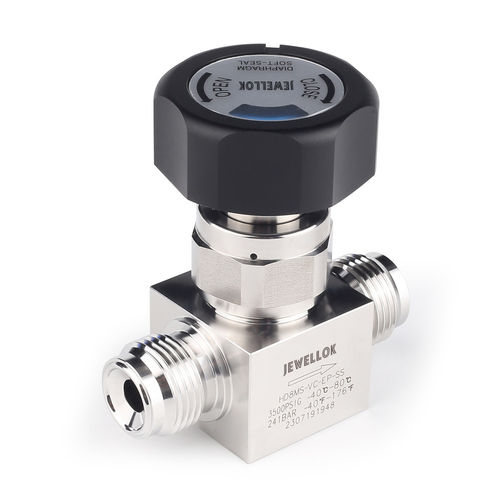
A UHP (Ultra High Purity) ball valve is a quarter-turn isolation valve specifically engineered for clean gas systems where contamination must be minimized.
Unlike conventional industrial ball valves, UHP ball valves are manufactured under strict cleanliness standards and feature:
High-purity 316L stainless steel body
Precision-machined ball and seats
Low internal dead volume
Electropolished flow passages
Helium leak-tested construction
Particle-free assembly
Cleanroom packaging
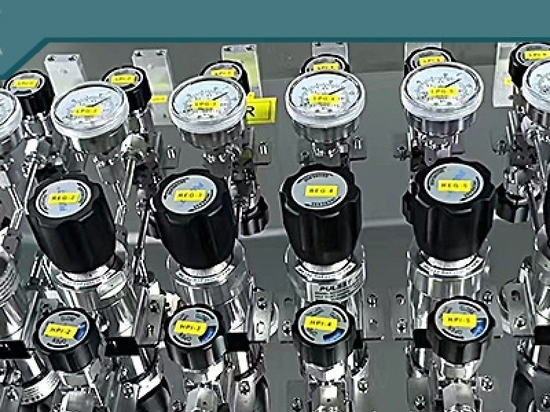
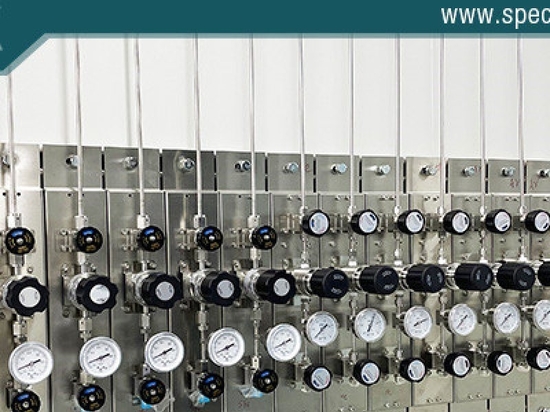
These valves are widely used in gas panels, valve manifold boxes (VMBs), gas cabinets, bulk gas distribution systems, and semiconductor process equipment.
Their primary purpose is to provide reliable on/off control while maintaining gas purity from source to process tool.
Why 316L Stainless Steel Is the Preferred Material
Material selection plays a decisive role in the performance of high-purity gas systems.
316L stainless steel offers an ideal combination of mechanical strength, corrosion resistance, weldability, and low carbon content.
Key advantages include:
Excellent Corrosion Resistance
316L stainless steel contains molybdenum, providing outstanding resistance against:
Moisture
Acidic gases
Chlorides
Corrosive chemicals
Cleaning agents
This ensures long-term reliability even in harsh chemical environments.
Low Carbon Content
The “L” designation indicates low carbon content.
Benefits include:
Reduced carbide precipitation
Better weld integrity
Improved corrosion resistance
Enhanced service life
This is especially important for orbital welding used in semiconductor gas lines.
High Mechanical Strength
316L stainless steel maintains excellent strength under:
High pressure
High temperature
Vacuum conditions
Frequent cycling
This makes it suitable for demanding industrial applications.
Outstanding Surface Finish
Electropolished 316L provides:
Extremely smooth internal surfaces
Reduced particle adhesion
Lower contamination risk
Easier cleaning
Improved corrosion resistance
Typical internal surface roughness:
Ra ≤ 10 μin (0.25 μm)
Premium UHP valves may achieve:
Ra ≤ 5 μin (0.13 μm)
Importance of UHP Ball Valves in Gas Distribution Networks
High-purity gas distribution systems transport expensive and highly sensitive process gases.
Even microscopic contamination can cause:
Wafer defects
Process instability
Equipment downtime
Product rejection
Increased production costs
UHP ball valves help eliminate contamination sources by providing:
Leak-Free Isolation
Reliable shut-off prevents:
Atmospheric contamination
Gas loss
Cross-contamination
Typical leak specifications include:
External leakage:
Less than 1 × 10⁻⁹ atm·cc/sec He
Internal leakage:
Bubble-tight shutoff
Minimal Dead Space
Dead volume traps gas residues and contaminants.
Modern UHP ball valves are designed with:
Compact flow paths
Optimized cavity geometry
Low hold-up volume
This improves purge efficiency and reduces gas consumption.
Low Particle Generation
Particle contamination is one of the biggest concerns in semiconductor fabrication.
Precision manufacturing helps minimize:
Metal wear
Seat abrasion
Internal friction
Particle release
High Cycle Life
Production facilities operate continuously.
High-quality UHP ball valves are designed for:
Tens of thousands of operating cycles
Stable sealing performance
Long maintenance intervals
Key Design Features
Modern UHP ball valves incorporate numerous advanced engineering features.
Full-Port Flow Design
A full-port ball provides:
Maximum flow capacity
Minimal pressure drop
Efficient gas delivery
This is especially important for high-flow gas systems.
Precision Ball Machining
The ball is manufactured with:
CNC precision machining
Mirror polishing
Tight dimensional tolerances
Benefits include:
Smooth operation
Improved sealing
Longer service life
PCTFE or PTFE Seats
Seat materials significantly affect valve performance.
Common options include:
PTFE
Advantages:
Chemical resistance
Low friction
Excellent sealing
PCTFE
Advantages:
Better dimensional stability
Lower gas permeability
Superior performance at low temperatures
Blowout-Proof Stem
A safety stem design prevents accidental stem ejection under pressure.
Benefits include:
Increased operator safety
Reliable sealing
Long-term durability
Double Stem Sealing
Multiple sealing barriers improve leak integrity.
Typical stem sealing includes:
PTFE packing
O-rings
Spring-loaded sealing systems
Quarter-Turn Operation
Only a 90-degree rotation is required.
Advantages include:
Fast operation
Easy automation
Simple maintenance
Reliable shut-off
Manufacturing Process of UHP Ball Valves
Producing UHP valves requires significantly higher manufacturing standards than conventional industrial valves.
Material Verification
Every raw material undergoes:
PMI (Positive Material Identification)
Material certification
Heat number traceability
Precision CNC Machining
High-precision CNC equipment produces:
Valve body
Ball
Stem
End connections
Typical tolerances are measured in microns.
Electropolishing
Electropolishing removes microscopic surface irregularities.
Benefits include:
Lower roughness
Improved corrosion resistance
Reduced particle generation
Better cleanliness
Ultrasonic Cleaning
Multiple cleaning stages remove:
Oil
Metal chips
Dust
Polishing residue
Only ultra-clean components proceed to assembly.
Cleanroom Assembly
Assembly takes place in controlled cleanroom environments to prevent contamination.
Operators wear:
Gloves
Masks
Cleanroom garments
Helium Leak Testing
Every valve is tested using helium mass spectrometry.
Leak integrity typically reaches:
1 × 10⁻⁹ atm·cc/sec He or better.
Final Cleaning and Packaging
Each valve is:
Nitrogen dried
Double bagged
Vacuum packaged
Clearly labeled
This ensures cleanliness during transportation and installation.
Applications of 316L UHP Ball Valves
Because of their superior cleanliness and reliability, UHP ball valves are widely used across multiple industries.
Semiconductor Manufacturing
Applications include:
Gas cabinets
Valve manifold boxes
Bulk specialty gas systems
Process gas panels
Wafer fabrication equipment
Common gases include:
Nitrogen
Argon
Hydrogen
Helium
Silane
Ammonia
Chlorine
Hydrogen chloride
Pharmaceutical Manufacturing
Used for:
Clean gas delivery
Sterile production
Bioprocess systems
API manufacturing
Biotechnology
Ideal for:
Laboratory gas systems
Fermentation facilities
Cell culture equipment
Analytical Laboratories
Suitable for:
Gas chromatography
Mass spectrometry
ICP systems
Calibration gas distribution
Solar Cell Manufacturing
Used in:
PECVD systems
Thin-film deposition
Gas supply panels
LED and Display Manufacturing
Supports high-purity gas delivery for:
OLED production
LCD manufacturing
Micro-LED fabrication
Compatibility with High-Purity Gases
316L stainless steel UHP ball valves are compatible with a wide range of gases.
Typical examples include:
Nitrogen (N₂)
Argon (Ar)
Helium (He)
Hydrogen (H₂)
Oxygen (O₂)
Carbon dioxide (CO₂)
Ammonia (NH₃)
Silane (SiH₄)
Nitrous oxide (N₂O)
Hydrogen chloride (HCl)
For highly corrosive or toxic gases, specialized seat materials and sealing configurations should be selected to maximize safety and service life.
Advantages Over Conventional Industrial Ball Valves
Compared with standard industrial valves, UHP ball valves offer significant performance improvements.
Feature Conventional Ball Valve UHP Ball Valve
Material Standard stainless steel High-purity 316L SS
Surface Finish Machined Electropolished
Cleanliness General industrial Semiconductor-grade
Leak Rate Standard industrial Ultra-low helium leak
Particle Control Moderate Extremely low
Packaging Standard Double cleanroom bagged
Traceability Limited Complete material traceability
Application General industry Ultra-high purity gas systems
How to Select the Right UHP Ball Valve
Choosing the correct valve requires careful evaluation of application requirements.
Important factors include:
Pressure Rating
Ensure the valve safely handles maximum operating pressure.
Temperature Range
Verify compatibility with process temperatures.
End Connection
Available options include:
Tube butt weld
Face seal fittings
Compression fittings
VCR-compatible connections
Flow Capacity
Select appropriate orifice size based on system flow requirements.
Surface Finish
For semiconductor applications:
Ra ≤ 10 μin
For critical processes:
Ra ≤ 5 μin
Leak Integrity
Select valves with certified helium leak testing.
Certification
Look for:
Material certificates
Pressure testing reports
Leak test reports
Cleanliness certification
Traceability documentation
Maintenance Best Practices
Proper maintenance extends valve life and preserves gas purity.
Recommended practices include:
Inspect valves regularly for external leakage.
Operate valves periodically to prevent sticking.
Avoid contamination during installation.
Use only clean tools and gloves.
Replace worn seats and seals during scheduled maintenance.
Perform leak testing after maintenance.
Follow manufacturer torque specifications.
Keep valves sealed before installation.
Proper handling significantly reduces contamination risks and extends equipment reliability.
Future Trends in UHP Ball Valve Technology
As semiconductor process nodes continue to shrink and purity requirements become increasingly stringent, UHP valve technology continues to evolve.
Emerging developments include:
Higher purity electropolished surfaces
Advanced low-particle seat materials
Smart valves with digital monitoring
Automated valve actuation
Improved corrosion-resistant alloys
Enhanced helium leak performance
AI-assisted predictive maintenance
Sustainable manufacturing processes
These innovations will help manufacturers achieve greater production efficiency, lower operating costs, and improved process consistency.
Ultra High Purity (UHP) Gas And Chemical Delivery Systems Manufacturer And Supplier
Ultra High Purity (UHP) Gas And Chemical Delivery Systems Manufacturer And Supplier
Conclusion
316L Stainless Steel UHP Ball Valves are indispensable components in modern high-purity gas distribution networks. Their superior corrosion resistance, ultra-clean internal surfaces, exceptional leak tightness, and long service life make them the ideal choice for semiconductor fabrication, pharmaceutical manufacturing, biotechnology, analytical laboratories, and other industries where gas purity is critical.
By combining premium 316L stainless steel, precision CNC machining, electropolished flow paths, cleanroom assembly, and rigorous helium leak testing, these valves provide reliable performance even in the most demanding ultra-high purity environments. As industrial processes continue to demand higher cleanliness standards and greater operational reliability, investing in high-quality UHP ball valves is essential for maintaining product quality, maximizing system uptime, and ensuring long-term operational success.
For more about 316L stainless steel UHP ball valves for high-purity gas distribution networks, you can pay a visit to Jewellok at https://www.jewellok.com/product-category/chemical-delivery-system/ for more info.