
#Industry News
High-Performance CVD Gas Precursor Delivery Systems for Ultra-Pure Applications
High-Performance CVD Gas Precursor Delivery Systems for Ultra-Pure Applications
Introduction
Chemical Vapor Deposition (CVD) is one of the most critical manufacturing technologies in modern high-tech industries, particularly in semiconductor fabrication, photovoltaic production, LED manufacturing, and advanced materials engineering. As device geometries continue to shrink and process requirements become increasingly stringent, the demand for ultra-high purity (UHP) gas delivery systems has grown significantly. Even trace levels of contamination in process gases can lead to defects, reduced yield, poor film quality, and equipment failure.
CVD gas precursor delivery systems play a central role in ensuring the stable, safe, and contamination-free transportation of specialty gases and chemical vapors from storage containers to process chambers. These systems are specifically engineered to maintain gas purity, precise flow control, and process consistency under demanding operating conditions.
This article explores the design principles, key components, material selection, contamination control strategies, and technological innovations behind high-performanceCVD gas precursor delivery systems for ultra-pure applications.
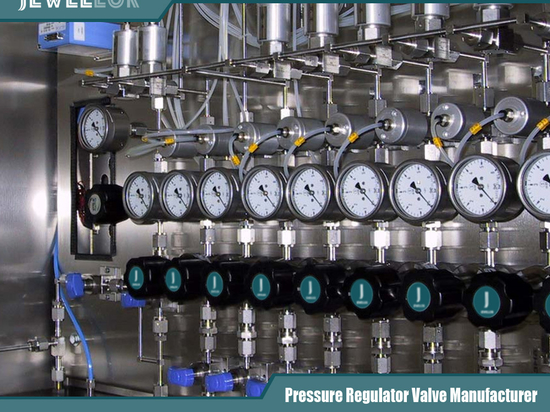
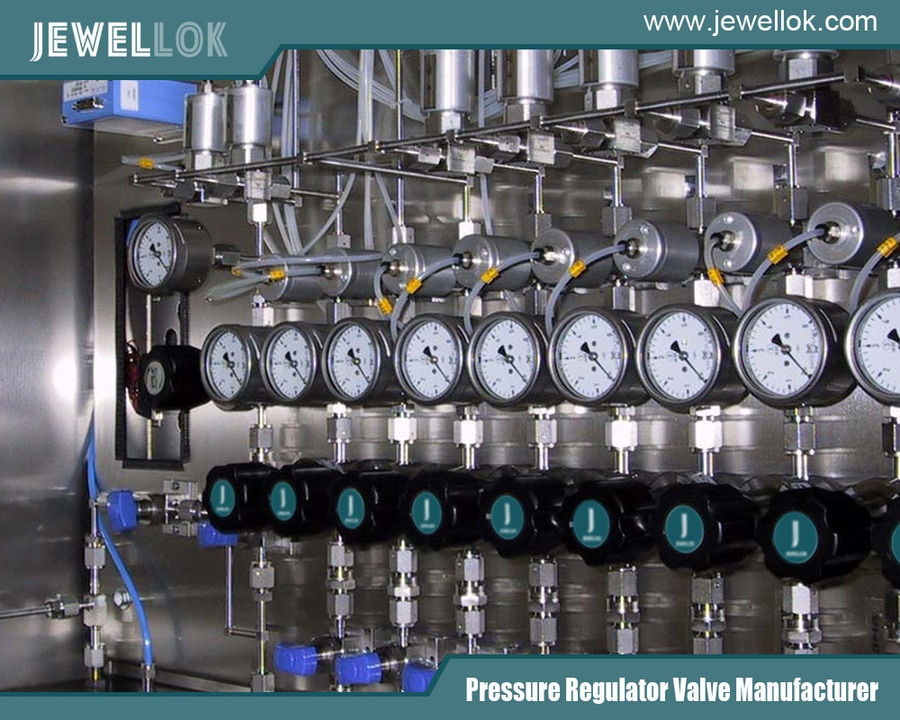
Argon Gas Flow Gauge Regulator And Valves
Argon Gas Flow Gauge Regulator And Valves
Understanding CVD Gas Precursor Delivery Systems
A CVD gas precursor delivery system is an integrated fluid handling solution designed to safely store, vaporize, regulate, purify, and transport reactive or high-purity gases used during CVD processes. These gases may include silane (SiH4), ammonia (NH3), tungsten hexafluoride (WF6), dichlorosilane (DCS), tetraethyl orthosilicate (TEOS), and various metal-organic precursors.
The primary objective of the system is to deliver the precursor gas to the deposition chamber with:
Stable pressure and flow rate
Ultra-high purity levels
Minimal particle generation
Accurate temperature control
Maximum process safety
High repeatability and reliability
In advanced semiconductor manufacturing, where process nodes are below 5 nm, even sub-ppb (parts per billion) contamination levels can significantly impact wafer yield. Therefore, every component within the gas delivery system must be optimized for ultra-clean performance.
Importance of Ultra-High Purity in CVD Processes
Ultra-high purity gas handling is essential because contaminants such as moisture, oxygen, hydrocarbons, particles, and metal ions can negatively affect thin-film deposition quality. Common issues caused by contamination include:
Film defects and pinholes
Poor adhesion
Non-uniform film thickness
Increased electrical resistance
Reduced device reliability
Particle contamination on wafers
For example, oxygen contamination during tungsten deposition can alter film resistivity, while moisture contamination in silicon nitride deposition may cause undesirable chemical reactions.
As a result, CVD gas delivery systems are designed to maintain extremely low contamination levels throughout the entire gas path. This requires careful consideration of materials, surface finishing, sealing technology, welding quality, and system cleanliness.
Key Components of a High-Performance CVD Gas Delivery System
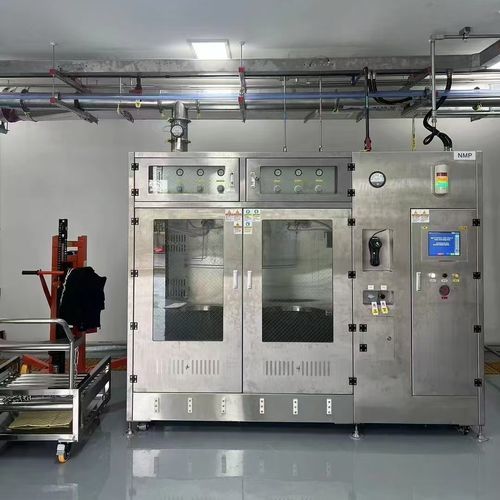
1. Gas Cabinets
Gas cabinets serve as the primary enclosure for hazardous or specialty gas cylinders. In semiconductor facilities, gas cabinets are designed to provide:
Leak containment
Automatic shutdown functions
Ventilation and exhaust control
Gas detection integration
Fire suppression compatibility
Safe cylinder replacement
High-performance gas cabinets are typically constructed from electropolished stainless steel to minimize particle generation and corrosion.
For toxic or pyrophoric gases, fully automated gas cabinets with programmable logic controllers (PLC) and remote monitoring capabilities are commonly used.
2. Pressure Regulators
Pressure regulators reduce high cylinder pressure to stable operating pressure levels required by the process tool. In ultra-pure applications, regulators must provide:
Minimal internal dead volume
Excellent pressure stability
Low particle generation
Corrosion resistance
High leak integrity
Diaphragm-sealed regulators made from 316L VAR stainless steel are widely used due to their superior purity performance and corrosion resistance.
Surface roughness is also critical. Electropolished internal surfaces with Ra values below 10 µin help reduce particle entrapment and improve cleanability.
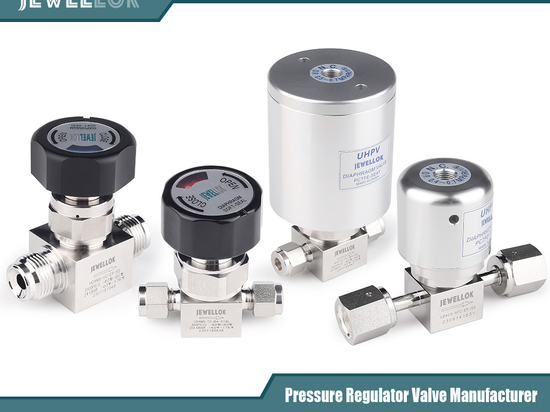
3. Ultra-High Purity Valves
Valves are among the most important components in a CVD gas delivery system. UHP diaphragm valves are specifically designed to eliminate dead space and minimize contamination risks.
Key features include:
Metal-to-metal sealing
Low internal volume
Orbital weld compatibility
High cycle life
Excellent leak tightness
Corrosion-resistant diaphragm materials
Manual, pneumatic, and fully automated valves may be integrated depending on process requirements.
In advanced fabs, automated valve manifolds are often controlled through centralized gas management systems to improve operational efficiency and safety.
4. Mass Flow Controllers (MFCs)
Mass flow controllers precisely regulate gas flow rates entering the deposition chamber. Accurate gas flow is essential for achieving consistent film thickness and deposition uniformity.
Modern MFC technologies offer:
High flow accuracy
Fast response times
Digital communication protocols
Multi-gas calibration
Self-diagnostic capabilities
High-purity MFCs are designed with corrosion-resistant wetted surfaces and low outgassing materials to maintain gas integrity.
5. Vaporization Systems
Many CVD precursors are stored in liquid form and require vaporization before delivery to the process chamber. Vaporization systems ensure stable and controlled gas generation.
Critical considerations include:
Uniform heating
Temperature stability
Prevention of precursor condensation
Accurate vapor pressure control
Heated lines and heated regulators are often used to prevent condensation during gas transport.
Advanced vapor delivery systems may include direct liquid injection (DLI) technology for improved precursor utilization and process repeatability.
6. Gas Purifiers and Filters
Gas purifiers remove trace contaminants such as oxygen, moisture, hydrocarbons, and particles from the gas stream.
Common purification technologies include:
Getter purifiers
Moisture traps
Particle filters
Chemical adsorption systems
Point-of-use filters with sub-micron filtration capability help protect sensitive process equipment from particle contamination.
In ultra-high purity environments, filtration efficiency often reaches 0.003 microns or smaller.
Material Selection for Ultra-Pure Gas Systems
Material compatibility is a critical factor in CVD gas delivery system design. Poor material selection can lead to corrosion, outgassing, particle shedding, and contamination.
316L Stainless Steel
316L stainless steel is the industry standard material for UHP gas systems due to its:
Excellent corrosion resistance
High mechanical strength
Low sulfur content
Good weldability
Compatibility with electropolishing
Vacuum arc remelted (VAR) 316L stainless steel is preferred for semiconductor applications because of its enhanced purity and microstructural consistency.
Surface Electropolishing
Electropolishing improves surface smoothness and corrosion resistance while reducing particle adhesion.
Benefits include:
Reduced surface roughness
Improved cleanability
Lower contamination risk
Enhanced corrosion resistance
Most semiconductor-grade tubing features internal surface roughness below 10 microinches Ra.
Metal Sealing Technology
Elastomer seals can outgas and absorb moisture, making them less suitable for critical ultra-pure applications.
Metal gasket face seal fittings are widely adopted because they provide:
Helium leak integrity
High temperature resistance
Low permeation rates
Minimal virtual leaks
VCR-compatible face seal fittings are commonly used throughout semiconductor gas delivery infrastructure.
Contamination Control Strategies
Maintaining ultra-high purity requires strict contamination control throughout manufacturing, installation, and operation.
Cleanroom Assembly
Gas delivery components are typically assembled in ISO Class 4 or Class 5 cleanroom environments to minimize particle contamination.
Technicians follow strict cleaning procedures including:
Ultrasonic cleaning
DI water rinsing
Nitrogen drying
Double-bag packaging
Orbital Welding
Orbital welding provides highly consistent weld quality with minimal contamination risk.
Advantages include:
Smooth internal weld surfaces
Reduced particle generation
High repeatability
Improved leak integrity
Borescope inspection is often performed to verify weld quality.
Helium Leak Testing
Helium mass spectrometer leak testing ensures system leak integrity at extremely low leak rates.
Typical semiconductor standards require leak rates below:
1 × 10^-9 atm·cc/sec helium
Leak testing is essential for preventing atmospheric contamination and hazardous gas leakage.
Automation and Smart Monitoring
Modern CVD gas delivery systems increasingly incorporate automation and Industry 4.0 technologies.
Key smart features include:
Real-time gas monitoring
Predictive maintenance
Automated valve sequencing
Remote diagnostics
PLC integration
SCADA connectivity
Sensors continuously monitor:
Pressure
Flow rate
Temperature
Moisture levels
Gas concentration
Automated alarm systems can immediately isolate gas supply lines if abnormal conditions are detected.
These intelligent monitoring capabilities significantly improve process reliability and reduce downtime.
Safety Considerations in CVD Gas Handling
Many CVD precursor gases are hazardous, toxic, pyrophoric, or corrosive. Therefore, safety is a major priority in system design.
Important safety features include:
Gas leak detectors
Automatic shutoff valves
Emergency exhaust systems
Excess flow sensors
Pressure relief devices
Ventilation monitoring
Compliance with international standards such as SEMI, CE, and ISO requirements is essential for semiconductor facilities.
In addition, proper operator training and preventive maintenance programs are critical for safe long-term operation.
Emerging Trends in CVD Gas Delivery Technology
As semiconductor manufacturing advances toward smaller nodes and more complex device architectures, CVD gas delivery technologies continue to evolve.
Advanced Materials Compatibility
New precursor chemistries require improved material compatibility with highly reactive gases and metal-organic compounds.
Manufacturers are developing specialized coatings and corrosion-resistant alloys to extend component lifespan.
Miniaturization and Modular Design
Compact modular gas panels reduce installation space while improving maintainability and scalability.
Modular systems offer:
Faster maintenance
Simplified upgrades
Improved standardization
Reduced downtime
AI-Driven Process Optimization
Artificial intelligence and machine learning are beginning to play a role in predictive system maintenance and process optimization.
AI-enabled analytics can identify:
Early component degradation
Flow instability trends
Potential contamination risks
Process drift conditions
These technologies help fabs achieve higher uptime and better production efficiency.
Sustainable Manufacturing
Energy efficiency and environmental sustainability are becoming increasingly important.
Modern gas delivery systems aim to reduce:
Gas consumption
Energy usage
Hazardous emissions
Waste generation
Improved gas utilization efficiency not only lowers operational costs but also supports environmental compliance goals.
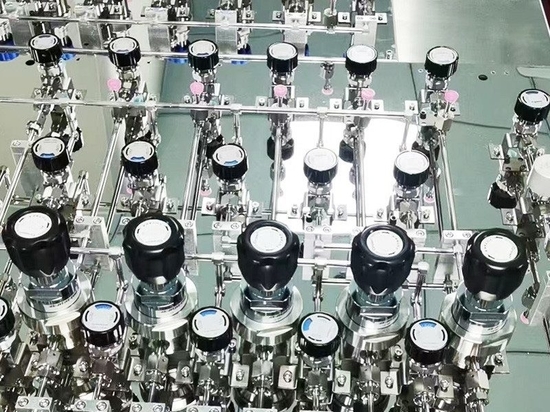
application of ultra-high purity gas pressure regulator
application of ultra-high purity gas pressure regulator
Conclusion
High-performance CVD gas precursor delivery systems are essential for achieving reliable, contamination-free processing in ultra-pure semiconductor and advanced manufacturing applications. As device geometries shrink and process complexity increases, the importance of precision gas handling continues to grow.
From ultra-high purity regulators and diaphragm valves to intelligent automation and advanced purification technologies, every component within the gas delivery system contributes to process stability, safety, and production yield.
By combining superior material selection, advanced contamination control, precision engineering, and smart monitoring capabilities, modern CVD gas delivery systems provide the performance required for next-generation semiconductor manufacturing.
As the industry continues to evolve toward smaller nodes, higher purity standards, and more sustainable production methods, innovative gas delivery technologies will remain a critical foundation for future manufacturing success.
For more about high-performance CVD gas precursor delivery systems for ultra-pure applications, you can pay a visit to Jewellok at https://www.jewellok.com/product-category/chemical-delivery-system/ for more info.