
#Industry News
Semi-Automatic and Fully Automatic UHP Gas Delivery System Solutions
Semi-Automatic and Fully Automatic UHP Gas Delivery System Solutions
In modern semiconductor manufacturing, flat panel display production, photovoltaic industries, biotechnology laboratories, and advanced material processing environments, the demand for Ultra-High Purity (UHP) gas delivery systems continues to rise. Precision gas control, contamination prevention, operational safety, and process reliability have become essential factors in maintaining production quality and yield.
To meet different operational requirements, manufacturers increasingly adopt semi-automatic and fully automatic UHP gas delivery system solutions. These systems ensure stable, safe, and efficient delivery of specialty gases while minimizing human intervention and process risks.
This article explores the design principles, working mechanisms, key components, advantages, and industrial applications of semi-automatic and fully automatic UHP gas delivery systems.
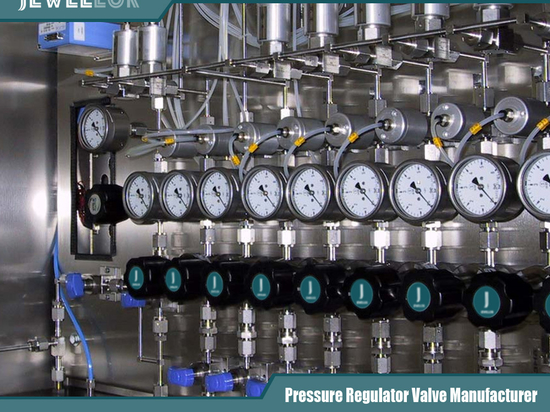
high-pressure gas control valves for industrial use
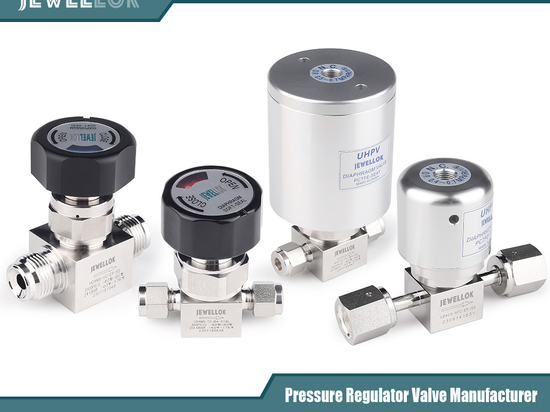
high-pressure gas control valves for industrial use
Understanding UHP Gas Delivery Systems
An Ultra-High Purity (UHP) gas delivery system is engineered to transport, regulate, monitor, and distribute process gases with extremely high purity levels, typically reaching 99.999% (5N) to 99.9999% (6N) purity standards.
These systems are widely used for delivering:
Inert gases (N₂, Ar, He)
Reactive gases (H₂, O₂)
Corrosive gases (Cl₂, HCl, NH₃)
Toxic gases (PH₃, AsH₃, SiH₄)
Specialty semiconductor process gases
The primary objective is to maintain gas integrity from the cylinder source to the process equipment while ensuring safe handling and accurate flow control.
Key system requirements include:
Contamination-free gas pathways
Leak-tight performance
Precise pressure and flow regulation
Emergency shutdown capability
Process automation compatibility
Depending on automation levels, UHP gas systems are generally classified into semi-automatic and fully automatic configurations.
Semi-Automatic UHP Gas Delivery Systems
System Overview
A semi-automatic UHP gas delivery system combines manual operation with automated monitoring and safety control functions. It is designed for applications requiring a balance between operational flexibility and process safety.
Operators typically perform certain actions manually, such as cylinder replacement or gas source switching, while automated subsystems manage pressure regulation, alarm detection, and safety interlocks.
Semi-automatic systems are commonly used in:
R&D laboratories
Pilot production lines
Small-scale semiconductor facilities
University research centers
Low-to-medium gas consumption environments
Core Components of Semi-Automatic Systems
A typical semi-automatic UHP gas delivery system consists of the following modules:
1. Gas Source Cabinet
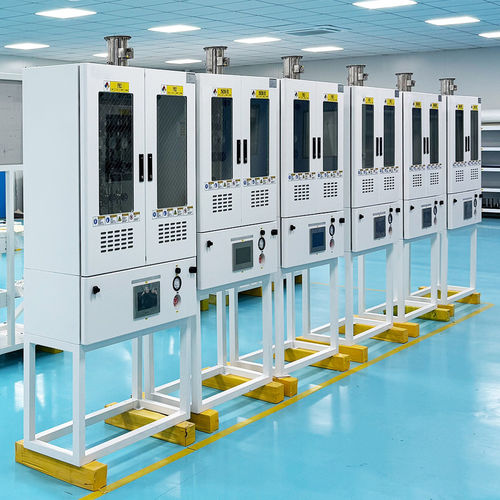
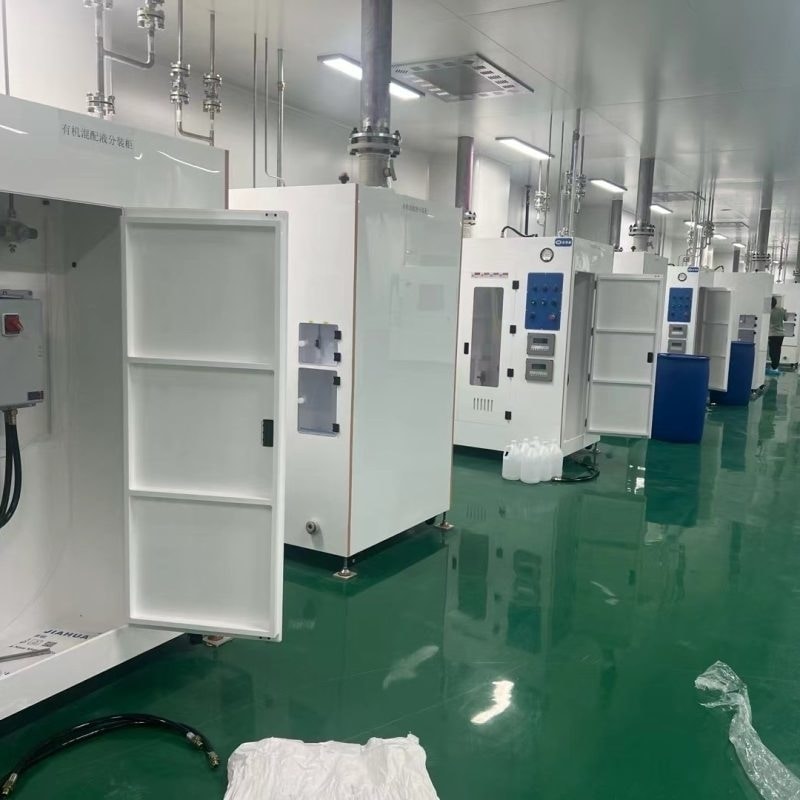
The gas cabinet provides a sealed containment environment for gas cylinders.
It generally includes:
Cylinder mounting bracket
Ventilation interface
Leak detector
Pressure monitoring gauges
Emergency shutoff valve
For hazardous gases, the cabinet is equipped with exhaust ventilation and toxic gas monitoring systems.
2. Pressure Regulation Module
The pressure control section stabilizes cylinder outlet pressure to meet process equipment requirements.
Key components include:
Cylinder regulator
Line regulator
Pressure transducer
Relief valve
Purge valve assembly
High-quality electropolished stainless steel components are used to minimize particle generation and contamination.
3. Manual Changeover Panel
In semi-automatic configurations, operators manually switch between primary and backup gas cylinders.
The changeover process typically involves:
Closing depleted cylinder valve.
Activating purge sequence.
Replacing cylinder.
Leak checking.
Restoring gas supply.
Although partially manual, integrated alarms help reduce operational mistakes.
4. Monitoring and Alarm System
Modern semi-automatic systems include basic electronic monitoring functions.
Common alarm conditions include:
High pressure alarm
Low pressure alarm
Gas leakage detection
Cabinet door interlock warning
Exhaust failure alert
Visual indicators and audible alarms provide immediate operator notification.
Advantages of Semi-Automatic Solutions
Semi-automatic systems offer several practical benefits.
Cost-Effective Investment
Compared with fully automated systems, semi-automatic solutions have lower capital expenditure and reduced installation complexity.
They are suitable for facilities with limited automation budgets.
Flexible Operation
Manual intervention allows operators to customize procedures according to specific process conditions.
This flexibility benefits research environments and experimental production.
Simplified Maintenance
Reduced software dependency and fewer automated components simplify troubleshooting and maintenance activities.
Scalable Architecture
Semi-automatic platforms can often be upgraded into fully automated configurations as production capacity expands.
Limitations of Semi-Automatic Systems
Despite their advantages, semi-automatic systems have inherent constraints.
Human operation introduces the possibility of:
Incorrect valve sequencing
Delayed cylinder replacement
Inconsistent operating procedures
Increased contamination risk
Additionally, manual source switching can cause temporary process interruptions, which may impact high-volume production environments.
Fully Automatic UHP Gas Delivery Systems
System Overview
A fully automatic UHP gas delivery system provides comprehensive process automation, continuous monitoring, intelligent control, and automatic gas source management.
These systems are designed for industries demanding:
24/7 continuous operation
Maximum uptime
High-volume manufacturing
Strict process repeatability
Enhanced operator safety
Fully automatic solutions are widely deployed in:
Semiconductor fabs
OLED manufacturing facilities
Solar cell production plants
Pharmaceutical cleanrooms
Advanced wafer fabrication processes
Key Features of Fully Automatic Systems
Fully automatic gas systems incorporate advanced automation technology to eliminate manual intervention during normal operation.
Key features include:
Automatic cylinder switchover
PLC-based control logic
Remote monitoring capability
Real-time diagnostics
Automated purge sequencing
Integrated safety interlock systems
Automatic Switchover Technology
One of the most important functions in fully automatic systems is automatic gas source switching.
When the primary cylinder reaches a predefined low-pressure threshold, the control system automatically activates the reserve cylinder without interrupting gas supply.
The sequence typically includes:
Pressure monitoring
Switchover decision logic
Solenoid valve activation
Pressure stabilization
Alarm confirmation
This capability ensures uninterrupted operation for mission-critical manufacturing processes.
PLC and HMI Integration
Fully automatic systems are commonly controlled using Programmable Logic Controllers (PLC) integrated with Human Machine Interfaces (HMI).
PLC systems manage:
Valve sequencing
Pressure monitoring
Alarm logic
Purge control
Emergency shutdown response
The HMI touchscreen provides operators with:
Real-time system status
Pressure readings
Alarm history
Maintenance records
Operating parameter adjustment
Advanced systems may also support industrial communication protocols such as:
Modbus
EtherNet/IP
Profibus
SECS/GEM integration
These interfaces facilitate connection with facility-wide automation platforms.
Advanced Purge and Vent Management
Gas purity protection is critical in semiconductor processing.
Fully automatic UHP systems use intelligent purge control strategies to eliminate residual contaminants during cylinder replacement and startup procedures.
Common purge methods include:
Nitrogen purge
Vacuum purge
Pressure cycling purge
Automatic vent management
The automated purge process reduces:
Moisture contamination
Oxygen intrusion
Particle introduction
Human procedural errors
This directly supports ultra-clean manufacturing environments.
Enhanced Safety Design
Handling hazardous gases requires rigorous engineering controls.
Fully automatic gas delivery systems incorporate multiple layers of safety protection.
Typical safety mechanisms include:
Gas Leak Detection
Dedicated sensors continuously monitor hazardous gas concentrations.
Upon leak detection, the system can automatically:
Close isolation valves
Trigger emergency shutdown
Activate exhaust purge
Send remote alarms
Redundant Interlock Logic
Safety interlocks prevent unsafe operational conditions.
Examples include:
Ventilation failure interlock
Excess pressure shutdown
Door open protection
Emergency stop circuitry
Remote Emergency Response
Many advanced facilities use centralized monitoring platforms.
Operators can remotely view and control gas systems from control rooms, reducing direct exposure to hazardous environments.
Comparing Semi-Automatic and Fully Automatic UHP Solutions
Choosing the right solution depends on production scale, safety requirements, and operational objectives.
Feature Semi-Automatic Fully Automatic
Automation Level Partial Complete
Operator Involvement Moderate Minimal
Cylinder Changeover Manual Automatic
System Cost Lower Higher
Process Continuity Limited Excellent
Safety Functions Standard Advanced
Suitable Applications Labs / Small Production Large Industrial Manufacturing
Semi-automatic systems are ideal for facilities requiring moderate automation and lower investment.
Fully automatic solutions are better suited for high-throughput manufacturing operations where downtime, contamination, and process variation must be minimized.
Materials and Construction Standards
UHP gas delivery system performance depends heavily on material selection and fabrication quality.
Common construction materials include:
Stainless Steel Tubing
316L electropolished stainless steel is the industry standard.
Benefits include:
Corrosion resistance
Low particle generation
High surface cleanliness
Excellent weld compatibility
Typical internal surface roughness requirements are:
Ra ≤ 10 μin for semiconductor-grade applications.
Orbital Welding Technology
Automatic orbital welding ensures consistent, contamination-free joints.
Compared with manual welding, orbital welding provides:
Repeatable weld quality
Reduced defect rates
Improved cleanliness
Enhanced leak integrity
High-Purity Valves and Fittings
Specialized UHP components must meet stringent leakage specifications.
Common requirements include:
Helium leak rate ≤ 1×10⁻⁹ atm·cc/sec
Metal diaphragm valve design
Electropolished wetted surfaces
Cleanroom assembly procedures
Industry Applications
Semiconductor Manufacturing
Semiconductor fabs rely on UHP gas delivery systems for:
Chemical Vapor Deposition (CVD)
Atomic Layer Deposition (ALD)
Etching processes
Ion implantation
Wafer cleaning
Process stability directly influences chip yield and device reliability.
OLED and Display Production
Display manufacturing uses specialty gases in thin-film deposition and plasma processing applications.
Automated gas systems improve production consistency and minimize contamination defects.
Pharmaceutical and Biotechnology Facilities
Controlled atmosphere environments require precise gas delivery for:
Fermentation
Sterile processing
Laboratory analysis
Cleanroom operations
Renewable Energy Manufacturing
Solar photovoltaic production utilizes specialty gases during silicon processing and thin-film coating operations.
Reliable gas supply is essential for maintaining process efficiency.
Future Trends in UHP Gas Delivery Technology
As Industry 4.0 and smart manufacturing evolve, gas delivery systems are becoming increasingly intelligent.
Emerging trends include:
AI-based predictive maintenance
Cloud-enabled remote diagnostics
Digital twin system modeling
IoT sensor integration
Advanced data analytics
Future UHP gas delivery solutions will emphasize:
Higher automation
Predictive safety management
Reduced maintenance costs
Improved sustainability performance
Manufacturers are investing in smarter platforms capable of supporting next-generation semiconductor and advanced manufacturing technologies.
Conclusion
Semi-automatic and fully automatic UHP gas delivery system solutions play a critical role in ensuring safe, reliable, and contamination-free gas management across advanced industries.
Semi-automatic systems provide flexible, cost-efficient solutions for laboratories and smaller production facilities, while fully automatic systems deliver superior continuity, safety, and process control for large-scale manufacturing environments.
By selecting the appropriate automation level, material standards, and safety architecture, facilities can optimize operational efficiency, enhance product quality, and meet increasingly demanding industry requirements.
As manufacturing technologies continue to advance, intelligent UHP gas delivery systems will remain essential infrastructure for achieving precision, purity, and operational excellence.
For more about semi-automatic and fully automatic UHP gas delivery system solutions, you can pay a visit to Jewellok at https://www.specialtygasregulator.com/product-category/specialty-gas-cabinet/ for more info.