
#Industry News
Pressure Control Panels Designed for Semiconductor Manufacturing Facilities
Pressure Control Panels Designed for Semiconductor Manufacturing Facilities
Introduction
The semiconductor industry is one of the world’s most demanding manufacturing sectors, where precision, cleanliness, and process stability directly determine product quality and production yield. Every stage of semiconductor fabrication—including photolithography, chemical vapor deposition (CVD), atomic layer deposition (ALD), plasma etching, ion implantation, and wafer cleaning—relies on the accurate delivery of high-purity process gases.
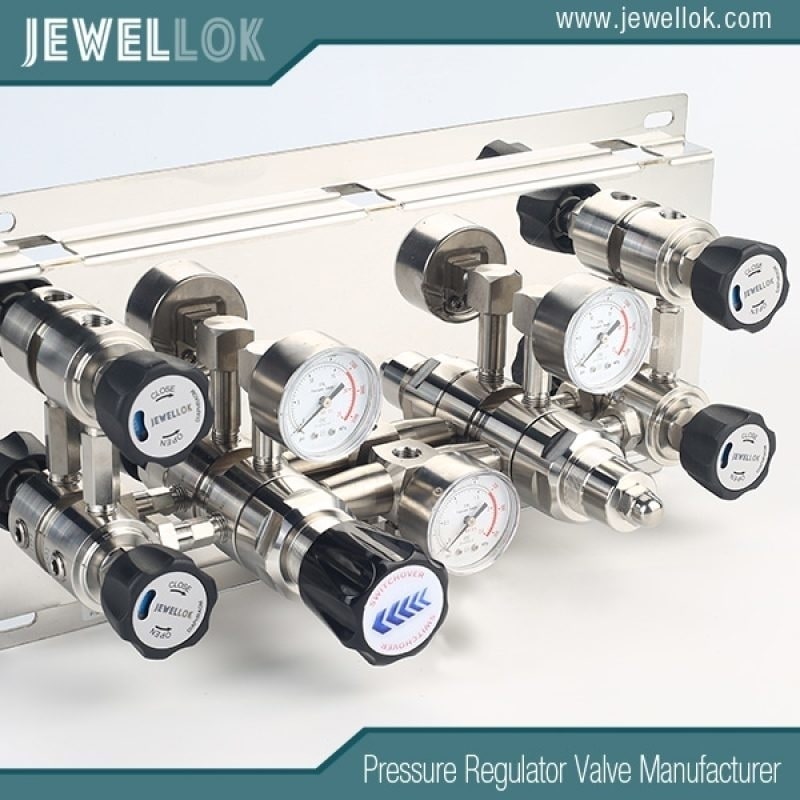
At the heart of every high-purity gas distribution network is the Pressure Control Panel (PCP). These specialized systems regulate gas pressure from high-pressure cylinders or bulk gas sources to the precise operating pressures required by semiconductor equipment. A well-designed pressure control panel not only ensures consistent gas flow but also protects expensive process tools, minimizes contamination risks, improves operator safety, and maximizes production uptime.
As semiconductor manufacturing continues to evolve toward smaller process nodes, higher wafer throughput, and increasingly sensitive process chemistries, modern pressure control panels have become intelligent, automated, and highly integrated systems capable of meeting the strictest purity and reliability requirements.
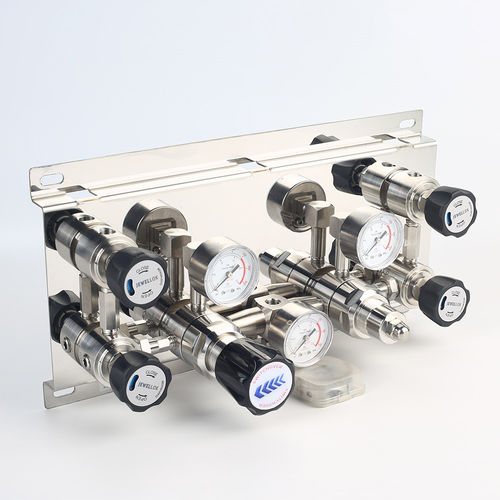
Single-Stage Ultra High-Purity Semiconductor Grade Regulator
Single-Stage Ultra High-Purity Semiconductor Grade Regulator
What Is a Pressure Control Panel?
A pressure control panel is an engineered gas management assembly designed to reduce, regulate, monitor, and distribute specialty gases throughout semiconductor manufacturing facilities.
Unlike conventional industrial gas regulators, semiconductor-grade pressure control panels are manufactured using ultra-high purity (UHP) materials and components to eliminate contamination, particle generation, and dead volume.
A typical pressure control panel includes:
High-purity pressure regulators
Diaphragm valves
Ball valves
Pressure gauges
Pressure transmitters
Mass flow interfaces
Relief valves
Check valves
Purge systems
Gas filters
Stainless steel tubing
VCR face seal fittings
PLC or automation interfaces
Together, these components provide stable gas pressure while ensuring maximum process safety.
Importance of Pressure Control in Semiconductor Manufacturing
Modern semiconductor fabrication uses dozens of specialty gases, including:
Nitrogen (N₂)
Argon (Ar)
Helium (He)
Hydrogen (H₂)
Oxygen (O₂)
Silane (SiH₄)
Ammonia (NH₃)
Chlorine (Cl₂)
Hydrogen Chloride (HCl)
Boron Trichloride (BCl₃)
Tungsten Hexafluoride (WF₆)
Sulfur Hexafluoride (SF₆)
Nitrous Oxide (N₂O)
Carbon Tetrafluoride (CF₄)
Each gas requires a different operating pressure depending on the process tool.
Pressure fluctuations can result in:
Film thickness variation
Etching inconsistency
Particle contamination
Process instability
Wafer defects
Equipment shutdown
Lower production yield
A precision pressure control panel eliminates these problems by maintaining stable outlet pressure regardless of cylinder pressure changes.
Key Design Features of Semiconductor Pressure Control Panels
Ultra-High Purity Construction
Semiconductor applications require extremely clean gas delivery systems.
Pressure control panels are typically manufactured using:
316L VAR stainless steel
316L VIM-VAR stainless steel
Electropolished internal surfaces
Surface roughness below 10 Ra μin
Orbital welded tubing
Metal diaphragm regulators
Face seal fittings
These materials minimize particle generation while maintaining excellent corrosion resistance.
High Pressure Accuracy
Process equipment often requires extremely stable gas pressure.
Advanced pressure regulators maintain outlet pressure with minimal drift, even when inlet cylinder pressure decreases during operation.
Benefits include:
Stable process conditions
Consistent gas flow
Improved repeatability
Better wafer yield
Dual-Stage Pressure Regulation
Most semiconductor pressure control panels utilize dual-stage pressure regulators.
Advantages include:
Better outlet pressure stability
Reduced supply pressure effect
Lower pressure droop
Improved control accuracy
Dual-stage regulation is especially important for critical deposition and etching processes.
Automatic Gas Changeover
Continuous production requires uninterrupted gas supply.
Automatic changeover systems switch between primary and reserve gas cylinders without interrupting process gas delivery.
Benefits include:
Continuous operation
Reduced downtime
Improved production efficiency
Lower labor costs
Automatic manifolds are commonly integrated into pressure control panels serving semiconductor tools.
Integrated Purge Systems
Gas purity is essential for semiconductor manufacturing.
Pressure control panels frequently incorporate automated purge systems using ultra-high purity nitrogen.
Typical purge functions include:
Air removal
Moisture removal
Oxygen removal
Maintenance preparation
Safe gas replacement
Proper purging significantly reduces contamination risks.
Leak-Tight Performance
Many semiconductor gases are toxic, corrosive, pyrophoric, or expensive.
Pressure control panels are designed with:
Helium leak-tested assemblies
Metal-to-metal sealing
VCR fittings
Welded tubing
High-integrity diaphragm valves
Typical helium leak rates are less than 1 × 10⁻⁹ atm·cc/sec.
Major Components of a Pressure Control Panel
Pressure Regulators
Pressure regulators reduce high cylinder pressure to a stable operating pressure.
Key selection factors include:
Inlet pressure rating
Outlet pressure range
Flow capacity
Gas compatibility
Pressure accuracy
Diaphragm Valves
Metal diaphragm valves provide contamination-free shutoff.
Advantages include:
Zero dead volume
High cycle life
Excellent leak tightness
High purity
Corrosion resistance
Pressure Gauges
Pressure gauges provide visual monitoring of:
Cylinder pressure
Intermediate pressure
Outlet pressure
Digital pressure transmitters may also transmit real-time data to factory control systems.
Relief Valves
Pressure relief devices protect downstream equipment from excessive pressure.
They improve both equipment safety and operator protection.
Filters
High-purity gas filters remove particles before gases enter sensitive semiconductor tools.
Typical filter ratings include:
0.003 μm
0.01 μm
0.1 μm
Stainless Steel Tubing
Electropolished seamless tubing minimizes:
Particle shedding
Moisture adsorption
Gas contamination
Internal corrosion
Applications Throughout Semiconductor Manufacturing
Pressure control panels support virtually every gas delivery application within semiconductor fabs.
Photolithography
Stable nitrogen pressure protects photoresist processes and maintains clean environments.
Chemical Vapor Deposition (CVD)
CVD systems require highly stable delivery of precursor gases under carefully controlled pressure conditions.
Pressure stability directly influences film thickness and deposition uniformity.
Atomic Layer Deposition (ALD)
ALD depends on precise pulsed gas delivery.
Even minor pressure variations can affect atomic-scale film growth.
High-precision pressure control panels help achieve excellent repeatability.
Plasma Etching
Etching processes utilize reactive gases under tightly controlled conditions.
Stable pressure ensures:
Uniform etching
Better critical dimension control
Reduced process variability
Ion Implantation
Ion implantation systems require accurate gas delivery to maintain beam stability and implantation precision.
Wafer Cleaning
Cleaning equipment uses specialty gases to remove contaminants without damaging wafer surfaces.
Reliable pressure regulation maintains cleaning consistency.
Safety Features
Semiconductor manufacturing frequently involves hazardous gases.
Modern pressure control panels incorporate multiple safety mechanisms.
These include:
Excess flow protection
Automatic emergency shutoff valves
Pressure relief valves
Gas leak detection interfaces
Purge interlocks
PLC emergency shutdown
Remote monitoring
Alarm systems
These features protect personnel, equipment, and production facilities.
Automation and Industry 4.0 Integration
Today’s semiconductor fabs increasingly adopt smart manufacturing technologies.
Modern pressure control panels support:
PLC communication
Ethernet/IP
Profinet
Modbus TCP
SCADA integration
MES connectivity
Remote diagnostics
Predictive maintenance
Digital pressure monitoring
Real-time data logging
These intelligent capabilities improve process visibility while reducing maintenance costs.
Material Selection for Corrosive Gases
Some semiconductor gases are highly corrosive.
Examples include:
Hydrogen Chloride
Chlorine
Hydrogen Fluoride
Boron Trichloride
Pressure control panels handling these gases often use:
Hastelloy components
Nickel alloys
Special diaphragm materials
Corrosion-resistant valve seats
Proper material selection greatly extends service life while maintaining gas purity.
Benefits of Custom Pressure Control Panels
Every semiconductor manufacturing facility has unique gas delivery requirements.
Custom-designed pressure control panels offer:
Optimized system layout
Improved installation efficiency
Better compatibility with existing gas systems
Customized pressure ranges
Flexible connection configurations
Integrated automation
Enhanced safety
Simplified maintenance
OEM customization also allows manufacturers to meet regional standards and customer specifications.
Selecting the Right Pressure Control Panel Supplier
When choosing a pressure control panel manufacturer, consider the following factors:
Experience in semiconductor gas systems
UHP manufacturing capabilities
Cleanroom assembly
Orbital welding expertise
Electropolishing technology
Helium leak testing
ISO quality management
Engineering support
Global technical service
Custom design capability
An experienced supplier can significantly improve system reliability while reducing long-term operating costs.
Future Trends
The semiconductor industry continues to push toward:
2 nm process technology
Advanced packaging
AI semiconductor production
Higher wafer throughput
Fully automated fabs
Future pressure control panels will feature:
AI-assisted diagnostics
Smart pressure prediction
IoT connectivity
Digital twin technology
Predictive maintenance
Enhanced cybersecurity
Fully integrated factory automation
These innovations will further improve gas delivery accuracy, safety, and manufacturing efficiency.
best top 10 ultra high purity gas pressure regulator in india
best top 10 ultra high purity gas pressure regulator in india
Conclusion
Pressure control panels are a critical component of semiconductor gas delivery infrastructure. By providing accurate pressure regulation, ultra-high purity construction, automatic gas management, and advanced safety features, they help ensure stable manufacturing processes and high wafer yields.
As semiconductor fabrication becomes increasingly sophisticated, pressure control panels are evolving from simple mechanical assemblies into intelligent, automated systems capable of supporting the next generation of advanced manufacturing facilities. Investing in high-quality, customized pressure control panels enables semiconductor manufacturers to enhance process stability, reduce contamination risks, improve operational safety, and achieve long-term production excellence in one of the world’s most demanding industrial environments.
For more about pressure control panels designed for semiconductor manufacturing facilities, you can pay a visit to Jewellok at https://www.jewellok.com/product-category/chemical-delivery-system/ for more info.