
#Industry News
ALD Gas Cabinet Technology Trends in Semiconductor Manufacturing 2026
ALD Gas Cabinet Technology Trends in Semiconductor Manufacturing 2026
Introduction: The Growing Importance of ALD Gas Cabinet Technology
As semiconductor manufacturing continues to advance toward smaller process nodes, higher device performance, and more complex chip architectures, Atomic Layer Deposition (ALD) has become one of the most critical thin-film deposition technologies. ALD enables extremely precise material deposition at the atomic scale, making it essential for advanced logic chips, memory devices, power semiconductors, MEMS, and next-generation packaging technologies.
Behind every high-performance ALD process is a highly reliable gas delivery infrastructure. The ALD gas cabinet plays a vital role in controlling precursor gases, process gases, and specialty chemicals with ultra-high precision. In 2026, semiconductor manufacturers are demanding more intelligent, safer, and cleaner gas cabinet solutions to support advanced fabrication requirements.
The latest A technology trends focus on intelligent automation, ultra-high purity gas management, advanced safety systems, digital monitoring, energy efficiency, and compatibility with emerging semiconductor materials. As chip manufacturers expand production capacity worldwide, ALD gas cabinet suppliers are developing next-generation systems to meet increasingly strict process control standards.
1. Increasing Demand for Advanced ALD Processes in Semiconductor Manufacturing
The semiconductor industry is entering a new era driven by artificial intelligence (AI), high-performance computing (HPC), electric vehicles, 5G communication, and advanced data storage. These applications require chips with higher transistor density, lower power consumption, and improved reliability.
Traditional deposition methods often struggle to achieve uniform thin films at atomic-level thickness. ALD solves this challenge by using sequential self-limiting surface reactions, allowing manufacturers to deposit highly conformal films with excellent thickness control.
In 2026, ALD technology will continue expanding in several key applications:
Gate dielectric layers for advanced logic devices
High-k dielectric materials for transistor scaling
Metal oxide films for memory devices
Barrier and liner layers in advanced interconnects
Thin-film encapsulation for OLED and flexible electronics
Battery materials and energy storage applications
Advanced semiconductor packaging
As ALD applications grow, the requirements for gas delivery systems become more demanding. The ALD gas cabinet must provide accurate precursor delivery, stable pressure control, contamination prevention, and reliable operation under continuous production conditions.
2. Ultra-High Purity Gas Delivery Becomes a Core Requirement
Semiconductor manufacturing requires extremely clean process environments. Even trace-level contamination from moisture, oxygen, particles, or metallic impurities can significantly affect wafer yield and device performance.
One of the major ALD gas cabinet trends in 2026 is the increasing adoption of ultra-high purity (UHP) gas delivery technologies.
Modern ALD gas cabinets are designed with:
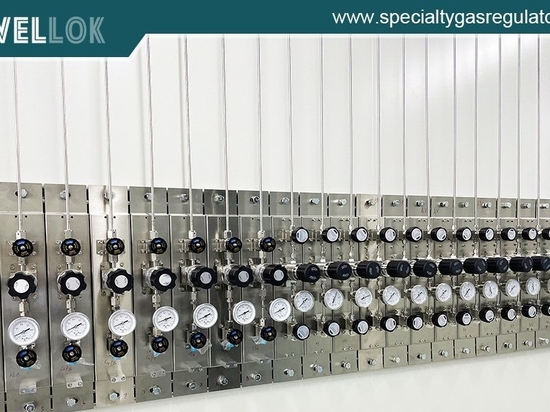
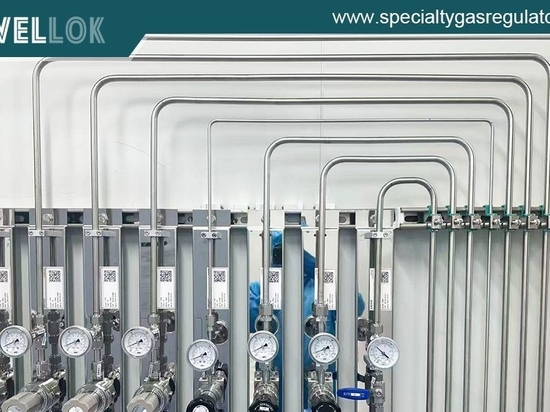
Semiconductor-grade 316L stainless steel tubing
Electropolished internal surfaces
Low dead-volume valve designs
High-performance metal diaphragm valves
Advanced leak detection systems
High-efficiency filtration components
316L stainless steel processed with advanced surface treatment has become a preferred material because it provides excellent corrosion resistance, low particle generation, and superior compatibility with aggressive precursor chemicals.
For sensitive ALD processes, gas cabinet manufacturers are also focusing on reducing moisture and oxygen levels through improved sealing technologies and optimized purge systems.
The integration of UHP components helps semiconductor fabs achieve better process repeatability, higher wafer yields, and longer equipment lifetime.
3. Intelligent Automation and Smart Control Systems
Automation is becoming one of the most important development directions for ALD gas cabinets in 2026.
Traditional gas cabinets require manual monitoring and adjustment by operators. However, advanced semiconductor fabs increasingly require fully automated systems capable of real-time monitoring, predictive maintenance, and remote operation.
Next-generation ALD gas cabinets integrate:
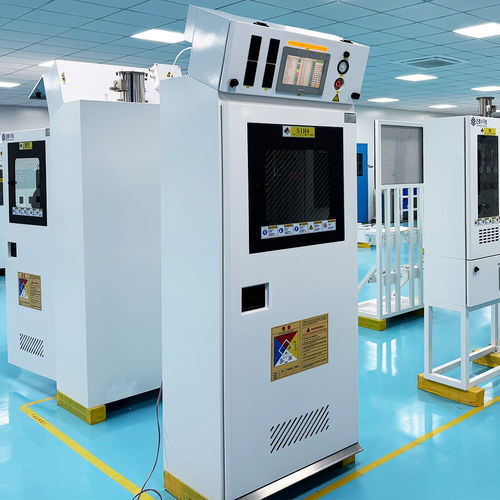
Industrial PLC control systems
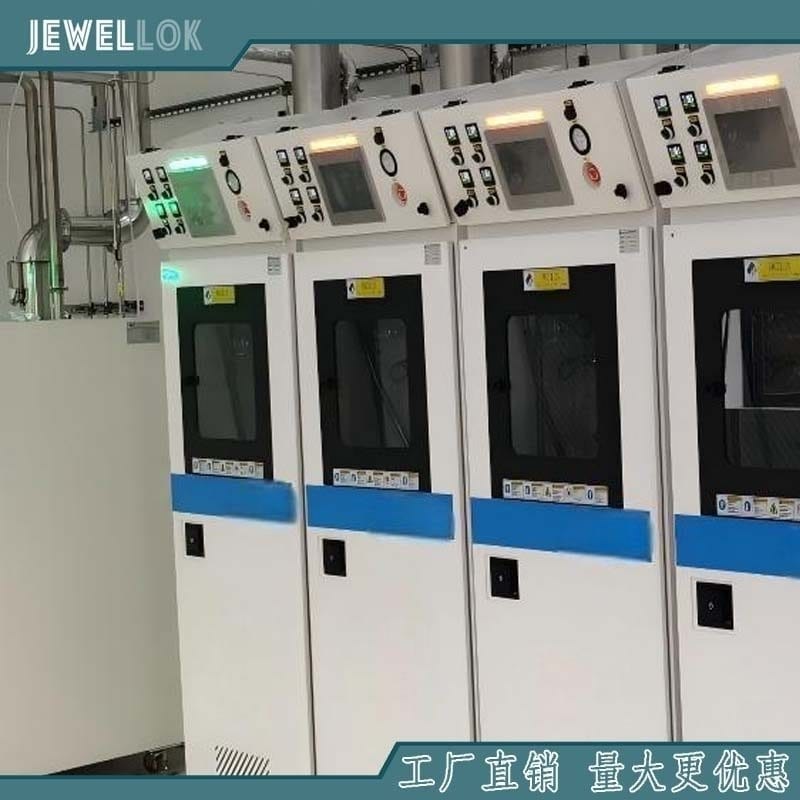
Touchscreen human-machine interfaces (HMI)
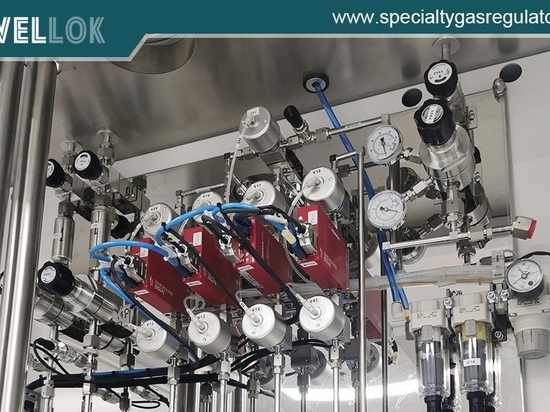
Real-time pressure monitoring
Temperature control modules
Flow control systems
Automated valve sequencing
Remote equipment communication
Through intelligent control algorithms, the gas cabinet can automatically optimize gas delivery conditions according to process requirements.
For example, during ALD precursor delivery, the system can precisely control:
Gas flow rate
Delivery pressure
Purge time
Valve switching sequence
Heating temperature
This improves film uniformity and reduces process variation.
In 2026, semiconductor manufacturers will increasingly adopt smart gas cabinet platforms connected with factory automation systems such as MES (Manufacturing Execution System) and FDC (Fault Detection and Classification) platforms.
4. Advanced Safety Technologies for Hazardous ALD Precursors
Safety remains a top priority in semiconductor manufacturing because many ALD precursors are toxic, corrosive, pyrophoric, or highly reactive.
Common ALD precursor materials include:
Metal organic compounds
Halide-based chemicals
Oxidizing agents
Reactive gases
Improper handling can create serious risks for personnel safety and equipment reliability.
Modern ALD gas cabinets are therefore equipped with advanced safety features:
Gas Leak Detection
High-sensitivity sensors continuously monitor hazardous gas concentrations. Early detection allows automatic shutdown and emergency response.
Automatic Emergency Shutoff
If abnormal pressure, temperature, or leakage conditions occur, the system can automatically isolate the gas source.
Ventilation Management
Gas cabinets maintain negative pressure environments to prevent hazardous gases from escaping into cleanroom areas.
Purge and Exhaust Systems
Automated purge systems remove residual gases before maintenance operations.
In 2026, safety systems will become more intelligent by integrating artificial intelligence-based monitoring and predictive failure analysis.
5. Improved Thermal Management for Advanced Precursors
Many ALD precursor chemicals require precise temperature control to maintain stable vapor pressure and prevent condensation.
Poor thermal management can cause:
Unstable precursor delivery
Particle generation
Pipeline blockage
Reduced process efficiency
Therefore, advanced ALD gas cabinets are incorporating improved heating technologies.
Key thermal management technologies include:
Heated gas lines
Temperature-controlled valve manifolds
Multi-zone heating systems
Thermal insulation designs
Digital temperature monitoring
In 2026, manufacturers are developing more precise thermal control systems capable of maintaining stable precursor conditions throughout the entire delivery path.
This is particularly important for next-generation ALD processes involving low vapor pressure materials.
6. Compact and Modular ALD Gas Cabinet Designs
Semiconductor fabs are continuously optimizing cleanroom space utilization. As equipment density increases, compact gas cabinet designs are becoming increasingly valuable.
The latest ALD gas cabinets feature:
Modular construction
Flexible configuration options
Reduced footprint
Simplified maintenance access
Expandable gas channels
Modular designs allow semiconductor manufacturers to quickly adapt gas delivery systems for different process requirements.
For example, a fab producing multiple device generations may require different precursor combinations. Modular ALD gas cabinets enable faster upgrades without replacing the entire gas delivery infrastructure.
This trend is especially important for semiconductor fabs expanding production capacity in regions such as Asia, North America, and Europe.
7. Digitalization and Predictive Maintenance
Digital transformation is reshaping semiconductor equipment management.
In 2026, ALD gas cabinets will increasingly adopt intelligent monitoring technologies that collect and analyze operational data.
Important monitoring parameters include:
Gas pressure trends
Valve operation cycles
Temperature fluctuations
Leakage conditions
Component lifetime data
Using advanced data analytics, manufacturers can predict potential failures before they occur.
Predictive maintenance provides several advantages:
Reduced unexpected downtime
Improved equipment availability
Lower maintenance costs
Extended component lifetime
Improved production efficiency
Future ALD gas cabinet systems will become more like intelligent industrial platforms rather than simple gas control equipment.
8. Growing Adoption of Customized ALD Gas Cabinet Solutions
Different semiconductor processes require different gas delivery configurations. A standard gas cabinet design cannot always satisfy advanced manufacturing requirements.
In 2026, semiconductor companies increasingly prefer customized ALD gas cabinet solutions.
Customization options include:
Gas channel quantity
Precursor compatibility
Valve selection
Pressure control range
Heating requirements
Communication protocols
Safety configurations
Professional gas cabinet manufacturers provide engineering support from design and simulation to fabrication, testing, and installation.
Customized solutions help fabs achieve optimized performance for specific ALD applications.
9. Sustainability and Energy Efficiency Trends
Environmental sustainability is becoming an important factor in semiconductor equipment development.
Advanced ALD gas cabinets are adopting energy-saving technologies such as:
Efficient heating systems
Reduced nitrogen consumption
Optimized purge cycles
Intelligent power management
Reducing gas consumption is especially important because semiconductor fabs use large quantities of specialty gases and ultra-high purity nitrogen.
Energy-efficient gas cabinet designs help manufacturers reduce operating costs while supporting global sustainability goals.
10. Future Outlook of ALD Gas Cabinet Technology in 2026 and Beyond
The semiconductor industry will continue moving toward smaller geometries, advanced materials, and more complex manufacturing processes. As a result, ALD gas cabinet technology will continue evolving.
Future developments will likely include:
AI-driven process optimization
Fully autonomous gas delivery systems
Advanced sensor integration
Higher purity material handling
More compact modular platforms
Enhanced cybersecurity for connected equipment
The role of the ALD gas cabinet will expand from a gas supply system into an intelligent process control platform that directly contributes to semiconductor manufacturing performance.
Conclusion
ALD gas cabinet technology is becoming increasingly critical for advanced semiconductor manufacturing in 2026. With the rapid development of AI chips, advanced memory, power electronics, and next-generation semiconductor devices, manufacturers require gas delivery systems with higher purity, greater safety, improved automation, and smarter control capabilities.
The major trends shaping ALD gas cabinets include ultra-high purity materials, intelligent automation, advanced safety systems, precise thermal management, modular designs, digital monitoring, and sustainable operation.
For semiconductor fabs seeking higher productivity and better process reliability, investing in advanced ALD gas cabinet solutions is essential. As semiconductor processes continue becoming more sophisticated, innovative gas delivery technologies will play a key role in enabling the next generation of high-performance electronic devices.
For more about ALD gas cabinet technology trends in semiconductor manufacturing 2026, you can pay a visit to Jewellok at https://www.specialtygasregulator.com/product-category/specialty-gas-cabinet/ for more info.