
#Industry News
High-Purity Chemical Dispense Unit (CDU) Systems for Semiconductor Wet Process Chemical Supply Applications
High-Purity Chemical Dispense Unit (CDU) Systems for Semiconductor Wet Process Chemical Supply Applications
In modern semiconductor manufacturing, process purity, chemical stability, and precise fluid delivery control are essential factors that directly impact wafer yield, device reliability, and manufacturing efficiency. As semiconductor process nodes continue to evolve toward advanced technologies below 5nm, contamination control standards within wet processing environments have become increasingly stringent.
Semiconductor wet process tools rely heavily on ultrapure chemical delivery systems to transport aggressive process chemicals safely and consistently. Among these systems, the Chemical Dispense Unit (CDU) has become a critical subsystem for managing high-purity chemical supply in semiconductor wet benches, cleaning tools, etching equipment, and surface preparation applications.
A high-performance CDU system ensures precise chemical dosing, stable pressure regulation, contamination-free fluid handling, and safe chemical distribution across multiple process tools. Designed specifically for high-purity semiconductor environments, CDU systems play a vital role in maintaining process repeatability, minimizing particle generation, and supporting advanced wet chemical applications.
This article explores the technical architecture, design principles, key components, material selection, and performance advantages of high-purity CDU systems for semiconductor wet equipment chemical supply applications.
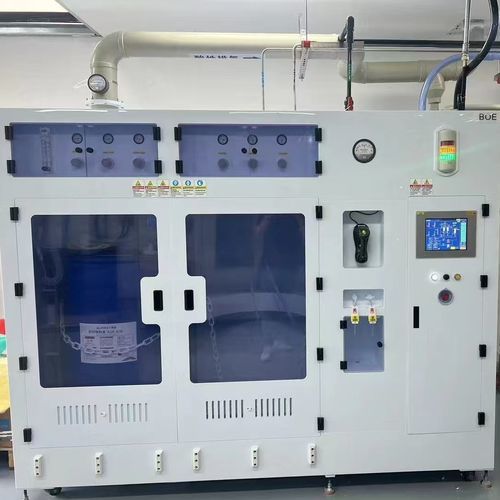
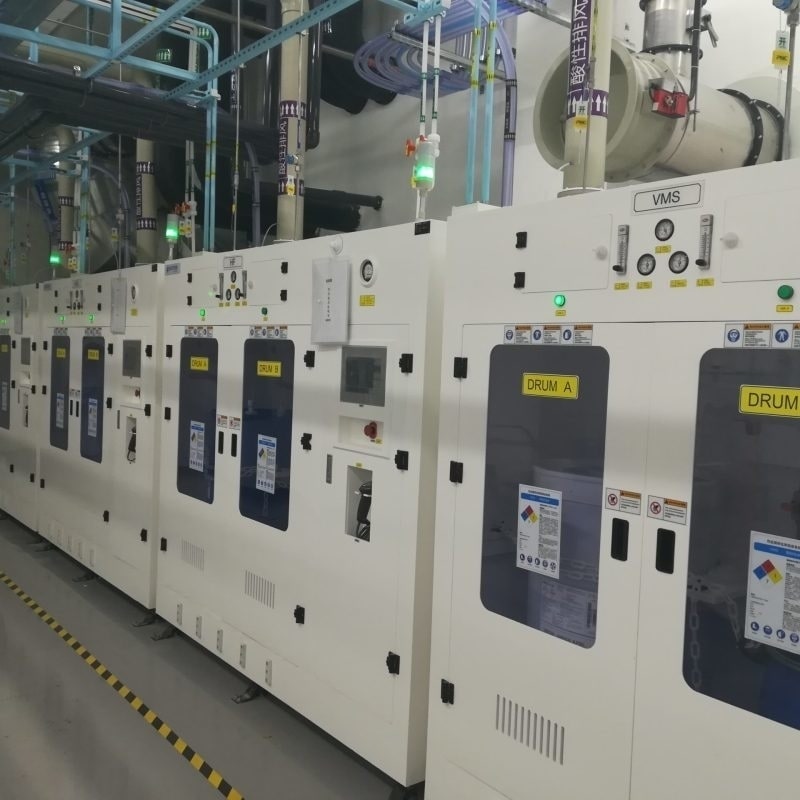
Chemical automatic liquid supply equipment
Semiconductor Wet Process Chemical Supply Challenges
Semiconductor wet processing involves numerous critical chemical treatments used during wafer fabrication, including:
Wafer cleaning
Oxide removal
Photoresist stripping
Surface conditioning
Chemical etching
Metal contamination removal
Particle cleaning
Surface passivation
These applications commonly utilize highly corrosive and sensitive chemicals such as:
Hydrofluoric Acid (HF)
Sulfuric Acid (H₂SO₄)
Nitric Acid (HNO₃)
Hydrochloric Acid (HCl)
Ammonium Hydroxide (NH₄OH)
Hydrogen Peroxide (H₂O₂)
Ozone DI Water
Buffered Oxide Etchant (BOE)
SC1 / SC2 Cleaning Solutions
Chemical supply systems handling these fluids face several technical challenges:
Ultra-High Purity Requirements
Even trace contamination at the parts-per-billion (ppb) level can introduce wafer defects, metal contamination, or particle generation, leading to reduced yield and device failure.
Chemical Compatibility Requirements
Aggressive acids, oxidizers, and alkaline solutions require highly corrosion-resistant wetted materials capable of long-term chemical exposure.
Precise Flow and Pressure Control
Semiconductor process repeatability depends on stable chemical flow rates, pressure consistency, and accurate dispense timing.
Safety and Leak Prevention
Hazardous chemicals require redundant safety protection, leak detection mechanisms, containment strategies, and automated emergency shutdown functions.
These demanding operational conditions necessitate highly engineered CDU systems optimized specifically for semiconductor chemical delivery environments.
What is a Chemical Dispense Unit (CDU)?
A Chemical Dispense Unit (CDU) is an integrated fluid management platform used to store, regulate, filter, monitor, and distribute high-purity process chemicals to semiconductor wet processing equipment.
The CDU serves as an intermediary control station between bulk chemical supply systems and point-of-use semiconductor tools.
Its primary functions include:
Chemical storage buffering
Pressure regulation
Flow stabilization
Filtration management
Degassing control
Chemical monitoring
Multi-tool distribution
Safety interlock protection
Automated chemical dispense control
A typical semiconductor CDU architecture integrates multiple functional modules into a compact, cleanroom-compatible skid assembly.
High-Purity CDU System Architecture
A semiconductor-grade CDU system typically consists of several integrated subsystems.
Chemical Supply Interface
The CDU receives chemicals from:
Bulk chemical delivery systems
Day tanks
Chemical cabinets
Drum transfer stations
Central chemical distribution networks
The inlet configuration must maintain closed-loop purity protection to prevent atmospheric contamination and moisture intrusion.
High-Purity Chemical Reservoir Module
The chemical reservoir functions as an intermediate storage and buffering chamber.
Key design considerations include:
Low particle generation
Dead-leg minimization
Smooth internal surface finishes
Chemical compatibility
Level monitoring integration
Advanced CDU systems often utilize:
PFA tanks
PVDF reservoirs
High-purity fluoropolymer vessels
These materials provide excellent resistance against strong acids, oxidizers, and solvent exposure.
Pump and Pressure Control Section
Accurate chemical transport requires highly stable fluid pressure management.
Common semiconductor CDU pump technologies include:
Diaphragm pumps
Air-operated double diaphragm (AODD) pumps
Magnetically coupled pumps
Bellows pumps
High-purity centrifugal pumps
Pressure control systems may integrate:
Pressure transducers
Precision regulators
Pulsation dampeners
Closed-loop control algorithms
Maintaining consistent dispense pressure is essential for process uniformity and chemical consumption optimization.
Ultrapure Filtration Module
Filtration represents one of the most critical contamination control functions within CDU systems.
Typical filtration stages include:
Pre-filtration
Final filtration
Point-of-use filtration
Common filter ratings include:
0.2 μm
0.1 μm
50 nm ultrafiltration
Advanced filtration technologies help remove:
Particles
Gel contaminants
Metallic impurities
Chemical decomposition byproducts
High-purity filter housings are commonly manufactured from:
PFA
PTFE
PVDF
High-purity polypropylene
Flow Measurement and Monitoring System
Modern CDU systems incorporate real-time instrumentation for process monitoring and control.
Integrated sensors may include:
Flow meters
Pressure sensors
Temperature sensors
Conductivity analyzers
Leak detectors
Tank level transmitters
Real-time monitoring enables:
Process diagnostics
Preventive maintenance
Alarm generation
Automated recipe control
Chemical consumption tracking
Advanced CDU platforms frequently support digital communication protocols including:
SECS/GEM
Ethernet/IP
Modbus TCP
PLC integration
Material Selection for High-Purity Semiconductor CDU Systems
Material compatibility is one of the most important design criteria for semiconductor chemical delivery equipment.
Metal contamination, corrosion products, and extractables must be minimized to maintain process integrity.
Common semiconductor CDU wetted materials include:
PFA (Perfluoroalkoxy Alkane)
PFA is widely recognized as the preferred material for semiconductor wet chemical handling.
Advantages include:
Excellent chemical resistance
Ultra-low extractables
High temperature capability
Superior purity performance
Smooth internal surfaces
PFA is commonly used for:
Tubing
Valves
Tanks
Manifolds
Pump components
PTFE (Polytetrafluoroethylene)
PTFE offers exceptional corrosion resistance across a broad range of aggressive chemicals.
Typical applications include:
Valve seats
Seals
Linings
Gaskets
PVDF (Polyvinylidene Fluoride)
PVDF provides strong mechanical performance combined with excellent chemical resistance.
Typical CDU applications include:
Piping systems
Reservoirs
Valve bodies
Structural components
High-Purity Stainless Steel
While fluoropolymers dominate corrosive wet chemical handling, electropolished stainless steel may still be used for selected compatible chemical applications and non-wetted structural assemblies.
Automation and Intelligent CDU Control
The semiconductor industry increasingly demands intelligent chemical delivery platforms capable of supporting Industry 4.0 manufacturing environments.
Modern CDU systems commonly integrate:
PLC-Based Automation
Programmable logic controllers enable:
Automated valve sequencing
Recipe management
Pump control
Alarm handling
Safety logic execution
Human Machine Interface (HMI)
Touchscreen HMI systems provide operators with:
Process visualization
Alarm notifications
System diagnostics
Parameter configuration
Historical trend monitoring
Predictive Maintenance Functions
Advanced CDU platforms support predictive analytics through continuous monitoring of:
Filter differential pressure
Pump operating conditions
Flow performance trends
Chemical consumption rates
These capabilities help reduce unplanned downtime and optimize maintenance scheduling.
Safety Design in Semiconductor CDU Systems
Because semiconductor wet process chemicals are highly hazardous, CDU safety engineering is mandatory.
Critical safety functions typically include:
Leak Detection Systems
Integrated leak sensors provide rapid detection of:
Chemical spills
Line failures
Seal degradation
Connection leakage
Secondary Containment Design
Chemical containment trays and enclosed cabinets prevent accidental chemical release into cleanroom environments.
Emergency Shutdown Interlocks
Automated interlocks can immediately isolate chemical flow upon detection of:
Pressure anomalies
Leak alarms
Pump failures
Emergency stop activation
Ventilation and Exhaust Integration
Proper exhaust design supports:
Vapor removal
Corrosive gas mitigation
Operator protection
Regulatory compliance
Advantages of High-Purity CDU Systems in Semiconductor Wet Equipment Applications
Deploying advanced CDU systems delivers significant operational and process advantages.
Enhanced Process Stability
Stable chemical delivery improves process consistency and wafer-to-wafer repeatability.
Reduced Contamination Risk
High-purity fluid paths minimize particle generation and chemical contamination.
Improved Yield Performance
Precise chemical management directly supports higher semiconductor manufacturing yields.
Increased Equipment Reliability
Robust CDU engineering reduces maintenance frequency and unplanned production interruptions.
Flexible Tool Integration
Modular CDU designs enable scalable deployment across various wet process platforms.
Future Development Trends
The evolution of semiconductor manufacturing is driving continuous innovation in CDU technology.
Future trends include:
Smart CDU Platforms
AI-enabled diagnostics and digital twin monitoring are expected to enhance predictive maintenance capabilities.
Advanced Material Innovation
Next-generation fluoropolymers and ultra-low extractable materials will further improve purity performance.
Compact Modular Architecture
Space-efficient CDU designs will support increasing fab density requirements.
Sustainability Optimization
Future CDU systems will emphasize:
Reduced chemical waste
Lower energy consumption
Water conservation
Chemical recycling integration
sih4 gas valve manifold box
Conclusion
High-purity Chemical Dispense Unit (CDU) systems are essential components within semiconductor wet process chemical supply infrastructure. As semiconductor device geometries continue to shrink and contamination tolerances become increasingly strict, CDU performance requirements are evolving rapidly.
Through advanced material selection, precision fluid control, intelligent automation, and rigorous safety engineering, modern CDU systems provide the reliability, purity, and process consistency required for semiconductor wet equipment applications.
For semiconductor manufacturers pursuing higher yield, enhanced contamination control, and advanced process capability, investing in optimized high-purity CDU technology represents a critical step toward next-generation semiconductor production excellence.
For more about high-purity chemical dispense unit (CDU) systems for semiconductor wet process chemical supply applications, you can pay a visit to Jewellok at https://www.specialtygasregulator.com/product-category/specialty-gas-cabinet/ for more info.