
#Industry News
CVD Gas Precursor Delivery Solutions for Semiconductor and Coating Industries
CVD Gas Precursor Delivery Solutions for Semiconductor and Coating Industries
Chemical Vapor Deposition (CVD) is one of the most critical manufacturing technologies used in modern semiconductor fabrication and advanced industrial coating applications. From integrated circuits and MEMS devices to solar panels, optical coatings, and wear-resistant surfaces, CVD processes enable the precise deposition of thin films with exceptional uniformity, purity, and performance. At the center of every successful CVD process lies a highly reliable and precisely engineered gas precursor delivery system.
CVD gas precursor delivery systems are designed to safely store, transport, control, vaporize, and deliver reactive gases or liquid precursors into process chambers under tightly regulated conditions. These systems directly influence process stability, film quality, equipment uptime, yield, and operational safety. As semiconductor nodes continue shrinking and coating technologies demand increasingly sophisticated material properties, the requirements for gas delivery systems have become significantly more stringent.
This article explores the principles, components, challenges, and advanced solutions associated with CVD gas precursor delivery systems for semiconductor and coating industries.
specialty gas cabinet manufacturers
specialty gas cabinet manufacturers
Understanding CVD Gas Precursors
CVD processes involve the chemical reaction of gaseous precursor materials on heated substrates to form solid thin films. Depending on the application, precursors may exist as gases, volatile liquids, or solid compounds requiring vaporization before delivery.
Common semiconductor CVD precursors include:
Silane (SiH4)
Dichlorosilane (DCS)
Tungsten Hexafluoride (WF6)
Ammonia (NH3)
Trimethylaluminum (TMA)
Titanium Tetrachloride (TiCl4)
Tetraethyl Orthosilicate (TEOS)
In coating industries, CVD precursors may include:
Titanium Nitride precursors
Chromium compounds
Organometallic compounds
Metal carbonyls
Ceramic coating precursors
Many of these chemicals are highly reactive, toxic, corrosive, pyrophoric, or moisture-sensitive. Therefore, the delivery system must maintain ultra-high purity conditions while ensuring operator safety and process reliability.
Importance of Gas Precursor Delivery Systems
The quality of deposited films is directly linked to precursor flow stability and purity. Even slight variations in temperature, pressure, contamination, or flow rate can result in:
Film thickness inconsistencies
Particle contamination
Reduced wafer yield
Poor adhesion
Defective coatings
Process instability
An advanced CVD gas delivery system provides:
Precise flow control
Stable vaporization
Consistent pressure regulation
Contamination-free gas transport
Safe chemical handling
Real-time monitoring and automation
For advanced semiconductor manufacturing at sub-5nm technology nodes, ultra-high purity (UHP) gas delivery has become essential to maintain defect-free production environments.
Key Components of CVD Gas Precursor Delivery Systems
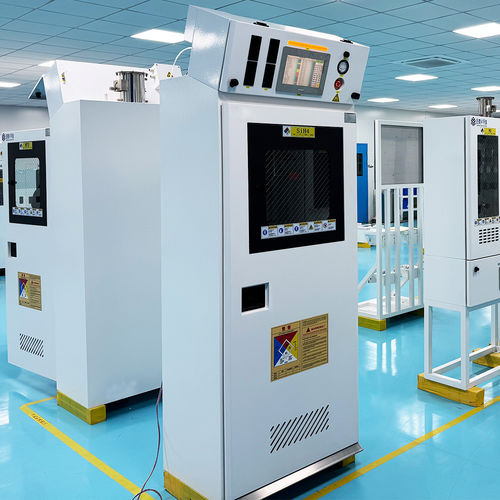
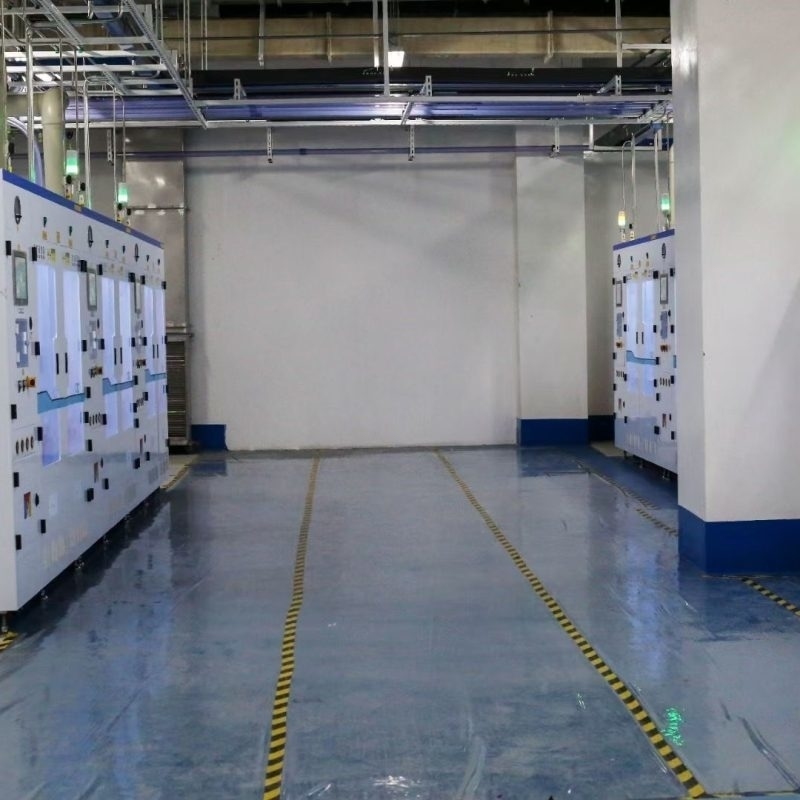
1. Gas Cabinets
Gas cabinets provide secure housing for hazardous gas cylinders and precursor containers. They are equipped with:
Gas leak detectors
Automatic shutoff valves
Ventilation systems
Fire suppression integration
Emergency shutdown controls
In semiconductor fabs, gas cabinets must comply with strict international safety standards and local regulations.
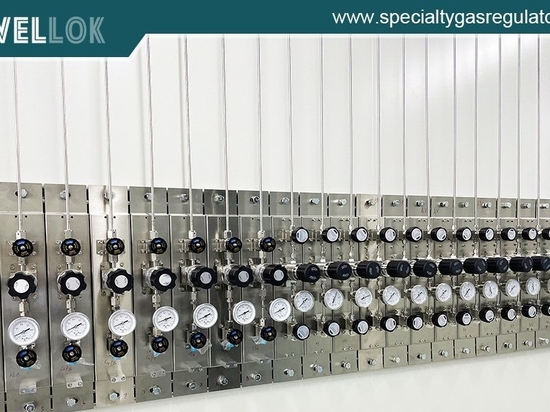
2. Pressure Regulators
Pressure regulators reduce high cylinder pressure to stable operating levels suitable for process tools. High-performance regulators used in CVD systems typically feature:
Stainless steel diaphragms
Electropolished internal surfaces
Low dead volume design
High leak integrity
Corrosion resistance
Ultra-high purity regulators help minimize particle generation and contamination.
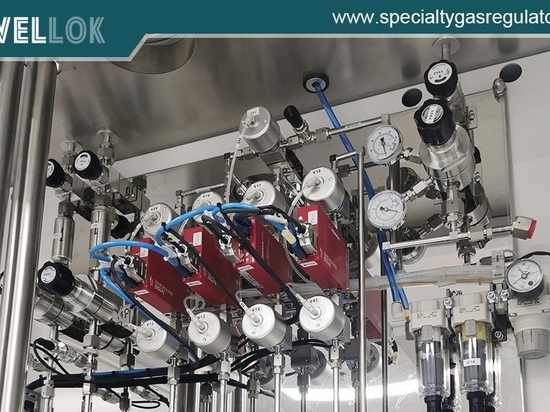
3. Mass Flow Controllers (MFCs)
Mass Flow Controllers are critical for maintaining accurate gas flow rates into the deposition chamber. Advanced digital MFCs offer:
High precision control
Fast response time
Multi-gas calibration
Remote communication capability
Self-diagnostic functions
Stable precursor flow is particularly important in Atomic Layer Deposition (ALD) and advanced plasma-enhanced CVD processes.
4. Vaporization Systems
Many liquid precursors require controlled vaporization before entering the process chamber. Vaporizer systems ensure stable conversion from liquid to vapor phase while avoiding condensation.
Key technologies include:
Direct liquid injection (DLI)
Heated bubblers
Carrier gas-assisted vaporizers
Flash vaporizers
Precise temperature management is essential to maintain vapor pressure stability.
5. Heated Gas Lines
Some precursor gases condense easily under lower temperatures. Heated delivery lines prevent condensation and maintain stable gas transport.
Features include:
Uniform temperature distribution
PID temperature control
Insulated tubing assemblies
High-purity stainless steel construction
Maintaining consistent line temperatures prevents particle formation and process interruption.
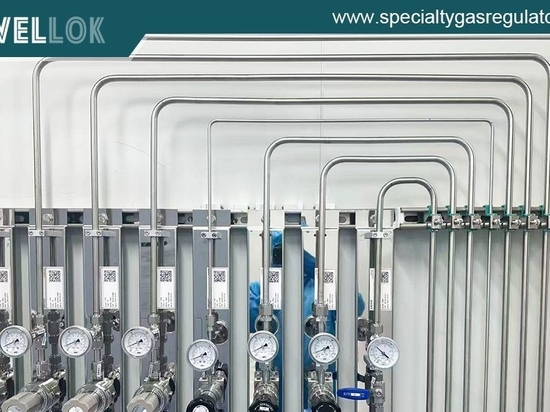
6. Valves and Manifolds
Diaphragm valves and welded manifolds are widely used in UHP gas systems. These components must provide:
Zero internal leakage
Minimal dead space
Corrosion resistance
High cycle life
Cleanroom compatibility
Orbital welding techniques are commonly used to minimize contamination risks.
Ultra-High Purity Requirements in Semiconductor Manufacturing
Semiconductor fabrication environments demand extremely low contamination levels. Even trace impurities at parts-per-billion (ppb) levels can affect device performance.
UHP gas delivery systems are designed with:
Electropolished 316L stainless steel tubing
Surface roughness below 10 Ra
Metal-to-metal sealing
Helium leak testing
Particle-free assembly processes
Cleanroom manufacturing
Advanced purification technologies may also include:
Gas purifiers
Moisture traps
Oxygen removal systems
Particle filters
The entire system must maintain integrity throughout installation, operation, and maintenance.
Safety Challenges in CVD Precursor Handling
Many CVD precursor chemicals present severe hazards. Common risks include:
Toxicity
Gases such as arsine, phosphine, and diborane are highly toxic even at low concentrations.
Pyrophoric Behavior
Silane and certain organometallic compounds can spontaneously ignite upon exposure to air.
Corrosiveness
Halogen-containing precursors may corrode system components if improper materials are used.
Pressure Hazards
Compressed gas cylinders require robust pressure management and emergency isolation systems.
To address these risks, modern gas delivery systems incorporate:
Automatic shutdown systems
Gas detection sensors
Redundant safety valves
Ventilation monitoring
PLC-based interlocks
Exhaust gas scrubber integration
Safety engineering is now considered equally important as process performance.
Automation and Smart Control Technologies
Industry 4.0 and smart manufacturing are transforming gas delivery technologies. Modern systems increasingly integrate automation features such as:
PLC control systems
Remote monitoring
Data logging
Predictive maintenance
Real-time diagnostics
SCADA integration
Smart sensors can monitor:
Flow rates
Pressure fluctuations
Temperature stability
Gas purity
Valve performance
Predictive maintenance algorithms help reduce downtime by identifying component degradation before failures occur.
Digitalization also improves traceability and process optimization across semiconductor fabs and coating production lines.
CVD Gas Delivery for Advanced Semiconductor Applications
Advanced Logic and Memory Devices
As chip geometries continue shrinking, precursor delivery precision becomes increasingly critical. Advanced nodes require:
Atomic-scale film uniformity
Extremely stable precursor pulses
Rapid switching performance
Ultra-clean delivery environments
ALD and low-pressure CVD systems heavily rely on highly responsive gas delivery components.
Compound Semiconductor Manufacturing
Gallium Nitride (GaN), Silicon Carbide (SiC), and III-V semiconductor production often use highly specialized precursors with strict thermal management requirements.
Gas delivery systems for compound semiconductors must address:
Higher operating temperatures
Corrosive chemistries
Complex precursor mixtures
Enhanced safety protocols
Semiconductor Packaging
Advanced packaging technologies such as TSV, fan-out packaging, and wafer-level packaging also require sophisticated deposition processes supported by reliable precursor delivery.
Applications in Industrial Coating Industries
Beyond semiconductor manufacturing, CVD precursor delivery systems are widely used in industrial coatings.
Tool Coatings
Titanium Nitride (TiN) and Diamond-Like Carbon (DLC) coatings improve:
Wear resistance
Surface hardness
Corrosion resistance
Tool lifespan
Stable precursor delivery ensures coating consistency across large production batches.
Optical Coatings
CVD coatings are used for:
Anti-reflective layers
Infrared optics
Display technologies
Precision lenses
Uniform precursor distribution is essential for optical performance.
Aerospace and Automotive Components
Protective ceramic and thermal barrier coatings help improve durability under extreme operating conditions.
These applications require robust high-temperature gas delivery systems capable of continuous industrial operation.
Material Selection for Gas Delivery Systems
Material compatibility is critical in precursor delivery design. Common materials include:
316L Stainless Steel
Widely used for its:
Corrosion resistance
Weldability
UHP compatibility
Hastelloy
Suitable for highly corrosive chemicals and aggressive environments.
Nickel Alloys
Used in specialized high-temperature applications.
Fluoropolymer Components
Sometimes applied in low-pressure or highly reactive chemical environments.
Improper material selection can lead to corrosion, contamination, and catastrophic system failures.
Emerging Trends in CVD Gas Delivery Technology
Increased Use of ALD
Atomic Layer Deposition requires extremely precise precursor pulsing and rapid valve actuation.
Sustainable Manufacturing
Manufacturers are seeking systems that reduce:
Gas waste
Energy consumption
Chemical emissions
AI-Driven Process Optimization
Artificial intelligence is increasingly being used to optimize gas flow stability and predictive maintenance.
Modular Gas Delivery Platforms
Modular system architectures simplify:
Maintenance
Scalability
Process upgrades
Tool integration
Enhanced Safety Compliance
Global semiconductor expansion is driving stricter safety and environmental standards worldwide.
Future Outlook
The future of CVD gas precursor delivery systems will be shaped by continued advances in semiconductor technology, materials science, and industrial automation. Emerging technologies such as AI chips, quantum computing, advanced displays, electric vehicles, and renewable energy systems will further increase demand for highly reliable thin-film deposition processes.
Gas delivery systems will continue evolving toward:
Higher purity standards
Greater automation
Smarter diagnostics
Improved sustainability
Enhanced chemical compatibility
Miniaturized high-performance components
Manufacturers capable of delivering fully integrated, ultra-clean, and intelligent gas handling solutions will play a critical role in the next generation of semiconductor and advanced coating production.
vmb valve manifold box manufacturer in china
vmb valve manifold box manufacturer in china
Conclusion
CVD gas precursor delivery systems serve as the foundation of modern semiconductor fabrication and advanced coating technologies. These systems must deliver exceptional precision, purity, safety, and reliability under increasingly demanding process conditions.
From gas cabinets and vaporizers to mass flow controllers and smart automation platforms, every component contributes directly to process stability and final product quality. As industries continue pushing toward smaller semiconductor nodes, more advanced materials, and higher production efficiency, the importance of sophisticated gas delivery solutions will only continue growing.
By combining ultra-high purity engineering, advanced automation, robust safety systems, and intelligent process control, modern CVD gas precursor delivery solutions are enabling the future of semiconductor manufacturing and industrial coating innovation.
For more about CVD gas precursor delivery solutions for semiconductor and coating industries, you can pay a visit to Jewellok at https://www.specialtygasregulator.com/about/ for more info.