
#Industry News
Semiconductor Grade Ultra-High Purity Gas Regulator for Process Gas Control
Semiconductor Grade Ultra-High Purity Gas Regulator for Process Gas Control
Ultra-high purity (UHP) gases are essential to modern semiconductor manufacturing. Process gases such as nitrogen (N₂), argon (Ar), hydrogen (H₂), oxygen (O₂), carbon dioxide (CO₂), and various specialty gases are used throughout wafer fabrication, including deposition, etching, ion implantation, cleaning, doping, and chamber purge processes. Because semiconductor processes operate at extremely small tolerances, even trace contamination or unstable gas pressure can affect wafer quality, process repeatability, and equipment reliability.
At the heart of a high-performance gas delivery system is the semiconductor-grade ultra-high purity gas regulator. Unlike conventional industrial regulators, UHP gas regulators are specifically engineered to maintain stable pressure and minimize particle generation, moisture contamination, outgassing, and gas leakage. Their internal surface finish, material selection, diaphragm design, sealing technology, and manufacturing processes must all meet the demanding requirements of semiconductor and other high-purity applications.
A properly selected UHP gas regulator provides accurate pressure control from the gas source to the process tool while protecting downstream equipment from excessive pressure fluctuations. This article explains the construction, operating principles, materials, performance characteristics, applications, and selection considerations of semiconductor-grade UHP gas regulators.
Best top 10 specialty gas pressure regulator valve manufacturers in china
Best top 10 specialty gas pressure regulator valve manufacturers in china
What Is a Semiconductor-Grade UHP Gas Regulator?
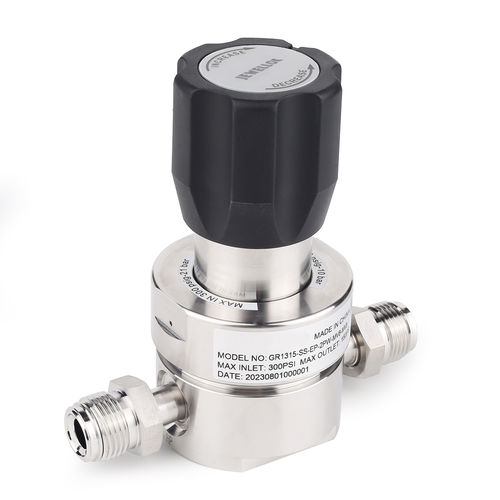
A semiconductor-grade UHP gas regulator is a precision pressure-control device designed for high-purity and ultra-high-purity gas distribution systems. Its primary function is to reduce and control gas pressure from a high-pressure source to a stable downstream pressure suitable for semiconductor process equipment.
A typical gas supply cylinder or bulk gas system may operate at significantly higher pressure than the process tool requires. The regulator creates a controlled pressure reduction while compensating for changes in inlet pressure and downstream gas demand.
In semiconductor applications, pressure control alone is not sufficient. The regulator must also preserve gas purity throughout the delivery process. Internal components therefore require carefully selected materials, controlled surface finishes, low dead volume, and reliable sealing structures.
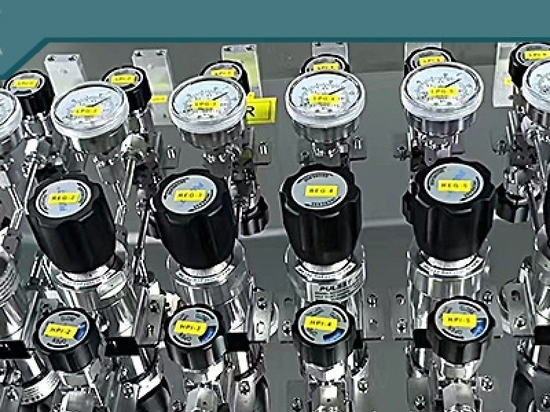
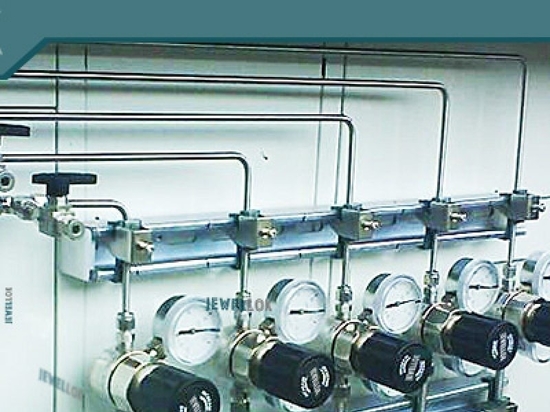
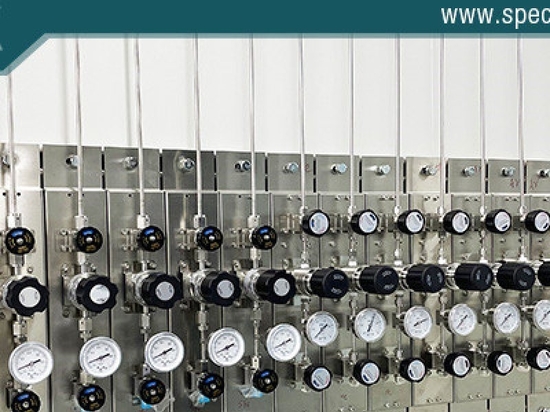
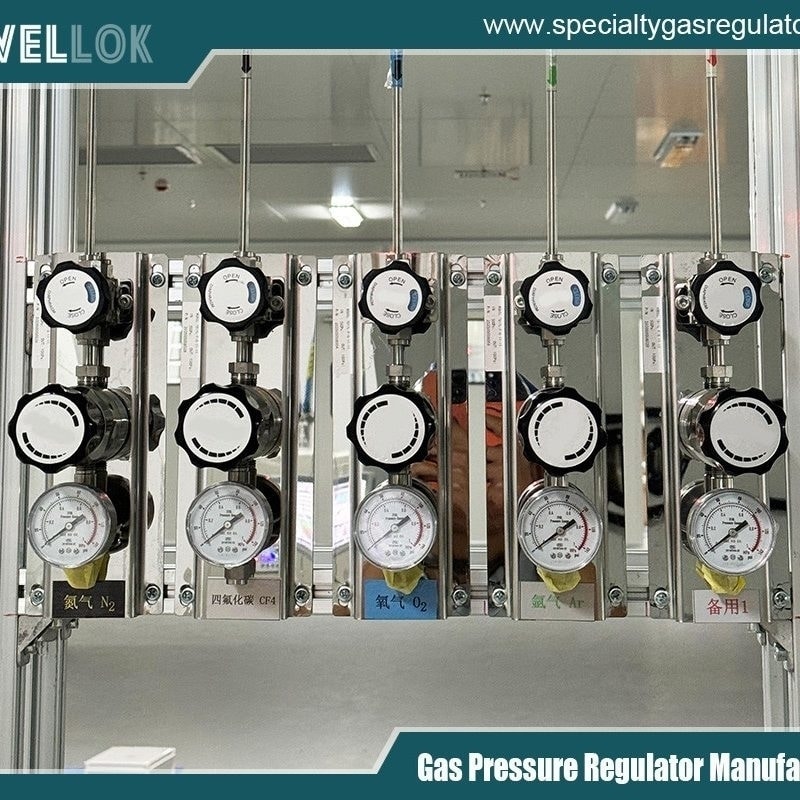
Typical UHP regulators are installed in gas cabinets, gas panels, valve manifold boxes (VMBs), chemical delivery systems, and point-of-use gas systems.
Why UHP Gas Regulation Is Critical in Semiconductor Manufacturing
Semiconductor fabrication requires highly controlled process conditions. Gas pressure directly affects parameters such as gas flow rate, chamber pressure, reactant concentration, and process uniformity.
For example, during chemical vapor deposition (CVD) or atomic layer deposition (ALD), variations in gas delivery can influence film thickness and uniformity. In plasma etching, unstable gas pressure can affect plasma characteristics and etching profiles.
Contamination is another major concern. Conventional industrial regulators may contain materials or internal geometries that introduce particles, moisture, hydrocarbons, or other contaminants into the gas stream. These contaminants can negatively affect sensitive semiconductor processes.
A semiconductor-grade UHP regulator is therefore designed to provide:
Stable and repeatable downstream pressure
Extremely low internal contamination
Minimal particle generation
Low gas permeation and outgassing
Reliable leak-tight performance
High corrosion resistance
Low internal dead volume
Consistent performance over long operating periods
These characteristics make UHP regulators an important component in maintaining process stability and gas purity.
Materials Used in UHP Gas Regulators
Material selection is one of the most important factors in semiconductor gas regulator design. Wetted components commonly use high-quality stainless steel, particularly 316L stainless steel, because of its corrosion resistance, mechanical strength, and suitability for high-purity gas service.
For demanding semiconductor applications, 316L stainless steel may be manufactured using controlled melting processes and then subjected to specialized cleaning and finishing procedures. Electropolishing can be used to improve internal surface characteristics and reduce locations where contaminants can accumulate.
The diaphragm is another critical component. Depending on the gas, pressure range, and application requirements, manufacturers may use metallic diaphragm materials with excellent fatigue resistance and corrosion resistance.
Sealing materials must also be carefully selected. Elastomer compatibility depends on gas chemistry, temperature, pressure, and required purity. For aggressive or highly reactive gases, material compatibility is particularly important because inappropriate sealing materials can degrade, permeate, or generate contaminants.
Internal Surface Finish and Electropolishing
Internal surface quality has a direct impact on gas purity. Rough internal surfaces can create microscopic areas where moisture, particles, and other contaminants may accumulate.
For this reason, semiconductor-grade gas regulators are often manufactured with highly controlled internal surface finishes. Electropolishing is commonly used to improve the surface condition of stainless-steel wetted components.
The electropolishing process removes a controlled amount of material from the surface, helping reduce microscopic irregularities and improving corrosion resistance. A smoother internal surface can also make cleaning and high-purity gas service more reliable.
The exact surface roughness requirement depends on the regulator design and application. Semiconductor customers should therefore verify the manufacturer’s specified Ra value, material certification, cleaning procedure, and inspection standard rather than relying solely on general claims such as “high purity.”
Diaphragm-Based Pressure Control
Many semiconductor UHP regulators use diaphragm-based pressure-control mechanisms. The diaphragm separates the gas flow path from the mechanical control components, reducing the potential for contamination from moving mechanical parts.
When downstream pressure changes, the diaphragm responds to the pressure difference and adjusts the regulator’s internal valve position. This enables the regulator to maintain a relatively stable outlet pressure despite changes in gas consumption.
A metallic diaphragm can provide advantages in high-purity applications because it offers excellent resistance to permeation and chemical exposure when appropriately selected.
Diaphragm design also affects regulator sensitivity, flow capacity, pressure stability, and service life. Therefore, the regulator should be selected according to the actual gas type, inlet pressure, outlet pressure, flow rate, and operating conditions.
Leak Tightness and Helium Leak Testing
Leak prevention is essential for semiconductor gas systems, particularly when toxic, corrosive, flammable, or expensive process gases are involved.
UHP regulators are commonly subjected to helium leak testing during manufacturing. Helium is used because its small molecular size and inert characteristics make it highly effective for detecting extremely small leakage paths.
A regulator’s leak performance depends not only on the body material but also on diaphragm construction, seals, fittings, welds, and manufacturing quality.
For critical semiconductor applications, customers should request documented leak-rate specifications and testing procedures. It is also important to distinguish between external leakage and internal seat leakage, because both can affect system performance in different ways.
Low Dead Volume Design
Dead volume refers to internal areas where gas can remain trapped or experience limited flow exchange. In high-purity gas systems, excessive dead volume can increase purge requirements and potentially contribute to cross-contamination.
UHP regulators therefore often incorporate compact internal flow paths and optimized valve geometries. Reducing unnecessary internal volume helps improve purge efficiency and gas replacement.
Low-dead-volume construction is particularly valuable in systems handling multiple process gases or gases with different chemical properties. It can help shorten transition times between process steps and reduce the amount of gas required for purging.
Applications in Semiconductor Gas Delivery Systems
Semiconductor-grade UHP gas regulators are used in a wide range of gas distribution applications.
Gas Cabinets
Gas cabinets provide controlled storage and delivery of process gas cylinders. Regulators inside the cabinet reduce cylinder pressure and provide controlled gas delivery to downstream components.
Gas Panels
Gas panels integrate regulators with valves, pressure sensors, filters, check valves, and other components. A precision UHP regulator provides the pressure-control function required for stable process gas delivery.
Valve Manifold Boxes
VMB systems distribute process gases to multiple semiconductor tools. Reliable regulators help maintain consistent pressure throughout the distribution network.
Point-of-Use Gas Systems
Point-of-use regulators are installed close to semiconductor process equipment. Their function is to provide precise final-stage pressure control before gas enters the process tool.
ALD and CVD Systems
Deposition processes require accurately controlled delivery of precursor and carrier gases. Stable pressure control contributes to consistent process conditions and repeatable film formation.
Etching Systems
Etching gases require controlled delivery to maintain appropriate process conditions inside the chamber. A high-quality regulator can help minimize pressure fluctuations in the gas supply system.
Key Performance Parameters
When selecting a semiconductor-grade UHP gas regulator, engineers should evaluate several technical parameters.
Inlet Pressure: The maximum and operating inlet pressure determine whether the regulator is suitable for the gas source.
Outlet Pressure: The regulator should provide the required downstream pressure range with sufficient adjustment resolution.
Flow Capacity: Flow requirements should be considered together with pressure drop and gas characteristics.
Gas Compatibility: Wetted materials must be compatible with the specific process gas.
Leak Rate: External and internal leakage specifications should be reviewed for critical applications.
Surface Finish: Internal surface roughness and finishing procedures are important indicators of high-purity performance.
Temperature Range: Operating temperature affects material performance, pressure stability, and sealing reliability.
Connection Type: Semiconductor gas systems commonly use high-purity tube fittings, welded connections, or other specialized connection configurations.
UHP Regulator Selection Guide
Choosing the correct regulator requires a system-level evaluation rather than simply selecting a regulator based on pressure range.
First, identify the exact gas or gas mixture. Chemical compatibility should then be evaluated for every wetted component.
Next, determine the maximum inlet pressure, required outlet pressure, normal operating flow rate, and maximum flow rate. Engineers should also consider pressure stability during changes in gas consumption.
The regulator’s connection type and size must match the gas panel or process piping. For critical applications, welded connections can reduce potential leakage points, while high-purity mechanical fittings may be selected where maintenance or modularity is required.
Finally, evaluate manufacturing quality, cleaning procedures, material certificates, helium leak testing, surface-finish specifications, and traceability. These factors are especially important when the regulator is used in advanced semiconductor manufacturing.
Manufacturing and Cleaning Requirements
The performance of a UHP gas regulator depends heavily on manufacturing discipline. Components used in the gas path should be produced in a controlled environment and cleaned using procedures appropriate for high-purity service.
After machining, components may undergo processes such as deburring, precision cleaning, passivation, electropolishing, ultrasonic cleaning, and controlled drying.
Assembly should minimize exposure to oil, dust, moisture, and other contaminants. Packaging is also important because a perfectly cleaned regulator can become contaminated during improper handling or storage.
Manufacturers serving the semiconductor industry should maintain traceability for materials, production batches, inspection results, and cleaning processes. Documentation provides customers with greater confidence in long-term gas system performance.
Advantages of High-Quality Semiconductor UHP Regulators
A properly designed UHP regulator offers several benefits to semiconductor gas delivery systems.
First, stable pressure control improves process repeatability. Second, high-quality wetted materials and surface finishing reduce contamination risks. Third, reliable sealing technology helps prevent hazardous gas leakage. Fourth, low-dead-volume designs can improve purge efficiency and reduce gas consumption.
In addition, durable construction can reduce maintenance requirements and improve the overall service life of the gas distribution system.
For semiconductor manufacturers, these advantages can translate into improved equipment availability, more consistent process performance, and lower operating risks.
Conclusion
The semiconductor-grade ultra-high purity gas regulator is a critical component in modern process gas control systems. Its role extends far beyond simple pressure reduction. A high-performance UHP regulator must maintain stable pressure while protecting the purity, safety, and reliability of the gas supply.
Materials such as high-quality 316L stainless steel, precision diaphragm structures, controlled internal surface finishes, low-dead-volume flow paths, and reliable sealing technologies are fundamental to UHP regulator performance. Proper cleaning, helium leak testing, inspection, and traceability are equally important.
As semiconductor manufacturing moves toward smaller process geometries and increasingly demanding process conditions, gas delivery systems require greater precision and reliability. Selecting a semiconductor-grade UHP gas regulator based on gas compatibility, pressure requirements, flow capacity, surface finish, leak performance, and manufacturing quality can help semiconductor fabs achieve stable and repeatable process gas delivery.
For semiconductor equipment manufacturers, gas panel integrators, and industrial gas system engineers, investing in properly engineered UHP pressure regulators is an essential step toward building reliable, contamination-controlled gas delivery infrastructure.
For more about semiconductor grade ultra-high purity gas regulator for process gas control, you can pay a visit to Jewellok at https://www.specialtygasregulator.com/product-category/specialty-gas-cabinet/ for more info.