
#Industry News
How To Choose The Right Stainless Steel Needle Valve
How To Choose The Right Stainless Steel Needle Valve
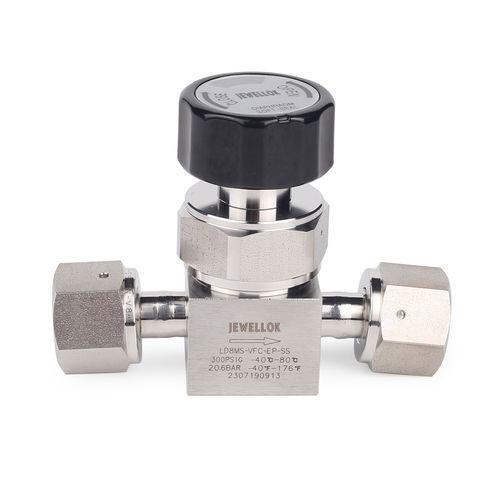
Stainless steel needle valves are precision instruments essential for controlling the flow of fluids and gases in a wide range of industrial applications. Known for their fine-threaded needle-like stem that allows for accurate throttling, these valves are particularly valued in systems requiring precise flow regulation, such as in oil and gas, chemical processing, pharmaceuticals, semiconductors, and instrumentation. The use of stainless steel enhances their durability, corrosion resistance, and suitability for harsh environments, making them a preferred choice over brass or plastic alternatives.
Selecting the right stainless steel needle valve is crucial to ensure system efficiency, safety, and longevity. An incorrect choice can lead to leaks, pressure drops, contamination, or even system failure, resulting in costly downtime or safety hazards. Factors like material grade, pressure rating, flow requirements, and environmental conditions all play a role in the decision-making process. This comprehensive 2000-word guide will walk you through the essential considerations, types, applications, and step-by-step process for choosing the ideal stainless steel needle valve. Whether you’re an engineer designing a new system, a procurement specialist sourcing components, or a maintenance professional upgrading equipment, this article provides the insights needed to make an informed decision.
Specialty gas regulator manufacturers
Understanding Stainless Steel Needle Valves
A needle valve is a type of flow control valve that uses a long, tapered needle to regulate the flow through a small orifice. The needle’s fine threading allows for gradual opening and closing, providing precise control over flow rates, especially in low-flow or high-pressure scenarios. Stainless steel needle valves incorporate stainless steel (typically grades like 316L or 304) for the body, stem, and other wetted parts, offering superior resistance to corrosion, high temperatures, and chemical exposure.
Why Stainless Steel?
Stainless steel’s properties make it ideal for needle valves:
Corrosion Resistance: Grades like 316L contain molybdenum, enhancing resistance to pitting and crevice corrosion from chlorides or acids.
Durability: Withstands pressures up to 10,000 psi and temperatures from -196°C to 450°C, depending on the design.
Hygienic: Non-porous surfaces reduce contamination risks, crucial for pharmaceuticals and food processing.
Strength: High tensile strength ensures reliability in demanding applications.
Compared to brass (which may corrode in aggressive environments) or plastic (limited to low pressures), stainless steel offers longevity and versatility, though at a higher cost.
How Needle Valves Work
The valve’s stem, threaded finely, moves the needle in or out of the seat, adjusting the orifice size. This allows for linear flow control, making needle valves excellent for throttling, metering, or sampling. They are not typically used for shut-off, as the needle can damage the seat over time if over-tightened.
Types of Stainless Steel Needle Valves
Stainless steel needle valves come in several configurations, each suited to specific applications. Understanding these types helps in selecting the right one.
Straight Needle Valves
Description: The stem and body are aligned in a straight line, offering simple flow control.
Features: Compact design, easy installation, suitable for low to medium flow rates.
Applications: Instrumentation lines, gas sampling, and laboratory setups.
Example: Swagelok’s SS-1RS4, rated for 5,000 psi.
Angle Needle Valves
Description: The inlet and outlet are at a 90-degree angle, allowing for flow direction changes.
Features: Reduces piping complexity, ideal for tight spaces.
Applications: Hydraulic systems, chemical processing, and panel-mounted instruments.
Example: Parker’s V Series, with 316 stainless steel for corrosive media.
Multi-Port Needle Valves
Description: Feature multiple ports for diverting or mixing flows.
Features: Versatile, with options for 2-way, 3-way, or more configurations.
Applications: Analytical instruments, sampling systems, and process control.
Example: HOKE’s 3700 series, designed for high-purity applications.
Bar Stock Needle Valves
Description: Machined from a single bar of stainless steel for enhanced strength.
Features: Leak-tight sealing, high-pressure capability.
Applications: Oil and gas, petrochemicals, and high-pressure hydraulics.
Example: Noshok’s 2070 series, rated for 10,000 psi.
Bellows-Sealed Needle Valves
Description: Incorporate a bellows seal to isolate the stem from the process fluid.
Features: Zero emissions, suitable for hazardous or toxic gases.
Applications: Semiconductors, pharmaceuticals, and vacuum systems.
Example: Tescom’s bellows-sealed models for UHP gases.
Forged Needle Valves
Description: Forged from stainless steel for superior strength and pressure resistance.
Features: Integral bonnet, high integrity in extreme conditions.
Applications: Offshore oil platforms, chemical plants, and power generation.
Example: Autoclave Engineers’ 30VM series, rated for 30,000 psi.
Each type addresses unique operational demands, from precision flow in labs to high-pressure control in industrial settings.
Applications of Stainless Steel Needle Valves
Stainless steel needle valves are used across industries for their precision and robustness:
Oil and Gas
Used for sampling, pressure testing, and flow control in wellheads, pipelines, and refineries. Their corrosion resistance handles sour gases and offshore conditions.
Chemical Processing
Regulate corrosive fluids like acids or solvents in reactors and transfer lines, where 316L stainless steel prevents degradation.
Pharmaceuticals
Ensure precise flow in sterile systems for gas or fluid delivery, with electropolished surfaces reducing contamination risks.
Semiconductors
Control UHP gases like silane or nitrogen in fabrication processes, where minimal particle generation is critical.
Instrumentation and Laboratories
Used in analytical equipment like chromatographs for accurate gas metering, benefiting from the valve’s fine control.
Aerospace and Defense
Manage hydraulic fluids or gases in aircraft systems, where high-pressure capability and reliability are essential.
Water Treatment
Regulate chemicals in dosing systems, with stainless steel resisting chlorinated water.
These applications highlight the valve’s versatility in demanding environments.
Key Features of Stainless Steel Needle Valves
When evaluating stainless steel needle valves, consider these features for optimal performance:
Material Grade
316L for corrosive environments; 304 for general use; exotic alloys like Hastelloy for extreme chemicals.
Pressure Rating
From 100 psi for low-pressure systems to 10,000 psi or more for high-pressure applications.
Flow Control Precision
Fine threading allows adjustments in increments of 0.001 inches, ideal for throttling.
Sealing Options
Metal-to-metal for high temperatures; soft seats (e.g., PTFE) for leak-tight performance.
End Connections
Threaded (NPT), compression (e.g., Swagelok), or flanged for easy integration.
Stem Design
Non-rotating stems reduce wear; rising stems indicate position.
Bonnet Type
Union bonnet for easy maintenance; integral bonnet for compactness.
Safety Features
Locking handles to prevent tampering; bellows seals for hazardous media.
These features ensure the valve meets specific operational and safety requirements.
How to Choose the Right Stainless Steel Needle Valve
Selecting the right stainless steel needle valve involves a systematic approach to match the valve’s specifications with your system’s needs. Follow these steps:
Step 1: Define Application Requirements
Fluid Type: Identify if the fluid is gas, liquid, corrosive, or UHP. For corrosive fluids, choose 316L stainless steel; for UHP, electropolished versions.
Flow Rate: Calculate the required Cv (flow coefficient) for your system’s flow needs.
Pressure and Temperature: Determine the maximum operating pressure (e.g., 5,000 psi) and temperature (e.g., 300°C).
Environment: Consider factors like humidity, chemicals, or cleanroom conditions.
Tip: Consult fluid compatibility charts from manufacturers like Parker or Swagelok.
Step 2: Select the Valve Type
Straight for simple lines; angle for space-saving; multi-port for sampling.
Tip: Use bar stock for high-pressure; bellows-sealed for toxic gases.
3: Choose Materials
Body and Stem: 316L for corrosion resistance; 304 for general use.
Seals: PTFE for chemicals; Viton for oils; metal for high temperatures.
Tip: Verify NACE compliance for sour gas applications.
4: Determine Size and Connections
Valve Size: Match to pipe diameter (e.g., 1/4 inch for instrumentation).
Connections: NPT for threaded; compression for leak-tight seals.
Tip: Compression fittings like Swagelok reduce leaks in high-vibration systems.
5: Evaluate Performance Specifications
Pressure Rating: Ensure it exceeds system MAWP.
Flow Precision: Look for low Cv (e.g., 0.0004–0.5) for fine control.
Leak Rate: Aim for 10^-9 cc/sec helium leak rate for UHP.
Tip: Check droop (pressure drop under flow) for stability.
6: Consider Safety and Compliance
Certifications: ASME, ISO, PED, or NACE.
Features: Locking handles, anti-tamper designs.
Tip: For hazardous areas, choose ATEX-certified valves.
7: Factor in Cost and Maintenance
TCO: Balance upfront cost with longevity and maintenance.
Maintenance: Choose valves with replaceable seats for easy repairs.
Tip: Stainless steel reduces long-term costs in corrosive environments.
8: Consult Manufacturers or Suppliers
Request samples or technical data sheets.
Tip: Partner with suppliers like Grainger or MSC Industrial for custom advice.
Maintenance and Best Practices for Stainless Steel Needle Valves
Proper maintenance ensures longevity and performance:
Regular Inspection: Check for leaks, stem wear, or corrosion.
Cleaning: Flush with compatible solvents; use ultrasonic cleaning for UHP.
Lubrication: Apply food-grade lubricant to stems if needed.
Calibration: Test flow control periodically.
Storage: Store in dry, clean areas to prevent contamination.
Best Practices: Avoid over-tightening; use in compatible media; follow manufacturer guidelines.
Leading Manufacturers of Stainless Steel Needle Valves
Several companies excel in producing high-quality stainless steel needle valves:
Swagelok
Overview: A global leader based in Ohio, USA, known for fluid system solutions.
Key Products: SS-1RS series, rated for 5,000 psi, with precise metering.
Strengths: Compression fittings, UHP options, extensive support.
Parker Hannifin
Overview: A U.S. company specializing in motion and control technologies.
Key Products: V Series, with 316 stainless steel for corrosive media.
Strengths: High-pressure designs, customization, global distribution.
HOKE
Overview: Part of Circor International, focusing on instrumentation valves.
Key Products: 3700 series bar stock valves, for pressures up to 6,000 psi.
Strengths: Forged construction, multi-port options.
Noshok
Overview: An American manufacturer of valves and gauges.
Key Products: 2070 series forged needle valves, rated for 10,000 psi.
Strengths: Affordable, durable, with gauge options.
Tescom (Emerson)
Overview: A division of Emerson, specializing in precision regulators and valves.
Key Products: Bellows-sealed needle valves for UHP and hazardous gases.
Strengths: High-purity designs, technical expertise.
Autoclave Engineers (Parker)
Overview: Specializes in high-pressure equipment.
Key Products: 30VM series, for pressures up to 30,000 psi.
Strengths: Extreme pressure capability, forged stainless steel.
These manufacturers offer reliable, innovative solutions for diverse applications.
Emerging Trends in Stainless Steel Needle Valves
The needle valve industry is evolving:
Smart Valves: IoT-enabled valves with sensors for real-time monitoring.
UHP Focus: Electropolished 316L for semiconductor and pharmaceutical needs.
Sustainable Materials: Eco-friendly alloys and low-emission designs.
Compact Designs: Smaller valves for space-constrained systems.
Customization: 3D printing for bespoke valves.
These trends enhance precision, safety, and sustainability.
Practical Considerations for Using Stainless Steel Needle Valves
To maximize performance:
Installation: Ensure proper orientation (e.g., vertical for gas flow).
Operation: Avoid over-tightening to prevent seat damage.
Compatibility: Check for fluid reactions with stainless steel.
Maintenance: Schedule regular inspections and cleaning.
Case Studies
Oil Refinery (USA): Swagelok’s SS-1RS valves provided precise control in a high-pressure line, reducing leaks by 90%.
Pharmaceutical Lab (Germany): Tescom’s bellows-sealed valves ensured UHP gas delivery, meeting FDA standards.
Semiconductor Fab (Taiwan): Parker’s V Series valves minimized contamination in silane lines, improving yield.
Specialty gas regulator manufacturers
Conclusion
Stainless steel needle valves are vital for precise flow control in high-pressure and corrosive environments. By understanding their types, features, and selection criteria, you can choose the right valve for your application. Leading manufacturers like Swagelok, Parker, and Tescom offer innovative solutions backed by quality and support. As trends like smart valves and sustainability shape the future, these valves will continue to drive efficiency and safety. Invest in a high-quality stainless steel needle valve today to ensure your systems perform reliably, reducing downtime and enhancing operational success.
For more about how to choose the right stainless steel needle valve , you can pay a visit to Jewellok at https://www.jewellok.com/ for more info.