
#Industry News
Which Scrubber System is More Suitable for Treating Silane Off-Gas in Semiconductors?
Which Scrubber System is More Suitable for Treating Silane Off-Gas in Semiconductors?
Silane (SiH4) is a foundational precursor gas utilized extensively in modern semiconductor manufacturing. It plays a critical role in chemical vapor deposition (CVD), atomic layer deposition (ALD), and epitaxial growth processes used to form silicon thin films, gate oxides, and polysilicon layers. However, silane is characterized by extreme chemical reactivity, pyrophoricity, and toxicity.
When silane is introduced into process chambers, a significant fraction exits as exhaust or off-gas. Untreated silane off-gas presents severe safety hazards, including spontaneous combustion, explosion risks, and environmental non-compliance. Consequently, selecting the appropriate scrubber system is a critical engineering decision for semiconductor fabrication facilities (fabs).
This article evaluates the operational principles, advantages, limitations, and overall suitability of primary abatement technologies—focusing heavily on Burn-Wet (Thermal-Wet) systems, Dry Bed scrubbers, and standalone wet treatment options—to determine the optimal choice for semiconductor silane off-gas treatment.
The Chemical Nature and Hazards of Silane Off-Gas
To evaluate scrubber suitability, one must first understand the chemical properties of silane. Silane is a colorless, flammable, pyrophoric gas with a low autoignition temperature.
Pyrophoricity: Silane spontaneously ignites in air at concentrations as low as 1.0%.
Reaction Byproducts: When oxidized, silane converts into solid silicon dioxide (SiO2) nanoparticles and water vapor:
SiH4 + 2O2 SiO2 + 2H2O
The Clogging Challenge: The primary engineering obstacle in handling silane off-gas is managing this solid silica byproduct. If temperature and gas dynamics are not precisely controlled within the abatement hardware, fine SiO2 particles accumulate rapidly, causing pipe blockages, backpressure spikes, and catastrophic tool downtime.
Because silane is practically insoluble in water, conventional wet scrubbers cannot scrub it directly. An intermediate conditioning step—typically thermal oxidation or combustion—is mandatory before wet scrubbing can occur.
Overview of Silane Abatement Technologies
Semiconductor fabs generally deploy three primary categories of point-of-use (POU) or centralized abatement equipment to manage silane off-gas.
1. Dry Bed (Adsorption) Scrubbers
Dry bed abatement systems pass the silane-laden exhaust stream through a packed column of reactive solid media, such as metal oxides or chemically treated substrates. The silane reacts chemically with the solid media, binding the silicon atoms into stable solid matrices within the bed.
Advantages: Clean operation when handling low-flow or intermittent processes; minimal water consumption; straightforward mechanical setup.
Limitations: High operational costs in high-volume manufacturing (HVM) due to frequent media replacement; limited thermal capacity; severe risk of localized hotspots or bed fires if sudden high-concentration pulses enter the dry medium.
2. Standalone Wet Scrubbers
Standalone wet scrubbers rely on mass transfer between a contaminated gas stream and a scrubbing liquid (typically water or chemical reagents) to dissolve and neutralize water-soluble toxic gases.
Advantages: Excellent for acid gases and water-soluble components.
Limitations: Inapplicable as a standalone solution for silane. Because silane does not dissolve in water and does not react with standard aqueous scrubbing solutions without an oxidizer, passing untreated silane through a wet scrubber results in unmitigated flammable gas passing directly through the exhaust stack.
3. Burn-Wet (Thermal-Wet) Systems
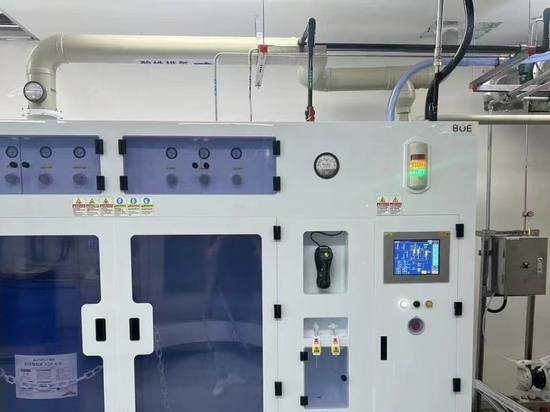
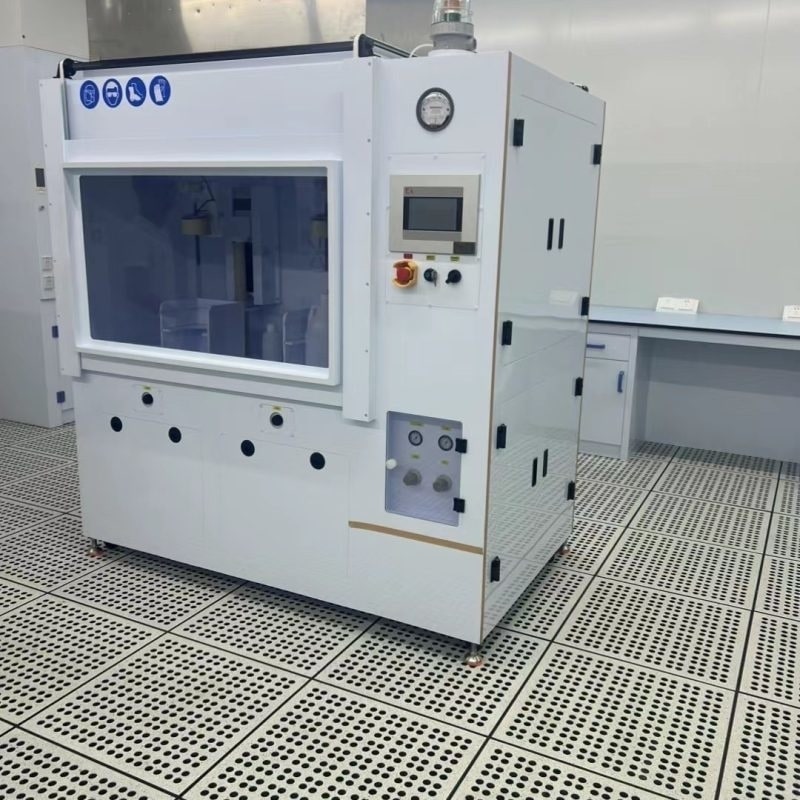
Burn-wet technology combines thermal oxidation (combustion) with downstream wet scrubbing in a single, compact point-of-use unit. The exhaust gas first enters a combustion chamber where a controlled burner oxidizes the silane into silicon dioxide and water vapor under high temperatures. Immediately following combustion, a quenching and wet-scrubbing section cools the hot gas stream and washes out the resulting silica particulates and any secondary acid gases.
Advantages: High destruction and removal efficiency (DRE); robust handling of high gas flows and variable concentrations; continuous automated removal of solid byproducts via liquid spray systems.
Limitations: Higher initial capital expenditure; requires continuous utilities (fuel, water, electricity, and nitrogen purge).
Comparative Analysis: Burn-Wet vs. Dry Bed Systems
Evaluation Parameter Burn-Wet (Thermal-Wet) Systems Dry Bed Adsorption Systems
Destruction Efficiency Extremely high (>99.9% for silane) High, dependent on media saturation
HVM Suitability Excellent; designed for continuous, high-duty cycles Moderate to Poor; rapid media exhaustion under heavy loads
Byproduct Management Continuous liquid washdown removes solid $\text{SiO}_2$ Accumulates solids inside dry media, increasing backpressure
Safety Profile Controlled thermal destruction isolates ignition Risk of media bed channeling, overheating, or ignition
Operating Cost (OPEX) Moderate-to-high utility consumption (fuel, water) High media replacement and hazardous waste disposal costs
Key Takeaway: While dry beds are viable for low-flow research labs or specialized low-duty gas cabinets, Burn-Wet systems are overwhelmingly the preferred industry standard for high-volume semiconductor manufacturing lines running continuous CVD processes.
Key Engineering and Design Considerations for Fab Selection
When designing or selecting a scrubber system for silane off-gas, facility and environmental engineers must evaluate several crucial operating parameters:
Gas Stream Composition and Matrix Complexity
Silane rarely travels in isolation. In typical fab applications, silane is mixed with carrier gases such as nitrogen , hydrogen, or dopant gases like phosphine, diborane , and ammonia.
A Burn-Wet system effectively handles mixed-gas streams because the thermal oxidation stage breaks down multiple hydride gases simultaneously, while the wet scrubbing stage neutralizes co-generated corrosive acid gases.
Particulate Control and Prevention of Pipe Clogging
The creation of silica dust is inevitable during silane abatement. Burn-wet systems incorporate specialized quenching rings and internal water curtains designed to instantly trap particulate matter before it can coat interior exhaust walls. Automated clean-out ports and self-cleaning reactor designs (often marketed under proprietary fab architectures like Tilia or Optimum units) ensure extended tool uptime.
Footprint and Point-of-Use (POU) Integration
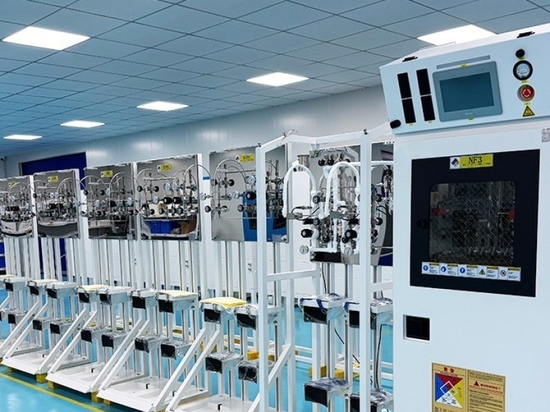
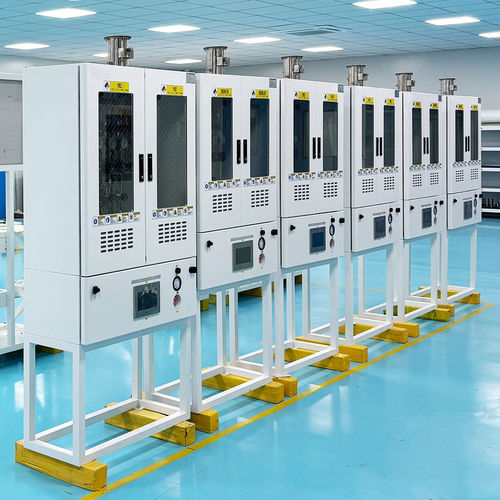
Modern semiconductor fabs prioritize real estate efficiency in the sub-fab. POU Burn-Wet units are engineered with a small footprint, allowing them to sit directly beneath or adjacent to process tools. This shortens the exhaust run between the reactor chamber and the abatement device, minimizing the length of foreline piping where hazardous pyrophoric deposits could otherwise accumulate.
Automation and Safety Interlocks
Advanced silane scrubbers feature PLC-based control architectures that continuously monitor flame status, chamber temperatures, cooling water flow, exhaust pressure differentials, and gas concentrations. In the event of a utility failure or abnormal pressure spike, automated safety interlocks instantly shut off upstream pneumatic valves to isolate the process tool from the exhaust line.
Conclusion
Treating silane off-gas requires a technology capable of managing extreme pyrophoricity, high reaction temperatures, and heavy solid particulate generation. While dry bed scrubbers offer a localized solution for low-volume or niche applications, they quickly become cost-prohibitive and operationally restrictive in high-volume production.
For modern semiconductor fabrication facilities, Burn-Wet (Thermal-Wet) scrubber systems represent the most suitable, reliable, and safe technology. By combining controlled thermal oxidation with integrated wet quenching, Burn-Wet systems safely convert hazardous silane into manageable solid and liquid byproducts while maintaining high tool uptime and strict compliance with environmental emission regulations.
For more about which scrubber system is more suitable for treating silane off-gas in semiconductors, you can pay a visit to Jewellok at https://www.jewellok.com/ for more info.