
#Industry News
Strategies for Managing Sudden High-Concentration Shock Loads in Wet Scrubber Tail Gas Treatment Systems
Strategies for Managing Sudden High-Concentration Shock Loads in Wet Scrubber Tail Gas Treatment Systems
Wet scrubbers remain a cornerstone technology in industrial tail gas (off-gas) purification, widely deployed across chemical synthesis, semiconductor manufacturing, metallurgy, and waste incineration plants. Designed to remove hazardous air pollutants (HAPs), acid gases (such asHCl, SO2, HF), and particulate matter through gas-liquid mass transfer, these systems operate reliably under steady-state conditions.
However, industrial processes are rarely static. Process upsets—sudden, unannounced surges in contaminant concentration, mass flow rate, or thermal energy—frequently challenge these environmental control systems. A sudden high-concentration shock load can overwhelm neutralization capacity, trigger severe pH crashes, cause scaling or plugging, and ultimately lead to non-compliance or equipment failure.
uhp 316l stainless steel gas pressure regulators
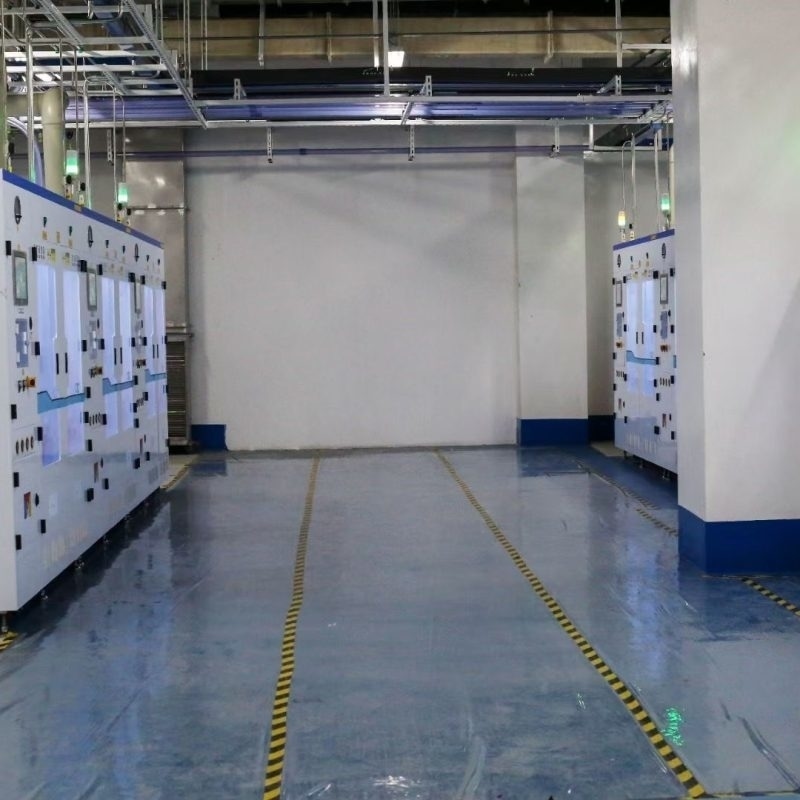
Industrial wet scrubber tail gas treatment installation.
1. Anatomy of a Process Upset in Wet Scrubbers
Understanding how a shock load propagates through a wet scrubbing train is essential for engineering effective countermeasures. Process upsets typically originate from:
Batch Process Excursions: Exothermic reactions going out of control, rapid venting of pressure vessels, or unreacted intermediate spikes in chemical reactors.
Upstream Equipment Failure: Catalyst degradation in selective catalytic reduction (SCR) or thermal oxidizers, resulting in raw breakthrough.
Feedstock Variability: Introduction of off-spec raw materials containing elevated sulfur, halogen, or volatile organic compounds (VOCs).
When a high-concentration shock load hits the scrubber inlet, it creates multiple concurrent stressors:
Stress Factor Immediate Physical/Chemical Impact Operational Consequence
Mass Transfer Saturation Liquid-film and gas-film resistance thresholds are exceeded; interfacial area becomes insufficient. Rapid contaminant breakthrough at the mist eliminator exit. pH Depletion Stoichiometric consumption of dissolved alkaline reagents (e.g., NaOH, Ca(OH)2) outpaces replenishment. Sudden pH crash, shifting absorption equilibrium and releasing dissolved acid gases back into the gas phase.
Thermal Excursion High enthalpy gases entering the tower cause localized flashing, steam generation, and packing degradation. Destruction of internal structured packing and failure of plastic ductwork.
2. Advanced Real-Time Monitoring and Early Warning Systems
Traditional feedback control—waiting for the scrubber outlet or tray pH to drop before reacting—is inherently reactive and too slow to catch rapid shock loads. Modern high-resilience systems utilize a multi-layered sensing architecture:
Upstream Feedforward Sensors
Fast-Response Spectrometry: Fourier-Transform Infrared (FTIR) or tunable diode laser absorption spectroscopy (TDLAS) installed in the ductwork upstream of the scrubber provide real-time concentration profiles with sub-second response times.
Process Interlock Integration: Direct communication links between reactor Distributed Control Systems (DCS) and the scrubber environmental control logic, signaling an impending venting event seconds or minutes before the surge arrives.
Internal Scrubber Diagnostics
Redundant pH and Redox (ORP) Probes: Positioned across multiple packed beds or stages to detect concentration gradients instantly.
Differential Pressure (ΔP) Transmitters: Monitoring packing resistance to detect early signs of salt crystallization, polymer blinding, or flooding caused by rapid reaction products.
3. Engineering and Operational Mitigation Strategies
To absorb sudden shock loads without compromising effluent standards, plants must integrate both passive engineering buffers and active chemical responses.
A. Hydraulic and Chemical Buffering
Oversized Recirculation Sumps: Maintaining a large liquid-to-gas (L/G) ratio and substantial sump volume ensures that sudden acid spikes are diluted across a massive molar reservoir rather than causing an immediate pH collapse.
Automated Dual-Stage Reagent Dosing: Implementing split-range dosing valves. A primary fast-acting valve handles baseline loads, while a secondary oversized modulating valve opens rapidly upon detecting a high-rate pHdeviation.
Buffer Salts Addition: Incorporating buffering agents such as phosphates or carbonates alongside primary caustic solutions to stabilize pH swings through chemical buffering capacity.
B. Multi-Stage Scrubbing Architecture
A robust wet scrubber tail gas treatment system handling frequent process upsets should employ a segregated multi-stage configuration:
Quench/Roughing Stage: A direct-contact venturi or spray tower designed specifically for thermal shock absorption and bulk removal of 80% to 90% of incoming heavy loads.
Polishing Stage: A counter-current packed bed operating at tightly controlled neutral-to-alkaline pH to capture trace pollutants down to regulatory limits.
C. Emergency Dilution and Quench Mechanisms
Automated Air Ingestion Dampers: Rapid-opening dilution air louvers triggered by upstream FTIR sensors, injecting ambient air to dilute the incoming pollutant concentration below critical reaction thresholds.
Emergency Water Quench Loops: High-pressure spray headers that activate autonomously during thermal spikes, preventing structural failure of internal FRP (fiber-reinforced plastic) shells.
4. Advanced Process Control (APC) Philosophies
Standard PID loops often oscillate or lag severely during non-linear shock events. Advanced control strategies provide superior stability:
Feedforward-Feedback Cascade Control: The feedforward controller calculates the required reagent flow based on incoming mass flow and concentration measurements, preemptively injecting caustic before the pH probe registers a drop. The feedback loop acts as a fine-tuning trim.
Override and Selector Control Logic: In the event of a severe upset, safety logic overrides normal setpoints, forcing maximum pump speeds and opening bypass valves to protect critical assets while maintaining minimum scrubbing efficiency.
5. Industrial Case Study: Managing an Acid Gas Surge
Consider a specialty chemical plant producing chlorinated intermediates. A sudden exothermic runaway reaction in a synthesis reactor forced an emergency pressure relief, sending a massive wave of high-concentration HCl gas (>15,000 ppm) into the tail gas scrubber.
Traditional Response Risk: A standard single-stage scrubber with slow valve actuation would have experienced a pH drop from 9.0 to 1.5 within 4 seconds, leading to severe acid gas breakthrough and environmental violation.
Mitigation Deployment: The plant’s automated system utilized upstream FTIR detection, which triggered three simultaneous actions 2.5 seconds before the gas front reached the scrubber:
Automated opening of the emergency recirculation booster pump.
Feedforward injection of concentrated NaOH directly into the venturi throat.
Activation of dilution air dampers to lower inlet thermal stress.
Outcome: Despite the shock load, the system maintained outlet HCl concentrations below 5 ppm, proving that predictive engineering and automated buffering can successfully neutralize extreme process upsets.
gas cylinder changeover manifold manufacturers
Conclusion
Process upsets and high-concentration shock loads are inevitable realities in complex industrial operations. Relying solely on conventional, reactive wet scrubber designs exposes plants to severe environmental risks and costly downtime. By integrating advanced upstream monitoring, multi-stage hydraulic buffering, robust materials of construction, and predictive feedforward control, operators can transform their wet scrubber tail gas treatment systems into resilient, shock-absorbent assets that ensure continuous compliance and operational safety.
For more about strategies for managing sudden high-concentration shock loads in wet scrubber tail gas treatment systems, you can pay a visit to Jewellok at https://www.specialtygasregulator.com/product-category/specialty-gas-cabinet/ for more info.