
#Industry News
PP Polypropylene Chemical Exhaust Scrubber for Acid Gas Neutralization and Air Pollution Control
PP Polypropylene Chemical Exhaust Scrubber for Acid Gas Neutralization and Air Pollution Control
1. Introduction
Industrial manufacturing, chemical processing, semiconductor fabrication, metal finishing, and pharmaceutical synthesis generate substantial volumes of corrosive gaseous emissions. Among these, acid gases—such as hydrochloric acid (HCl), sulfuric acid (H2SO4), nitric acid (HNO3), hydrofluoric acid (HF), and chromic acid (H2CrO4)—pose severe environmental hazards, atmospheric pollution risks, workplace health threats, and severe infrastructure degradation if left untreated.
To meet strict regulatory standards established by global environmental protection agencies, industrial facilities rely on industrial wet scrubbing technology. Among the various structural materials available for wet scrubber construction, Polypropylene (PP) has emerged as an ideal standard for acid gas neutralization systems.
This technical article provides a comprehensive engineering analysis of Polypropylene (PP) chemical exhaust wet scrubbers, detailing their material chemistry, structural thermodynamics, neutralization reaction mechanics, system architectures, design equations, operational parameters, and maintenance considerations.
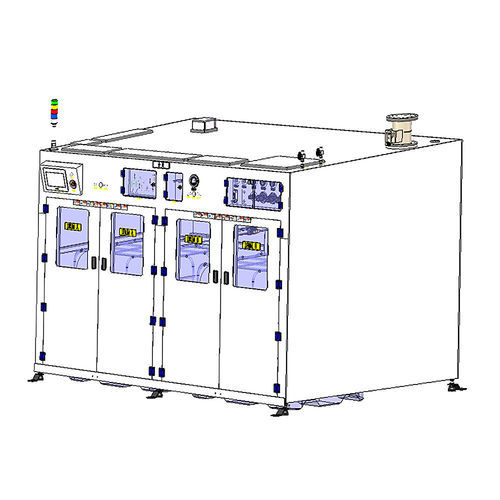
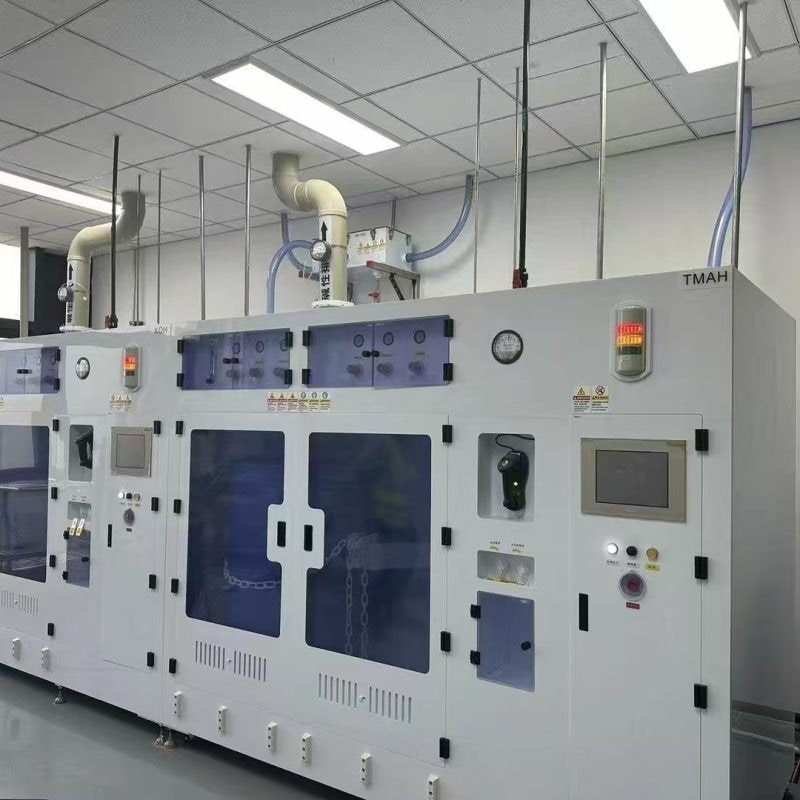
chemical delivery module (CDM) and chemical delivery system (CDS)
2. Material Characteristics of Polypropylene in Corrosive Applications
Choosing the proper structural material for an acid gas scrubber requires evaluating chemical compatibility, temperature limits, mechanical strength, weight, cost, and ease of fabrication.
2.1 Chemical Resistance and Polymer Structure
Polypropylene is a thermoplastic addition polymer produced from the monomer propylene (C3H6). Its semi-crystalline non-polar hydrocarbon matrix provides high chemical inertness to inorganic acids, bases, and aqueous salt solutions across wide concentration ranges.
Chemical Agent Polypropylene (PP) Compatibility Resistance Level
Hydrochloric Acid (HCl, all conc.) Excellent Immune to aqueous acid attack
Sulfuric Acid (H2SO4, up to 70%) Excellent High stability
Nitric Acid (HNO3, up to 30%) Good Moderate (Oxidizing at higher conc.)
Hydrofluoric Acid (HF, all conc.) Excellent Resistant to fluoridated compounds
Sodium Hydroxide (NaOH, all conc.) Excellent Complete caustic resistance
Sodium Hypochlorite (NaOCl) Good to Fair Dependent on temperature and concentration
Unlike metals, PP does not undergo electrochemical oxidation or pitting corrosion. When compared to metallic alloys such as Hastelloy, Titanium, or 316L Stainless Steel, PP offers high resistance to halogenated acid gases (such as HCl and HF) at a fraction of the material and installation cost.
2.2 Physical and Mechanical Properties
Standard homopolymer and copolymer PP grades utilized in industrial vessel fabrication exhibit physical properties optimized for structural integrity under dynamic airflow pressures:
Density: ~0.90 to 0.91 g/cm3 (offering high strength-to-weight ratios for rooftop installations).
Tensile Strength at Yield: 30 to 40 MPa.
Heat Deflection Temperature (HDT): 85°C to 110°C (0.45 MPa).
Continuous Operating Temperature: Up to 80°C (176°F) for Standard PP; up to 100°C (212°F) for Polypropylene High Heat / Flame Retardant grades (PP-s / PPs).
Flame Retardancy: Special flame-retardant polypropylene (PP-s) is self-extinguishing and meets DIN 4102 B1 and UL94 V-0 standards, making it ideal for exhaust systems carrying flammable or hazardous air pollutants (HAPs).
3. Principles of Acid Gas Neutralization in Wet Scrubbers
Wet acid scrubbers rely on mass transfer between a rising gas stream containing acid pollutants and a falling liquid stream containing a chemical neutralizing reagent.
Clean Gas Outlet
|
[ Demister Pad ]
|
Scrubbing —> [ Spray Nozzles ] <— Liquid Recirculation Line
Reagent | |
Inlet | Packed Bed | (Gas/Liquid Contact Zone)
| (Media) |
|
Raw Gas —> [ Gas Inlet ]
Exhaust Stream |
[ Recirculation Tank ]
|
Sludge / Drain
3.1 Gas-Liquid Mass Transfer Dynamics
The absorption process follows the Two-Film Theory of mass transfer:
Gas-Phase Diffusion: Acid molecules diffuse through the gas boundary layer toward the gas-liquid interface.
Interface Absorption: Acid gas dissolves into the liquid boundary layer driven by concentration gradients (solubility governed by Henry’s Law).
Liquid-Phase Neutralization: Dissolved acid reacts instantly with the dissolved alkaline reagent in the bulk liquid phase.
The overall rate of mass transfer (NA) is defined by:
NA=KG . A(PA–PA*)
Where:
NA = Mass transfer rate of pollutant A (kmol/s)
KG = Overall gas-phase mass transfer coefficient (kmol/(m²skPa))
A = Interfacial contact area per unit volume (m²/m³)
PA = Partial pressure of pollutant in the gas stream (kPa)
PA* = Equilibrium partial pressure over the liquid solution (kPa)
Maintaining a low equilibrium partial pressure (PA*0) requires rapid, complete chemical neutralization of the dissolved acid in the liquid phase.
3.2 Chemical Reaction Stoichiometry
Hydrochloric Acid Absorption (HCl)
Using Sodium Hydroxide (NaOH) as the scrubbing medium:
HCl(g)HCl(aq)
HCl(aq)+NaOH(aq)NaCl(aq)+H2O(l)
Sulfuric Acid Mist and Vapor (H2SO4)
H2SO4(aq)+2NaOH(aq)Na2SO4(aq)+2H2O(l)
Nitric Acid Neutralization (HNO3 & NOx)
Nitric acid gas absorbs cleanly into caustic solution:
HNO3(aq)+NaOH(aq)NaNO3(aq)+H2O(l)
(Note: If nitrous oxide gases (NOx) are present, multi-stage scrubbing using sodium hydrosulfite (NaHS) or hydrogen peroxide (H2O2) dosing may be required for oxidation-reduction stages).
4. Main Components of a PP Wet Scrubber System
A Polypropylene chemical scrubber operates as an integrated system featuring specialized internal and external components:
+————————————————————————-+
| SYSTEM ARCHITECTURE |
| |
| 1. Lower Sump Tank (PP Sheet Welded construction) |
| 2. Vertical/Horizontal Column Body (Cylindrical PP Shell) |
| 3. Gas Inlet Diffuser / Transition Ducting |
| 4. Liquid Distribution Headers & Non-Clogging Spray Nozzles |
| 5. Random or Structured Packing Media Bed (PP Tri-Packs / Pall Rings) |
| 6. High-Efficiency Mist Eliminator (Demister Profile / Mesh) |
| 7. Chemical Dosing & Automated pH / ORP Control Loops |
| 8. Recirculation Pumps (Vertical Immersion or Magnetic Drive PP Pumps) |
| 9. Exhaust Blower Fan (PP / FRP Impeller and Housing) |
+————————————————————————-+
4.1 Scrubber Shell and Sump Fabrication
The body of the scrubber is constructed using thermoplastic welding techniques:
Extrusion Welding: High-stress structural joints and heavy base fittings use hot-air extrusion guns with PP filler rods.
Socket / Butt Fusion: Used for internal piping and reagent distribution headers.
Structural Reinforcement: High-aspect-ratio columns incorporate external PP or steel-reinforced FRP bands (wrapping) to prevent buckling from internal vacuum or thermal expansion.
4.2 Packing Media
The packing media maximizes the surface contact area (A) between gas and liquid while maintaining minimal pressure drop (P). Polypropylene is the standard material for packing components:
Random Packing types: PP Pall Rings, PP Tellerettes, PP Tri-Packs.
Key Properties: High specific surface area (100-240m²/m³), high void fraction (90% – 96%), low bulk weight, and high chemical resistance.
4.3 Liquid Distribution System
Liquid distribution headers route the neutralizing wash liquor to non-clogging, full-cone spray nozzles manufactured from solid PP or PVDF. The nozzles deliver uniform droplet distribution across the packing bed to prevent channeling.
4.4 Mist Eliminator (Demister)
To prevent liquid droplet entrainment in the clean exhaust gas, a mist eliminator is positioned downstream of the spray zone.
Chevron Blades / Profile Vanes: Intersect droplet trajectories via inertial impaction.
Mesh Pads: Fine polypropylene filament knitted pads capture fine droplets down to 5–10 microns, achieving mist removal efficiencies over 99%.
5. System Design Principles and Sizing Calculations
System design balances liquid-to-gas ratios, gas velocity, column diameter, packing height, and differential pressure.
5.1 Gas Flow Rate and Superficial Velocity
The column diameter (D) is sized using the gas volumetric flow rate (Q) and the design superficial gas velocity (vs). For counter-current packed towers, vs typically ranges between 1.0m/s and 2.5m/s to prevent liquid flooding. Where Ac is the cross-sectional area of the tower shell.
5.2 Liquid-to-Gas Ratio (L/G Ratio)
The Liquid-to-Gas ratio (L/G) ensures adequate surface wetting of the packing media.
Typical L/G Range: 1.5L/m³ to 3.5L/m³ of gas (0.2 to 0.45gal/1000ft³).
Operating below minimum wetting rates causes dry spots on packing media, reducing scrubbing efficiency.
Operating above maximum capacity causes liquid buildup, sharply increasing pressure drop (P) and risking column flooding.
5.3 Mass Transfer and Packing Height Calculation
The total height of packing (Z) required to achieve a target removal efficiency is determined using the Number of Transfer Units (NTU) and Height of a Transfer Unit (HTU) method:
Z=NTUHTU
For a target efficiency of 99.5% with yin=1000ppm and yout=5ppm:
NTU=In(200) ≈5.30
With a typical HTU value of 0.4to0.6meters for acid gas absorption in PP random packing, the required packed bed height (Z) is calculated as:
Z=5.30 x 0.5m≈2.65meters
6. Process Automation, Control Systems, and Instrumentation
To maintain stable performance, prevent reagent waste, and minimize operator intervention, modern PP acid scrubbers use automated control loops:
+—————————–+
| pH & ORP Controller / PLC |
+————–+————–+
|
+———————+———————+
| |
v v
+—————+ +—————+
| Reagent Dosing| | Blowdown/Drain|
| Pump (NaOH) | | Valve Control |
+—————+ +—————+
6.1 Automated pH Control Loop
pH Sensor Assembly: Continuous inline pH probes installed in the recirculation sump monitor chemical depletion.
Dosing Logic: Acid absorption lowers the sump pH. When the pH drops below a setpoint (typically pH=8.5-9.5), a proportional-integral (PI) controller activates a diaphragm metering pump to introduce concentrated NaOH (20% – 50% solution) into the sump, stabilizing the pH.
6.2 Conductivity and Blowdown Control
Salt accumulation (NaCl,Na2SO4) in the recirculation liquid increases dissolved solids (TDS), raising liquid viscosity and risking crystallization on packing surfaces.
Conductivity Sensors: Measure electrical conductivity (mS/cm) of the wash liquor.
Automated Blowdown: When conductivity exceeds preset thresholds (e.g., 50mS/cm), an automated drain valve opens, purging concentrated salt solution while freshwater makeup valves replenish the sump.
6.3 Differential Pressure Monitoring
Differential pressure transmitters (ΔP) measure pressure losses across the packed bed and mist eliminator.
Elevated ΔP indicates scaling, particulate buildup, or flooding within the packing matrix, triggering maintenance alerts.
7. Comparative Performance: PP vs. Alternative Scrubber Materials
Evaluating Polypropylene against other structural materials highlights key selection factors for acid gas applications:
Performance Metric Polypropylene (PP) FRP (Fiberglass Reinforced Plastic) PVC / CPVC 316L Stainless Steel
Halogenated Acid Resistance Outstanding Good (Resin dependent) High Poor (Cl– pitting risk)
Caustic Resistance Outstanding Fair to Good High High
Max Continuous Temp. 80°C – 100°C 90°C – 120°C 60°C (PVC) / 90°C (CPVC) > 400°C
Impact Resistance High (Ductile) High (Rigid) Moderate (Brittle) Very High
Weight Low (0.9g/cm³) Medium (1.5-1.8g/cm³) High (1.4g/cm³) Very High (8.0g/cm³)
Relative Cost Index Low – Moderate Moderate – High Low – Moderate Very High
8. Installation, Operational Safety, and Maintenance Protocols
Ensuring long service life and high removal efficiency requires standard operating procedures:
8.1 Inspection and Preventive Maintenance Checklist
Weekly:
Clean and recalibrate pH and conductivity probes.
Check recirculation pump discharge pressures and flow meter readings.
Inspect pump mechanical seals or magnetic drive couplings for leaks.
Monthly:
Inspect spray nozzle patterns through clear PP access view ports.
Check pressure drop (P) across the mist eliminator and clean profile vanes if deposits form.
Annually:
Shut down the system for internal inspection of packing media.
Perform chemical flushing or high-pressure water washing of packing beds to remove salt scale or biological growth.
Ultrasonic wall thickness testing on PP shell welds subject to thermal stress.
8.2 Operational Safety Considerations
Exothermic Heat of Neutralization: Mixing concentrated acids and bases releases heat. Ensure water replenishment rates prevent sump temperatures from exceeding the maximum rating of the PP material (<80°C).
Over-pressure Protection: Install liquid seal pots or pressure-relief rupture discs designed for corrosive environments to protect PP vessels from mechanical failure due to sudden duct pressure spikes.
9. Conclusion
Polypropylene (PP) wet scrubbers offer a reliable, cost-effective, and highly efficient solution for neutralizing acid gas emissions and controlling industrial air pollution. Their resistance to aggressive chemicals, low weight, high structural durability, and repairability make them superior to conventional metals and composite materials for treating inorganic acids (HCl, H2SO4, HF, HNO3).
By incorporating optimized mass transfer packed-bed designs, automated pH and conductivity control loops, and high-efficiency demister profiles, PP scrubbing systems achieve pollutant removal efficiencies exceeding 99%. As environmental standards tighten worldwide, polypropylene wet scrubbers will remain essential assets for sustainable industrial environmental control.
For more about PP polypropylene chemical exhaust scrubber for acid gas neutralization and air pollution control, you can pay a visit to Jewellok at https://www.jewellok.com/ for more info.