
#Industry News
How Does a Gas Pressure Regulator Work in a Centralized Laboratory Gas Supply System?
How Does a Gas Pressure Regulator Work in a Centralized Laboratory Gas Supply System?
A centralized laboratory gas supply system is an essential utility infrastructure in modern laboratories, research institutions, pharmaceutical facilities, semiconductor manufacturing plants, and industrial testing centers. It provides a continuous and controlled supply of gases from centralized storage areas to multiple laboratory workstations, analytical instruments, production equipment, and experimental devices.
Depending on the application, these systems may distribute nitrogen (N₂), oxygen (O₂), argon (Ar), helium (He), hydrogen (H₂), carbon dioxide (CO₂), compressed air, and various specialty gases. Each gas may require a different supply pressure, flow rate, purity level, and pressure stability.
One of the most important components in this system is the gas pressure regulator. Its primary function is to reduce high or fluctuating upstream gas pressure to a controlled downstream pressure suitable for laboratory equipment and processes.
Without reliable pressure regulation, laboratory equipment may experience unstable gas flow, inaccurate analytical results, process interruptions, or damage caused by excessive pressure. In applications involving toxic, corrosive, flammable, or high-purity gases, improper pressure control can also create significant safety risks.
Understanding how a gas pressure regulator works in a centralized laboratory gas supply system is therefore essential for system designers, engineers, laboratory managers, and gas equipment purchasers.
This article explains the operating principles of gas pressure regulators, their main components, different regulator types, installation requirements, common problems, and key factors to consider when selecting a suitable regulator.
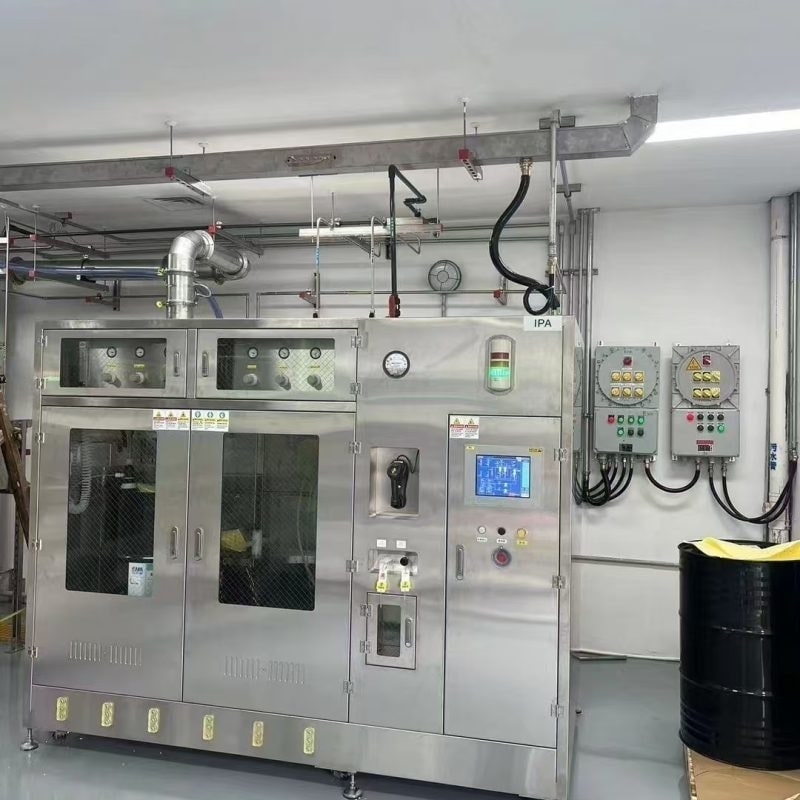
high purity high pressure gas delivery system
1. What Is a Gas Pressure Regulator?
A gas pressure regulator is a mechanical control device designed to maintain a relatively stable outlet pressure despite changes in inlet pressure or downstream gas demand.
In a centralized laboratory gas supply system, gas is typically stored in high-pressure cylinders, cylinder bundles, liquid gas storage tanks, or bulk gas supply equipment.
The pressure at the storage source may be considerably higher than the pressure required by laboratory instruments.
For example, a high-pressure nitrogen cylinder may contain gas at a pressure of approximately 150–200 bar when full, depending on the cylinder specifications and filling conditions. However, connected laboratory equipment may require a much lower operating pressure.
A pressure regulator reduces the incoming pressure to the required downstream level.
Its main functions include:
Reducing high inlet pressure to a usable operating pressure.
Maintaining stable downstream pressure.
Compensating for variations in gas demand.
Protecting downstream equipment from excessive pressure within its rated operating conditions.
Supporting consistent gas delivery to laboratory workstations.
Improving the operational reliability of the gas distribution network.
It is important to understand that a pressure regulator is not simply a fixed restriction or needle valve. It is an automatic mechanical control device that adjusts its internal opening in response to downstream pressure changes.
A pressure regulator also does not replace pressure relief devices, automatic shutoff valves, or other independent safety systems.
2. How Does a Gas Pressure Regulator Work?
Most conventional laboratory gas pressure regulators operate through a balance between gas pressure, spring force, and a diaphragm or piston mechanism.
The operating process involves several interconnected mechanical components.
2.1 Basic Operating Principle
A typical diaphragm-operated regulator contains the following components:
Inlet connection.
Outlet connection.
Valve seat.
Valve stem or poppet.
Diaphragm.
Adjustable pressure-control spring.
Adjustment screw or knob.
Internal pressure passages.
When gas enters the regulator, it passes through an internal valve opening controlled by the valve stem and seat.
The downstream pressure acts against one side of the diaphragm, while the adjustable spring applies an opposing mechanical force.
The regulator continuously adjusts the valve opening according to the balance between these forces.
2.2 When Downstream Pressure Is Too Low
When the downstream pressure falls below the regulator’s setpoint, the force acting against the diaphragm decreases.
The spring force becomes relatively stronger and moves the diaphragm and valve mechanism toward the opening position.
More gas enters the downstream pipeline, increasing outlet pressure.
This process continues until the downstream pressure approaches the regulator’s setpoint.
2.3 When Downstream Pressure Reaches the Setpoint
As downstream pressure increases, the pressure acting on the diaphragm also increases.
Eventually, the diaphragm force balances the spring force.
The valve moves toward a more restricted position, reducing the amount of gas entering the downstream system.
The regulator maintains an operating balance between the incoming gas flow and downstream demand.
2.4 When Downstream Pressure Becomes Too High
If downstream pressure rises above the setpoint, the pressure force acting on the diaphragm becomes greater than the spring force.
The valve moves toward the closed position, restricting additional gas flow.
This reduces the gas entering the downstream pipeline and helps restore the outlet pressure toward the setpoint.
This automatic adjustment allows the regulator to maintain relatively stable downstream pressure during normal operating conditions.
However, actual pressure stability depends on regulator design, gas properties, flow demand, inlet pressure, and regulator sizing.
3. Main Components of a Gas Pressure Regulator
Understanding the construction of a regulator helps engineers evaluate its performance and suitability for laboratory gas applications.
3.1 Diaphragm
The diaphragm is one of the most important components in a diaphragm-operated regulator.
It detects downstream pressure changes and transfers the resulting force to the valve mechanism.
High-purity gas regulators may use metal diaphragms, often manufactured from stainless steel, to reduce potential contamination and provide reliable mechanical performance.
The diaphragm material must be compatible with the gas being controlled.
For corrosive or specialty gases, material selection should consider chemical compatibility, pressure rating, temperature, and expected service life.
3.2 Pressure-Control Spring
The spring provides the mechanical force required to establish the regulator’s outlet pressure.
Turning the adjustment knob or screw changes the spring compression.
Increasing spring compression generally increases the regulator’s pressure setpoint, while reducing compression lowers it.
The available adjustment range depends on the regulator’s design and spring specification.
3.3 Valve Seat and Poppet
The valve seat and poppet control gas flow through the regulator.
When downstream pressure decreases, the valve opens to allow more gas through.
When downstream pressure increases, the valve restricts the flow.
The materials used for these components influence leakage performance, chemical compatibility, and regulator durability.
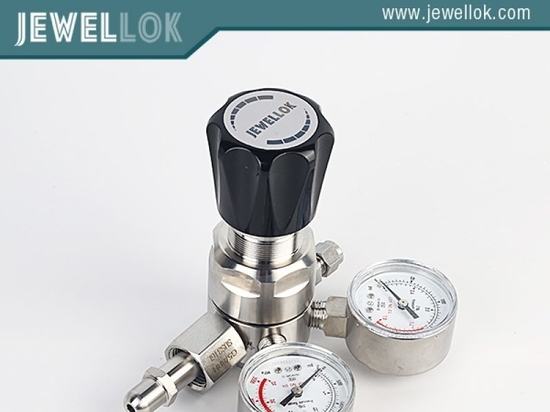
3.4 Pressure Gauges
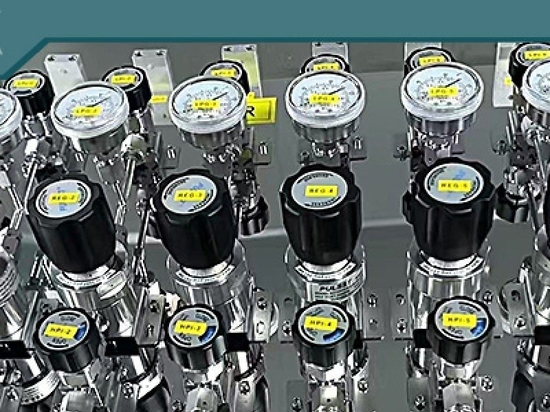
Pressure regulators used in laboratory gas systems commonly include inlet and outlet pressure gauges.
The inlet gauge indicates the pressure available from the gas source.
The outlet gauge indicates the regulated pressure supplied to the downstream pipeline.
These readings help operators monitor gas supply conditions and identify abnormal pressure changes.
For high-purity applications, pressure gauges should be selected to minimize contamination risks and meet the required measurement accuracy.
3.5 Regulator Body
The regulator body houses the internal pressure-control mechanism.
Common materials include brass and stainless steel.
Stainless steel regulators are frequently selected for high-purity gas applications because of their corrosion resistance and suitability for appropriately designed clean gas systems.
For semiconductor, analytical laboratory, and specialty gas applications, 316L stainless steel regulators may be specified with suitable surface finishing and cleaning requirements.
However, the grade of stainless steel alone does not guarantee high-purity performance. Internal surface quality, manufacturing cleanliness, sealing materials, and assembly procedures are also important.
4. Different Types of Gas Pressure Regulators Used in Centralized Laboratory Systems
Different laboratory applications require different regulator configurations.
4.1 Single-Stage Pressure Regulator
A single-stage regulator reduces inlet pressure to the required outlet pressure through one primary pressure-reduction mechanism.
Its advantages include:
Simple construction.
Compact design.
Lower initial cost.
Convenient installation.
Relatively straightforward maintenance.
Single-stage regulators are suitable for many general laboratory gas applications where inlet pressure variations do not significantly affect downstream process requirements.
However, as the source cylinder pressure decreases, the outlet pressure may increase slightly under certain operating conditions. This behavior is commonly associated with supply-pressure effect or inlet-pressure dependency.
For processes requiring very stable outlet pressure, a different regulator configuration may be more appropriate.
4.2 Two-Stage Pressure Regulator
A two-stage regulator reduces the inlet pressure through two sequential pressure-reduction stages.
The first stage reduces the high source pressure to an intermediate pressure.
The second stage further reduces the intermediate pressure to the required downstream operating pressure.
This arrangement helps minimize the influence of changing cylinder pressure on the final outlet pressure.
Two-stage regulators are commonly used in analytical laboratories, calibration gas systems, and applications requiring improved pressure stability.
They are particularly useful when consistent gas delivery is important for sensitive analytical equipment.
4.3 High-Purity Gas Pressure Regulator
High-purity gas pressure regulators are designed to minimize contamination and maintain gas quality during pressure reduction.
They are widely used in:
Semiconductor manufacturing.
Gas chromatography.
Mass spectrometry.
Laboratory analytical instruments.
Specialty gas distribution.
High-purity nitrogen and argon systems.
Common design characteristics include 316L stainless steel bodies, metal diaphragms, high-quality sealing materials, controlled internal surface finishes, and specialized cleaning and assembly procedures.
Depending on the application, regulators may use VCR connections, compression fittings, or other compatible high-purity connection designs.
4.4 Automatic Changeover Pressure Regulator
In centralized laboratory gas supply systems, an automatic changeover system is used to maintain gas delivery when the primary cylinder bank becomes depleted.
The system generally connects two gas cylinder banks through a changeover panel.
When the operating bank reaches a predefined changeover condition, the system switches gas supply to the reserve bank.
This helps reduce interruptions and allows laboratory personnel to replace empty cylinders without immediately interrupting downstream gas delivery.
Automatic changeover systems are particularly useful for laboratories that require continuous nitrogen, hydrogen, helium, or other process gas supplies.
The changeover function should be supported by suitable pressure monitoring, alarms, and isolation arrangements.
5. Where Is the Gas Pressure Regulator Installed in a Centralized Laboratory Gas Supply System?
A centralized gas supply system typically consists of several pressure-control stages.
A simplified system arrangement is:
Gas source → Cylinder manifold or bulk storage → Primary pressure regulator → Main distribution pipeline → Area control panel → Point-of-use regulator → Laboratory equipment
Each stage serves a different function.
5.1 Primary Pressure Regulation
The primary regulator is generally installed near the gas source, such as a cylinder manifold or bulk storage system.
Its purpose is to reduce the high source pressure to a controlled intermediate pressure suitable for the main distribution pipeline.
Primary regulators must be compatible with the maximum source pressure and the specific gas being supplied.
5.2 Main Pipeline Pressure Control
The main distribution pipeline transports regulated gas to different laboratory areas.
Depending on the system design, additional pressure-control equipment may be installed to maintain suitable operating conditions across different branches.
Pipe sizing, pressure drop, material compatibility, and gas purity must all be considered.
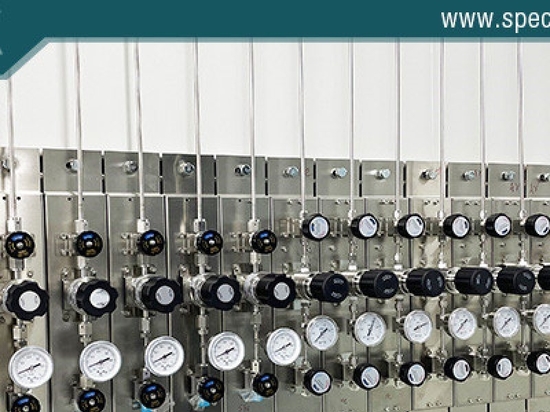
5.3 Area Gas Control Panel
An area gas control panel provides local isolation, pressure monitoring, and sometimes secondary pressure regulation for a particular laboratory or operating zone.
This arrangement allows maintenance and pressure adjustment without necessarily affecting the entire facility.
5.4 Point-of-Use Pressure Regulation
Point-of-use regulators are installed close to laboratory instruments or process equipment.
They provide the final pressure adjustment required by the connected equipment.
For sensitive instruments, a dedicated regulator can help reduce the effects of pressure fluctuations in the main distribution network.
6. Key Factors When Selecting a Gas Pressure Regulator
Selecting an appropriate pressure regulator requires consideration of several technical parameters.
6.1 Gas Compatibility
The regulator materials must be compatible with the gas being handled.
Different gases have different chemical properties.
For example:
Nitrogen and argon are generally inert under normal laboratory conditions.
Hydrogen is highly flammable.
Oxygen requires oxygen-compatible materials and cleaning.
Ammonia is chemically reactive and requires suitable material selection.
HCl and other corrosive gases require specialized corrosion-resistant designs.
Silane and certain specialty gases require dedicated engineering and safety measures.
Never assume that a regulator suitable for one gas can automatically be used for another.
6.2 Maximum Inlet Pressure
The regulator must be rated for the maximum possible inlet pressure, including the source pressure under fully charged conditions.
The maximum inlet pressure should be checked against the manufacturer’s technical documentation.
Operating above the rated pressure may result in equipment failure or hazardous gas release.
6.3 Outlet Pressure Range
The required outlet pressure depends on the connected equipment and process requirements.
For example, some analytical instruments require relatively low and stable supply pressures, while other laboratory equipment may operate at higher pressures.
Choose a regulator with an appropriate outlet adjustment range rather than selecting one based only on its maximum pressure rating.
6.4 Flow Capacity
A regulator must provide sufficient gas flow to meet the maximum downstream demand.
Important selection parameters include:
Required gas flow rate.
Maximum inlet pressure.
Required outlet pressure.
Gas molecular properties.
Operating temperature.
Pressure drop through the distribution system.
An undersized regulator may experience excessive pressure droop when demand increases.
Engineers should use the manufacturer’s flow curves or sizing tools to confirm regulator capacity.
6.5 Material and Connection Selection
For high-purity gas applications, 316L stainless steel regulators are frequently specified.
Connection types may include:
VCR metal-gasket face-seal fittings.
Compression fittings.
NPT threaded connections.
Other application-specific connections.
The connection design must match the pipeline material, pressure rating, sealing requirements, and gas purity requirements.
6.6 Pressure Stability and Accuracy
Sensitive laboratory processes may require precise pressure control.
In these applications, engineers should evaluate outlet pressure stability, droop, supply-pressure effect, hysteresis, and repeatability.
Two-stage regulators or specialized high-purity regulators may provide better performance than basic single-stage designs.
7. Common Problems with Gas Pressure Regulators and Troubleshooting Methods
Even high-quality regulators may experience problems after extended operation or improper installation.
7.1 Unstable Outlet Pressure
Possible causes include:
Inlet pressure fluctuations.
Incorrect regulator sizing.
Contamination inside the valve seat.
Worn internal components.
Unstable downstream gas demand.
Solution: Check the source pressure, verify regulator sizing, inspect the internal components according to manufacturer procedures, and evaluate whether a two-stage regulator is necessary.
7.2 Pressure Creep
Pressure creep occurs when downstream pressure gradually increases even though gas demand is low or absent.
A common cause is leakage across the regulator valve seat.
This may result from contamination, damaged sealing surfaces, or internal wear.
Solution: Remove the regulator from service according to the approved maintenance procedure and have it inspected and repaired by qualified personnel. Replace damaged components and perform the manufacturer’s specified leak and performance tests.
A regulator should not be treated as a positive isolation valve.
7.3 Insufficient Gas Flow
Insufficient flow may result from an undersized regulator, blocked inlet filters, partially closed valves, low source pressure, or excessive pipeline pressure drop.
Solution: Check the complete gas supply path, measure inlet and outlet pressures under actual flow conditions, and compare the regulator’s flow capacity with the required demand.
7.4 External Gas Leakage
Leakage may occur at threaded connections, diaphragm housings, seals, or pipeline fittings.
Solution: Isolate the affected section using approved procedures and conduct appropriate leak testing with a method suitable for the gas and system pressure.
Never use an open flame to check for gas leakage.
For toxic, corrosive, flammable, or oxygen service, follow the applicable specialized safety procedures.
8. Installation and Maintenance Requirements
Proper installation and maintenance are essential for maintaining regulator performance and laboratory gas safety.
Before installation:
Confirm the regulator is designed for the intended gas.
Verify maximum inlet and outlet pressure ratings.
Check connection compatibility.
Confirm material and seal compatibility.
Inspect the regulator for shipping damage and contamination.
Ensure the gas pipeline is properly prepared and cleaned.
During operation:
Monitor inlet and outlet pressure regularly.
Check for abnormal pressure fluctuations.
Inspect connections for leakage.
Keep the regulator and surrounding area clean.
Follow the manufacturer’s maintenance schedule.
Replace damaged gauges, seals, and internal components as required.
For high-purity gas systems, maintenance should be performed using appropriate clean procedures to prevent moisture, oil, particles, and other contaminants from entering the gas path.
Oxygen regulators require particular attention to oxygen-service cleanliness because hydrocarbon contamination can create a serious ignition hazard.
Regulator maintenance should only be performed by qualified personnel using approved procedures.
9. Safety Considerations in Centralized Laboratory Gas Supply Systems
Pressure regulators are important safety components, but they are only one part of a complete gas safety system.
A properly engineered centralized gas supply system may also include:
Pressure relief devices.
Automatic shutoff valves.
Gas leak detectors.
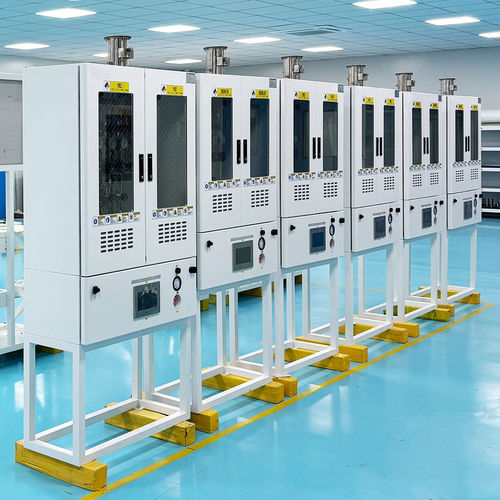
Ventilated gas cabinets.
Emergency isolation systems.
Cylinder restraints.
Pressure monitoring instruments.
Alarm and control systems.
Appropriate exhaust and ventilation arrangements.
For toxic and corrosive gases, suitable gas cabinets, leak detection, exhaust treatment, and emergency response systems may be required.
For flammable gases, the design must address ignition control, ventilation, gas detection, and appropriate electrical equipment.
For oxygen service, materials and components must be suitable for oxygen use and properly cleaned.
The system should be designed and installed in accordance with applicable local codes, relevant gas standards, and the specific laboratory’s risk assessment.
Semiconductor Fluid Control Systems And Components
Conclusion
A gas pressure regulator is a critical component in a centralized laboratory gas supply system. It reduces high source pressure to a controlled downstream pressure and automatically adjusts gas flow in response to changes in laboratory demand.
Its performance directly influences gas supply stability, equipment protection, analytical accuracy, and operational safety.
Single-stage regulators are suitable for many general gas applications, while two-stage regulators provide improved outlet pressure stability when source pressure changes. High-purity diaphragm regulators are particularly important in semiconductor manufacturing, analytical laboratories, and specialty gas distribution systems.
When selecting a regulator, engineers should carefully evaluate gas compatibility, maximum inlet pressure, outlet pressure range, flow capacity, pressure stability, body material, diaphragm construction, and connection type.
Regular inspection, correct installation, leak testing, and preventive maintenance are equally important for long-term reliability.
For modern laboratories and semiconductor facilities, choosing a properly engineered gas pressure regulator helps establish a stable, clean, and dependable centralized gas supply system while reducing operational risks and protecting sensitive downstream equipment.
For more abouth how does a gas pressure regulator work in a centralized laboratory gas supply system, you can pay a visit to Jewellok at https://www.jewellok.com/ for more info.