#Product Trends
Self-Service Terminal Industry Experiences Explosive Growth: In-Depth Analysis of Market Trends
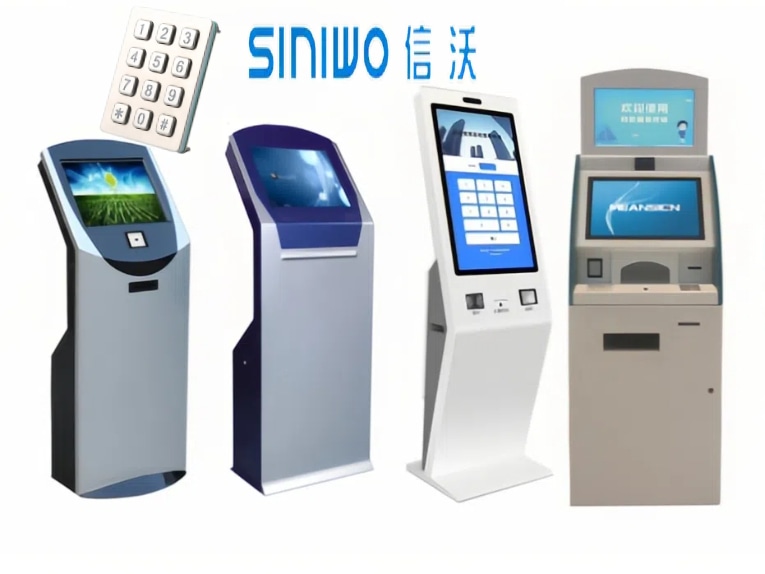
Industry Overview: Self-Service Terminals Become Key Drivers of Digital Transformation
In recent years, with the development of artificial intelligence (AI), the Internet of Things (IoT), and mobile payment technologies, the self-service terminal industry has been undergoing unprecedented growth. From self-checkout counters in shopping malls to smart registration kiosks in hospitals, these devices are reshaping the way we live. According to the latest report from global research firm MarketsandMarkets, the global self-service terminal market reached $38.6 billion in 2023 and is projected to exceed $65 billion by 2028, with a compound annual growth rate (CAGR) of 10.9%.
In China, the adoption of self-service terminals has been even more rapid. Data from the Ministry of Industry and Information Technology shows that the number of self-service terminal devices in China grew by 23.6% year-over-year in 2023, with double-digit growth in deployment across four major sectors: retail, healthcare, government services, and transportation.
Technology-Driven: Four Key Innovations Shaping the Industry
1. AI Empowers Smarter Terminals
The next generation of self-service terminals is evolving from "mechanical" to "intelligent." By integrating computer vision, natural language processing, and other AI technologies, these devices can now recognize user demographics—including age, gender, and even emotional state—to deliver personalized services.
For example, an AI-powered smart pharmacy vending machine in Beijing combines AI with self-service technology to offer advanced functionalities:
(1)Automated Medicine Dispensing
Connected to brick-and-mortar pharmacies, the machine provides round-the-clock access to over 100 common medications. Its intelligent system instantly retrieves and dispenses prescribed drugs, streamlining the purchasing process.
(2)Voice-Guided Medication Assistance**
Equipped with a high-definition touchscreen and voice prompts, the machine supports multiple payment methods, including QR code scanning and facial recognition. It also provides medication instructions and safety reminders to ensure proper usage.
Real-Time Quality Control
Built-in cameras and temperature/humidity monitoring ensure proper storage conditions, while an automated system tracks expiration dates and removes soon-to-expire medications.
2. IoT Enables Connected Ecosystems
The rollout of 5G networks has enabled true "smart connectivity" for self-service terminals. Real-time data transmission allows operators to monitor thousands of devices remotely. A leading beverage company, for instance, uses IoT to optimize inventory alerts, dynamic pricing, and targeted promotions across its smart vending network.
3. Contactless Interaction Becomes Standard
Post-pandemic hygiene concerns have accelerated the adoption of touch-free interfaces. Gesture control, voice commands, and mobile payment integrations are now widely preferred—87% of consumers say they favor self-service terminals with contactless options.
4. Modular Design Reduces Maintenance Costs
To address high upkeep expenses, manufacturers are adopting modular designs with standardized components. One coffee vending brand reported a 70% reduction in repair time and a 45% drop in annual maintenance costs per unit.
Application Scenarios: Diversified Growth Across Four Sectors
1. Retail: From Supplementary to Mainstream
Self-service technology is transforming retail operations. Convenience chain 7-Eleven plans to install unmanned checkout systems in 30% of its stores by 2024. Fully autonomous smart stores are also gaining traction, with one startup deploying over 5,000 "Smart Convenience Stations" nationwide.
2. Healthcare: Easing Hospital Bottlenecks
Self-service terminals in hospitals handle over 60% of registrations, payments, and report printing. A top-tier hospital reported a 40% reduction in patient wait times and a 30% decrease in staff workload after implementation.
3. Government Services: "Always-On" Accessibility
China’s "One-Network Administration" initiative relies heavily on self-service kiosks. Shenzhen has established a "15-minute government service zone," enabling residents to access 200+ services locally—a 58% annual increase in usage.
4. Transportation: Smarter Travel Experiences
Self-check-in kiosks at airports and train stations are nearly ubiquitous. Meanwhile, highway rest stops are adopting multifunctional terminals for fuel, retail, and dining services. One provincial transport group aims to upgrade 300 rest areas with smart terminals by 2024.
Challenges and Opportunities
Despite bright prospects, challenges persist. Homogeneous products have triggered price wars, squeezing some manufacturers’ profit margins below 20%. Cybersecurity risks also loom, as evidenced by a data breach at a terminal provider last year.
Yet opportunities abound. Untapped demand in lower-tier cities and rural areas offers significant growth potential, while overseas markets—especially in Belt and Road countries—are booming. One industry leader reported an 85% surge in international revenue.
Future Outlook: Ecosystem Integration
Experts predict self-service terminals will evolve from standalone devices into interconnected components of smart cities. Pilot projects like an experimental "Urban Neuron System" demonstrate how terminals can sync with public transit and community services.
As technology advances and applications multiply, the self-service terminal industry is poised for exponential growth—transitioning from a supporting tool to a cornerstone of the digital economy.