#Product Trends
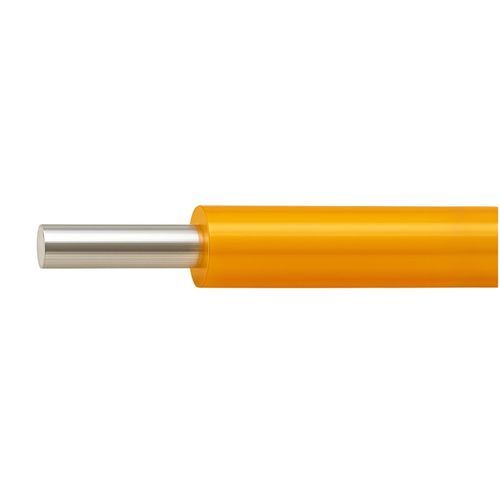
TPI Insulated Wire & Cable: The Unsung Hero in Harsh Environments
The Standout Performance of TPI Insulation
TPI Insulated Wire & Cable: The Unsung Hero in Harsh Environments
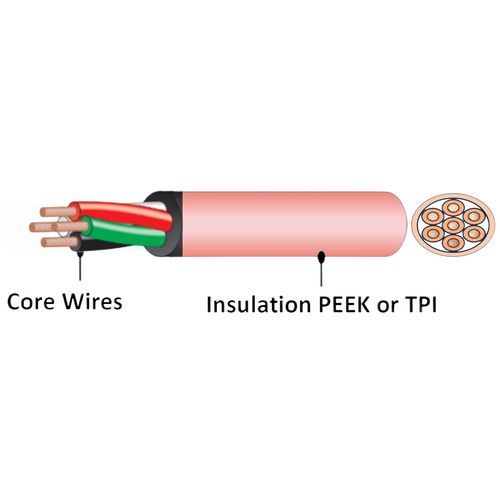
In the world of electrical engineering, where extremes of temperature, voltage, and physical stress are common, ordinary wire insulation often falls short. This is where TPI (Thermoplastic Polyimide) insulated wire and cable step in as a premium solution, enabling innovation and reliability in the most demanding applications.
What is TPI?
TPI stands for Thermoplastic Polyimide. It is a high-performance polymer belonging to the "super engineering plastics" family. The name itself reveals its key characteristics:
Polyimide: This is the foundation, known for an exceptionally strong and stable molecular structure. This structure is the source of its outstanding thermal and chemical resistance.
Thermoplastic: Unlike its close relative, thermoset polyimide (e.g., Kapton®), TPI can be melted and re-solidified. This property makes it extrudable, allowing for a seamless, continuous, and cost-effective insulation layer during the wire manufacturing process.
This unique combination results in a material that is both incredibly robust and conveniently processable.
The Standout Performance of TPI Insulation
Why would an engineer specify TPI over other materials? The answer lies in its comprehensive portfolio of properties:
Exceptional Thermal Stability
TPI insulation can typically operate continuously from -269°C (-452°F) to over 200°C (392°F), with some grades pushing towards 300°C (572°F). It does not melt, degrade, or become brittle across this immense range. This makes it ideal for applications experiencing wide temperature swings.
Superior Mechanical Strength & Toughness
TPI offers excellent tensile strength, abrasion resistance, and cut-through resistance. Wires insulated with TPI can withstand harsh handling, tight bending radii, and constant vibration without cracking or wearing thin, ensuring long-term integrity.
Excellent Electrical Properties
As an insulator, TPI excels. It has a stable low dielectric constant and high dielectric strength, effectively preventing current leakage and short circuits, even under high voltages and high-frequency signals.
Inherent Flame Resistance & Low Smoke Emission
TPI is naturally flame-retardant and often meets stringent UL V-0 ratings. In the event of a fire, it does not support combustion and generates very little smoke and toxic gas, a critical safety feature in enclosed spaces like aircraft and trains.
Remarkable Chemical Resistance
It is highly resistant to oils, greases, most solvents, and acids. This ensures the insulation remains intact and functional when exposed to aggressive chemicals in industrial or automotive environments.
Hydrolysis Resistance
Unlike some other high-performance polymers (e.g., PET), TPI is highly resistant to degradation in the presence of moisture and steam, preventing premature failure in humid conditions.
Where is TPI Insulated Cable Used?
You will find TPI wire and cable wherever failure is not an option:
Aerospace & Defense: Airframe wiring, jet engine harnesses, and avionics systems where weight, reliability, and extreme temperature resistance are paramount.
Automotive & Electric Vehicles (EVs): Under-the-hood applications, battery management systems (BMS), and high-temperature motor leads.
Industrial & Robotics: Wind turbine generators, downhole drilling equipment, and continuous flexing cables in robotic arms.
Medical Equipment: Sterilizable cables for autoclaves and other medical devices requiring repeated exposure to high heat and chemicals.
Consumer Electronics: As a high-reliability internal wiring, particularly in applications like high-power chargers.
Conclusion
TPI insulated wire and cable are not just another component; they are a critical engineering solution for pushing the boundaries of technology. By offering an unparalleled combination of thermal endurance, mechanical toughness, and electrical integrity in a processable form, TPI ensures that power and data can flow reliably in environments where lesser materials would fail. When your design demands uncompromising performance, TPI is the insulation material worth specifying.