#Product Trends
New Benchmark for Medical Input: Membrane Keyboards Empower Healthcare Digitalization with Light, Precise Touch and Full Protection
New Benchmark for Medical Input: Membrane Keyboards Empower Healthcare Digitalization with Light, Precise Touch and Full Protection
As hospitals accelerate their digital and smart transformation, the demands placed on input devices in environments such as operating rooms, ICUs, outpatient pharmacies, and laboratories are becoming increasingly stringent. Beyond basic typing functions, these devices must deliver precision, safety, and durability under extreme hygiene conditions.
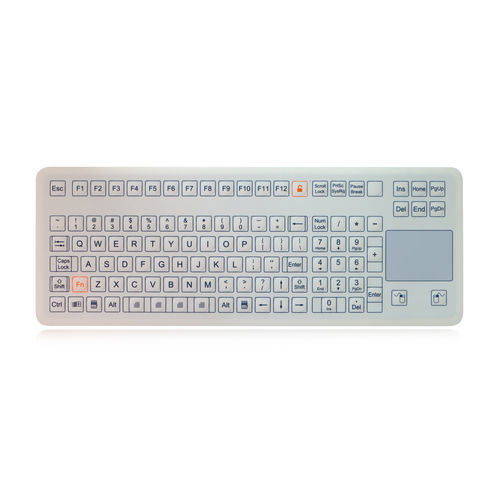
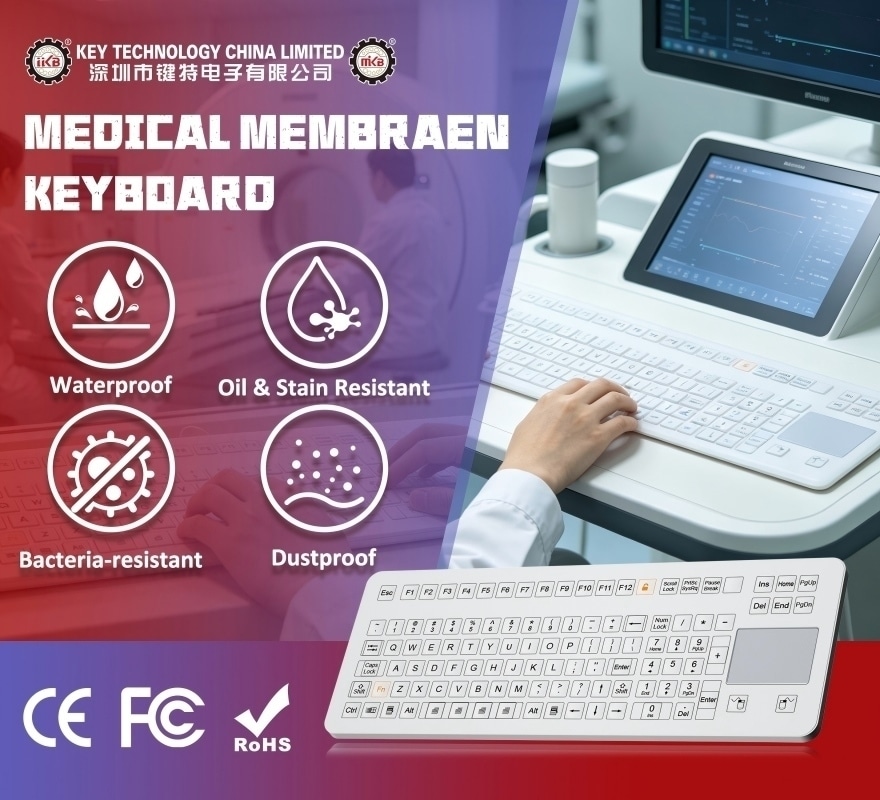
Against this backdrop, medical‑grade membrane keyboards featuring micro‑switch key technology, fully sealed waterproof and dustproof construction, and antimicrobial, stain‑resistant surfaces are rapidly emerging as the ideal solution for medical data entry. With light and comfortable keystrokes, uniform actuation force, precise and sensitive input, a smooth surface that is easy to clean, and permanently legible characters that never fade or wear off, membrane keyboards are setting a new standard for reliable, hygienic input in healthcare.
Core Technology: Micro‑Switches for Precision and Light Touch
In medical settings – whether creating electronic patient records, operating diagnostic instruments, or managing pharmaceutical inventory – input device stability and efficiency directly affect workflow. Unlike the heavy, stiff feel of traditional mechanical keyboards, modern medical‑grade membrane keyboards employ precision micro‑switch technology. Each key is integrated with a metal dome that delivers a consistent tactile response.
This design maintains a comfortable actuation force of approximately 60 grams across all keys, paired with a short travel distance of 0.45 mm. The result is a distinct, low‑effort key press that reduces finger fatigue. Optimized scissor‑mechanism key stems ensure uniform force distribution across the entire keyboard, delivering a consistent, stable, and responsive typing experience regardless of typing speed. At the same time, the low‑profile travel effectively reduces keystroke noise, preserving a quiet environment essential for patient care areas such as wards and operating rooms.
Durability & Protection: Reliable Performance in Demanding Environments
Keyboards in medical settings face multiple risks – accidental liquid spills, repeated spraying of disinfectants, airborne dust, and even sand particles. To address this, high‑end medical membrane keyboards are typically built with a fully sealed silicone enclosure, achieving IP68 protection (complete protection against solid ingress and resistance to continuous immersion in water). This means the entire keyboard can be rinsed under a tap or even submerged in disinfectant solution and used immediately after removal – perfectly aligning with the high‑frequency, high‑standard infection control protocols of hospitals.
Many medical membrane keyboards also feature a “clean mode” or “clean lock” function, which locks all keys with a single press during cleaning or disinfection. This prevents unintended inputs caused by liquid flow or accidental contact, ensuring the safety of medical systems and patient data. Whether mounted on a medical cart, integrated into diagnostic equipment, or placed on a laboratory bench, these keyboards deliver continuous, reliable input and drastically reduce downtime caused by device failure.
Permanent Legends & Hygienic Surface: Never‑Fade Printing, Easy to Clean
Legend durability is a critical quality requirement in healthcare environments where keyboards are frequently disinfected. Traditional screen‑printed or laminated legends quickly wear off or fade after repeated cleaning with alcohol or chlorine‑based disinfectants. Professional medical membrane keyboards employ a reverse‑printed legend process – the characters are printed on the underside of the transparent film, which is then sealed by a protective top layer. Daily wiping and disinfection never touch the printed layer, guaranteeing that legends never fade, peel, or wear off. Even after prolonged exposure to chemical disinfectants and high‑frequency daily cleaning, key markings remain crisp and legible, eliminating the risk of ambiguous labels and enhancing patient safety.
Hygiene is further ensured by the seamless, ultra‑flat key surface, which eliminates the gaps and crevices typical of conventional keyboards. Bacteria, dirt, and organic residues have nowhere to hide. A simple wipe with a disinfectant wipe or 75% alcohol solution delivers thorough cleaning. This design effectively breaks the chain of pathogen transmission, playing a vital role in healthcare‑associated infection control and protecting both patients and medical staff.
Conclusion: Redefining What Matters in Medical Input Devices
As the healthcare industry accelerates its digital and standardized transformation, the quality of input devices directly influences clinical efficiency, data security, and infection control outcomes. Medical‑grade membrane keyboards – built around micro‑switch technology with full IP68 sealing, optional nano‑silver antimicrobial coatings, and reverse‑printed, never‑fade legends – are fundamentally solving the pain points of traditional keyboards in medical environments: poor abrasion resistance, difficult cleaning, vulnerability to disinfectants, and harboring of contaminants.
With light, uniform keystrokes and highly sensitive, precise input, they offer medical staff a comfortable, efficient daily operating experience. Moreover, their comprehensive waterproof, oil‑proof, dust‑proof, and bacteria‑proof design provides a solid foundation for the reliability of medical data entry – a true benchmark for the future of clinical input devices.