#Industry News
Zero Clearance, Heavy RTJ, or Standard RF? Selecting the Right MATCH Flange Maintenance Tooling
From standard Raised Face to zero-clearance compact flanges: how to choose between wedge spreaders and valve-out tooling.
Improvised tools like hammers, cold chisels, and pry bars remain a primary cause of damaged sealing faces and costly turnaround delays. When pipework presents zero gap, heavy joint stiffness, or delicate metal-to-metal contact, forcing a standard wedge into the joint risks severe surface scoring and repeat leaks.
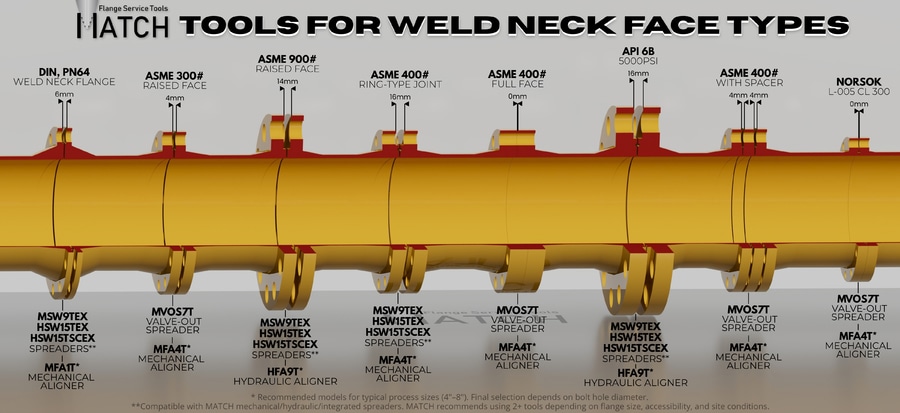
Safe joint disassembly requires selecting equipment engineered around the actual flange geometry:
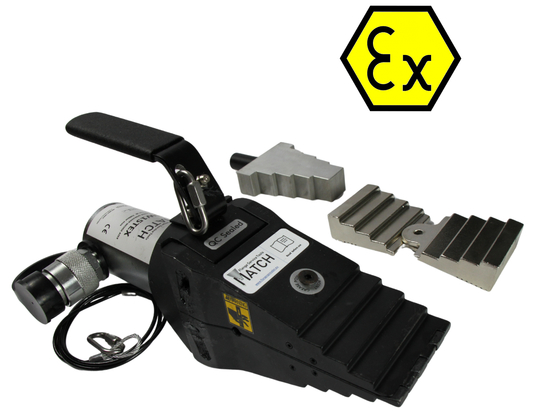
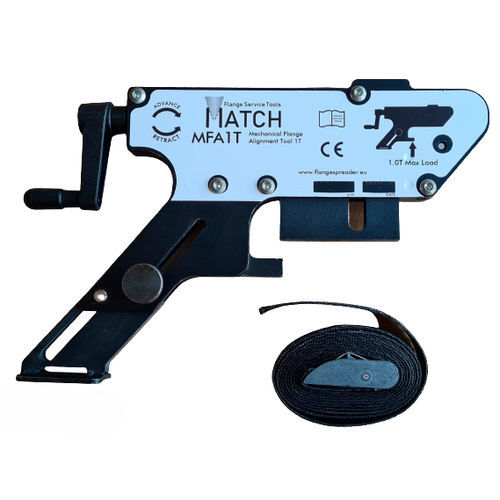
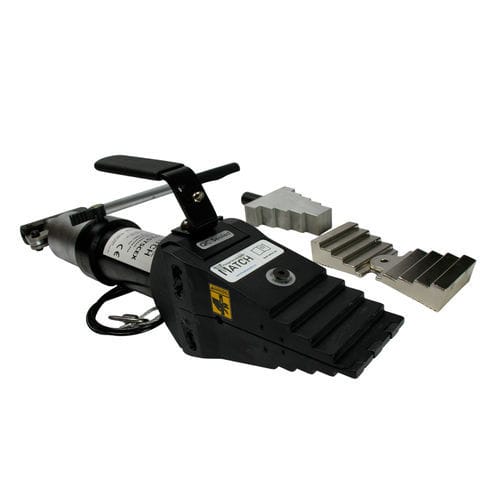
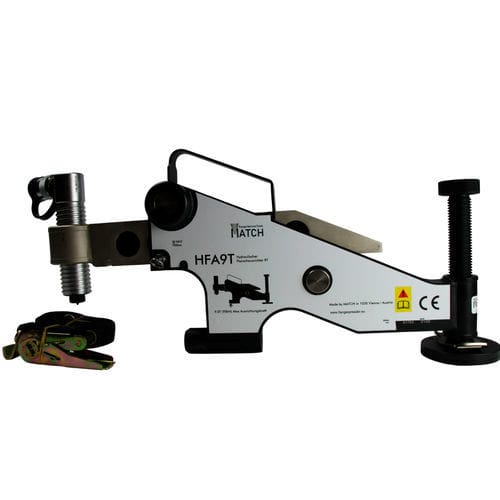
• Direct Clearance Joints (RF, RTJ, API 6B): Controlled mechanical and hydraulic wedge spreaders (such as MATCH MSW9TEX and HSW15TEX) deliver reliable separation force without slippage, while dedicated aligners (MFA1T, MFA4T, HFA9T) correct radial misalignment.
• Zero-Clearance & Compact Profiles (Full Face, Spacers, NORSOK): Forcing a wedge into zero-gap joints damages the seating area. The MATCH MVOS7T valve-out spreader anchors directly into existing bolt holes, pushing the joint apart cleanly from the outside.
• Tandem Operation (2+ Tools): Running two spreaders simultaneously prevents hinge distortion, eliminates stud bending, and guarantees parallel separation on stiff or large-bore piping.
Standardizing maintenance operations with purpose-built mechanical and hydraulic tools protects critical piping assets and keeps turnaround schedules on track. Explore the full technical breakdown and model selection guide on our website.