#Industry News
A DIAMOND IS FOREVER (MAYBE). BUT WHAT ABOUT SOIL?
Excavated soil can travel a long way. Or it can stay on site and be used again to help something grow. With MB Crusher’s shaft screener, topsoil gets a second life, right where it is needed.
Soil has a curious characteristic: it is extremely valuable when it is needed and becomes a problem when it takes up space. In between are lorries, journeys, transport costs, materials to be purchased and soil to be managed.
Topsoil is a valuable resource. It contains organic matter, minerals and life. And when a project transforms an urban space into a park, garden, pedestrian area or green space, that soil can return exactly where it is needed: to help something grow.
More greenery, more soil to put to use
Cities are changing. Parks, pedestrian areas, new gardens, urban greening and projects designed to make spaces more permeable are becoming increasingly common features of urban regeneration.
And as green spaces grow, so does the work involving soil. It is excavated, moved and prepared, while new areas are created for lawns, trees and planting.
The point is simple: that soil is already there. It can become a resource for the project, rather than leaving the site to make way for new material that has to be purchased and transported.
Ultimately, the question remains the same: why take a resource away, only to buy another one and bring it back?
Topsoil is created where it is needed
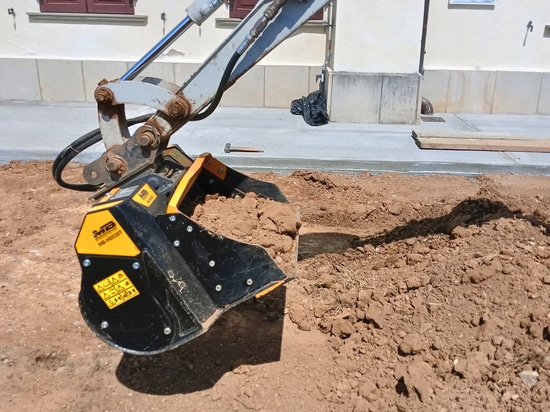
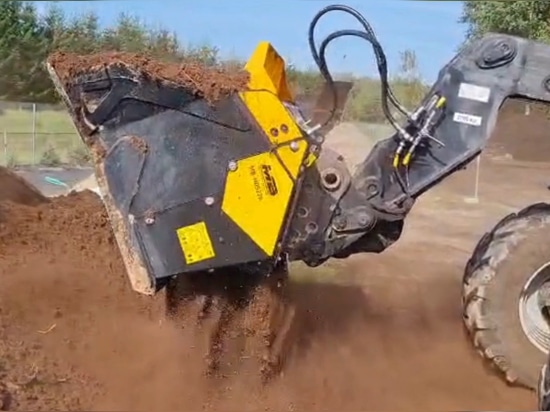
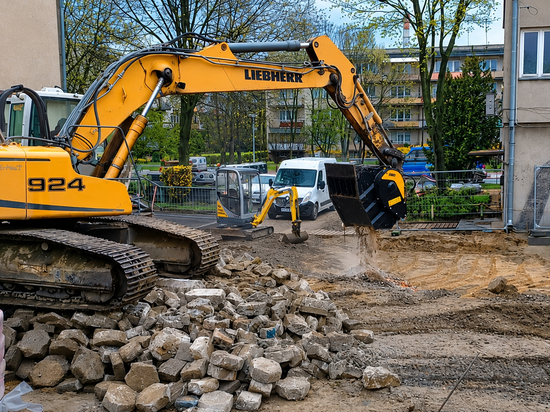
The MB Crusher MB-HDS shaft screener allows material to be screened directly on the carrier machine already present on site. Excavated soil, stones, roots and debris enter the attachment. The shafts screen the material and allow a fraction of soil to be obtained, ready for the next stage of work. The resulting material can become topsoil for a green area, material for seeding, a base for planting or material for backfilling an excavation.
And the story does not end with screening.
The MB-HDS range from MB Crusher uses different types of shafts, selected according to the material and the desired result. The machine can therefore support different operations: from soil screening to substrate preparation and mixing with compost or sand.
When I grow up, I’ll be a gardener
Soil knows what to do when it finds the right place. It just needs a helping hand.
Edil 2T S.n.c. di Todeschini Daniel & C. in Italy knows this well. To landscape gardens, the company uses an MB-HDS207 shaft screener with an RQ8 screening kit. The soil arrives, passes through the shafts and becomes useful again directly on site. Fewer journeys, less material handling and more material ready to become part of the new project.
The customer’s comment sums up the result nicely: work “like a real gardener”.
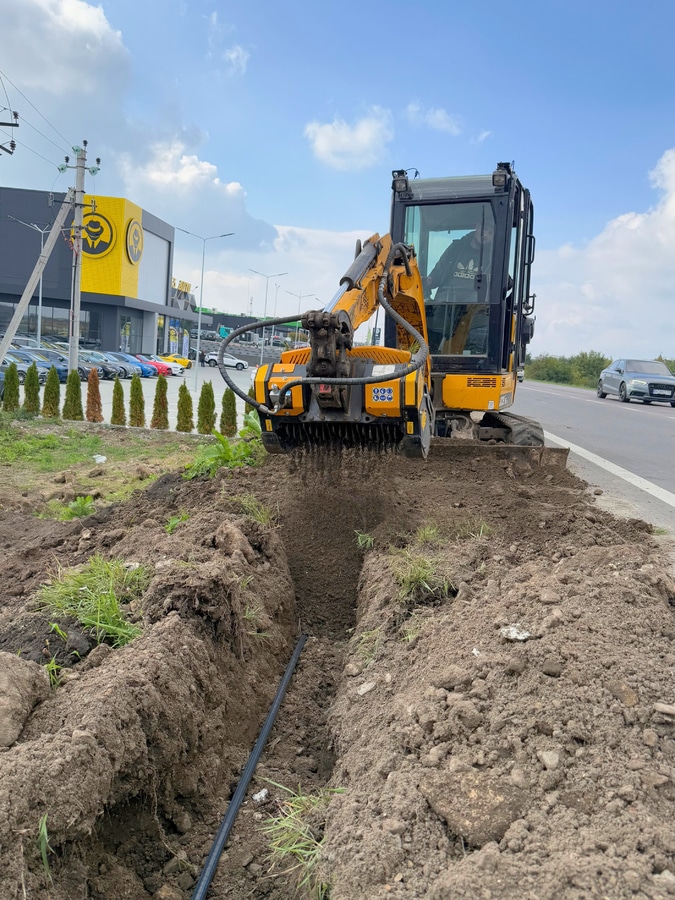
Even more interesting is the case of a company in Lviv, Ukraine, specialising in gardening and landscaping. Here, the MB-HDS207 shaft screener works on a mini excavator. A screening bucket was previously used, but with MB Crusher’s attachment, the work is now carried out around five times faster.
And that soil has plenty to do. Once screened, it becomes soil for lawns and flowers, supports new planting, is used in landscaping projects and also serves to backfill and cover pipes for water supply and irrigation systems.
Ultimately, that is the beauty of soil: it changes place, shape and purpose. But its value remains.
When soil becomes a business too
There are also those who have looked at the issue from another perspective.
In Lithuania, a company chose an MB-HDS220 shaft screener for its telescopic handler and turned the screening of sand, soil, compost and fertiliser into a genuine commercial activity. The materials are processed, screened and then packaged for sale to customers.
Soil can therefore become a raw material, a product and an opportunity.
This is also the essence of applying the circular economy to construction: making use of what is already there, reducing material handling and transport, and creating new material directly where it is needed.
A principle that also aligns with the environmental objectives of public works. In Italy, for example, the Minimum Environmental Criteria (CAM) requirements for green spaces provide for the preservation of the topsoil layer and its subsequent reuse in landscaping works.
The diamond remains a classic. Soil, on the other hand, reinvents itself. In the end, perhaps the real luxury is not having soil. It is knowing what to do with it.