#Product Trends
Fire Sleeve for High-Temperature Hose Protection
Fire Sleeve for hose
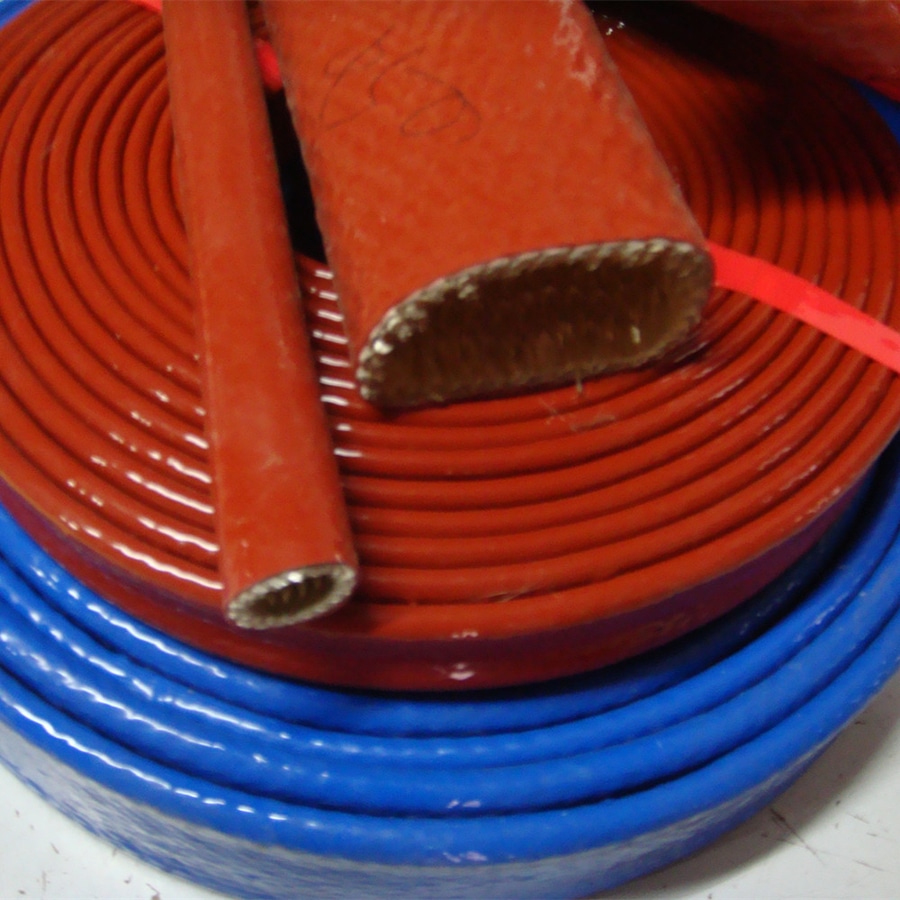
Fire Sleeve with Silicone Rubber and Fiberglass
A protective solution combining silicone rubber coatings and fiberglass substrates to shield hoses, cables, and tubing from extreme heat, flames, abrasion, and environmental damage.
Key Materials & Construction
Fiberglass Core:
Primary Role: Acts as the structural backbone, providing high-temperature resistance and mechanical strength.
Properties:
Non-combustible, withstanding temperatures up to 1,000°F (538°C) intermittently.
Resists melting, even under direct flame exposure.
Adds dimensional stability and tear resistance.
Silicone Rubber Coating:
Primary Role: Enhances flexibility, environmental protection, and durability.
Properties:
Withstands continuous temperatures up to 500°F (260°C).
Provides waterproofing, UV resistance, and chemical protection (fuels, oils, acids).
Maintains flexibility across a wide temperature range (-65°F to 500°F / -54°C to 260°C).
How It Works
Heat Insulation: Fiberglass reflects radiant heat, while silicone rubber slows thermal transfer to the hose.
Flame Resistance: Fiberglass is inherently non-flammable; silicone rubber self-extinguishes when exposed to flames.
Environmental Protection: Silicone rubber seals out moisture, chemicals, and UV radiation, while fiberglass resists abrasion.
Applications
Automotive/Racing: Protects fuel lines, brake hoses, and coolant lines near exhaust manifolds.
Aerospace: Shields hydraulic and pneumatic lines in jet engines and auxiliary power units (APUs).
Industrial Machinery: Guards hoses in foundries, welding equipment, or near boilers.
Marine: Resists saltwater corrosion and engine heat in bilge systems.
Benefits of Silicone + Fiberglass Design
Lightweight: Fiberglass adds minimal weight compared to metal alternatives.
Flexibility: Silicone rubber allows tight bends without cracking.
Durability: Resists aging, ozone, and weathering.
Easy Installation: Slips over existing hoses; no specialized tools required.
Technical Considerations
Temperature Ratings:
Continuous: 500°F (260°C) with silicone coating.
Peak (Short-Term): Up to 1,000°F (538°C) for fiberglass substrate.
Chemical Compatibility: Silicone resists oils, fuels, and mild acids; verify compatibility for harsh solvents.
Certifications: Often meets SAE AS3571 (aerospace), MIL-DTL-6415 (military), and FMVSS 302 (flammability).
Limitations
Abrasion Resistance: While fiberglass is tough, sharp edges or heavy friction may require additional abrasion-resistant layers.
Cost: Silicone-coated sleeves are pricier than basic fiberglass sleeves but offer superior environmental protection.
Installation & Maintenance
Fit: Ensure snug coverage without overstretching.
Inspection: Check for silicone cracking, fiberglass fraying, or discoloration (indicative of overheating).
Replacement: Replace if inner hose becomes visible or coating degrades.
Example Use Case
Aircraft Hydraulic Lines: A silicone-coated fiberglass sleeve protects critical hoses in engine bays, surviving both extreme heat and hydraulic fluid exposure.
Conclusion
The silicone rubber + fiberglass fire sleeve balances flexibility, heat resistance, and environmental protection. Its layered design ensures hoses survive harsh conditions, making it ideal for automotive, aerospace, and industrial applications where reliability and safety are paramount. Always match the sleeve’s specifications to your operational temperature and chemical exposure needs.