#Product Trends
Silicone Coated Fiberglass Braided Fire Protection Sleeve for hose protection
Fire Protection Sleeve for hose
A silicone coated fiberglass braided fire protection sleeve is a specialized protective covering designed to safeguard hoses in high-temperature and fire-prone environments. Here's a detailed breakdown:
Structure & Materials
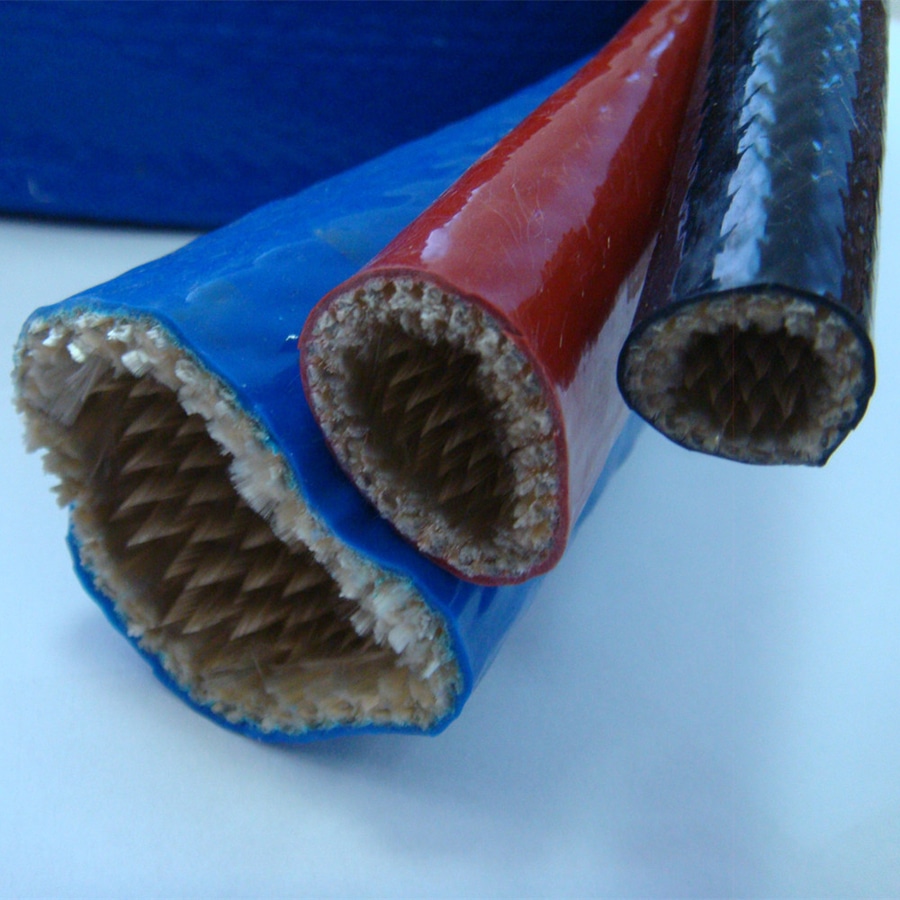
Fiberglass Braid:
The core is braided fiberglass, providing high tensile strength and heat resistance (typically up to 500°C+).
Braiding enhances flexibility, allowing the sleeve to expand/contract with hose movement.
Silicone Coating:
An outer layer of silicone adds durability, UV resistance, and moisture/chemical protection.
Silicone withstands continuous temperatures up to 200–300°C, complementing the fiberglass’s higher heat tolerance.
Key Features
Fire Resistance: Protects hoses from direct flames and radiant heat, preventing melting or combustion.
Flexibility: Braided structure allows easy installation over bends and fittings.
Abrasion/Chemical Resistance: Silicone layer shields against wear, oils, and corrosive substances.
Weatherproofing: Resists UV rays, ozone, and moisture degradation.
Applications
Industries: Automotive (e.g., race cars, engines), aerospace, industrial machinery, firefighting equipment.
Use Cases: Hydraulic systems, fuel lines, coolant hoses, or any hose exposed to extreme heat.
Benefits
Safety: Prevents hose failure in fires, reducing risks of leaks or explosions.
Durability: Extends hose lifespan in harsh conditions.
Compliance: Often meets standards like UL, ASTM, or military specs (e.g., MIL-DTL-641).
Considerations
Temperature Limits: Max continuous use depends on silicone (lower than fiberglass).
Installation: Slid over hoses; available in various diameters for custom fits.
Maintenance: Inspect periodically for cracks or wear. Resists most chemicals but verify compatibility.
Cost/Weight: May be pricier/heavier than non-fire-resistant alternatives.
Comparison to Alternatives
Ceramic/Aluminum Sleeves: Offer higher temp resistance but less flexibility.
PVC/Rubber Sleeves: Lower heat tolerance and may emit toxic fumes when burned.
Conclusion
This sleeve combines fiberglass’s heat resistance with silicone’s environmental protection, ideal for balancing fire safety and flexibility in dynamic applications. Always verify specifications (e.g., temp range, chemical resistance) for your use case.