
#Product Trends
AI in Industrial Machine Vision: Improving Inspection Performance
A practical approach to defect detection, process reliability, and scalable automation
Artificial intelligence (AI) and deep learning are increasingly used in industrial machine vision to improve inspection accuracy and system adaptability. Compared to traditional rule-based vision systems, deep learning models can handle greater variability in materials, lighting conditions, and product complexity.
By training neural networks on production data, AI-based vision systems learn to identify defects and patterns without relying on manually defined rules. This approach enables more consistent inspection results in environments where conventional methods often face limitations.
Deep Learning in Machine Vision
Deep learning algorithms automatically extract relevant features from image data, allowing systems to detect subtle or irregular defects. These models can be updated and retrained as production conditions evolve, supporting long-term system performance.
This makes deep learning particularly suitable for applications involving:
* Variable surface textures
* Complex defect characteristics
* Inconsistent illumination conditions
Key Advantages
High-precision detection
Accurate identification of fine and complex defects that are difficult to define using rule-based methods.
Robust operation
Stable performance across changes in lighting, positioning, and background conditions.
Reduced inspection errors
Lower false positive and false negative rates contribute to improved production yield and reduced waste.
Scalability
Models can be adapted to new products and production lines with limited reconfiguration.
Typical Applications
AI-based machine vision systems are applied in a range of industrial processes, including:
* Surface inspection and defect detection
* Optical character recognition (OCR) and code verification
* Assembly verification
* Object classification and sorting
* Robotic guidance and automation support
OdinVision AI Vision Platform
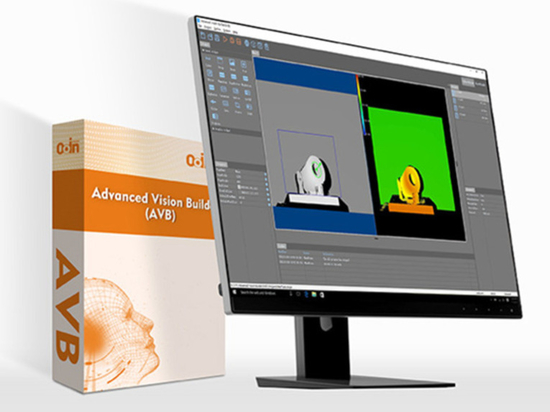
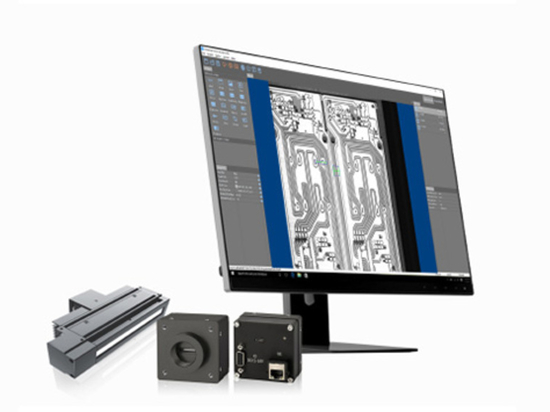
OdinVision provides AI-based machine vision solutions designed for industrial environments. The platform combines deep learning algorithms with compatible hardware and software tools for model training, deployment, and system integration.
It supports implementation within existing automation systems and enables continuous optimization based on production data.
Conclusion
AI and deep learning are extending the capabilities of industrial machine vision by improving inspection reliability in complex environments. Their ability to adapt to variability and evolving production conditions makes them a practical solution for modern manufacturing and quality control processes.