#Industry News
Busbars in Electrical Panels: How Main, Neutral and Earth Bars Share the Work
What each bar type does, when copper or aluminum makes sense, and how cross-section is set from current density, temperature rise and short-circuit duty.
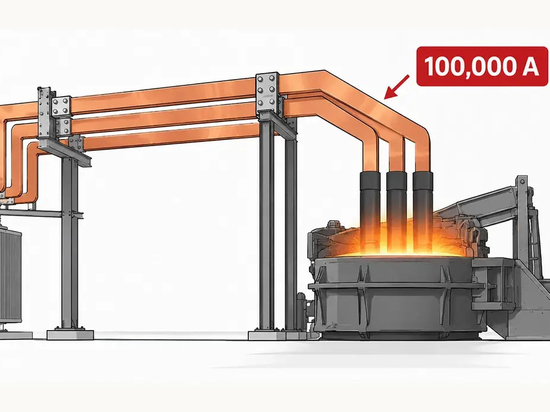
Busbars in electrical panels serve everything from a residential load center to a 6,300 A main switchboard, yet the term covers three different conductors with different sizing rules. A new technical guide from PAYAPRESS explains how each bar works, how to choose between copper and aluminum, and how busbar size is determined.
Three bars, three jobs
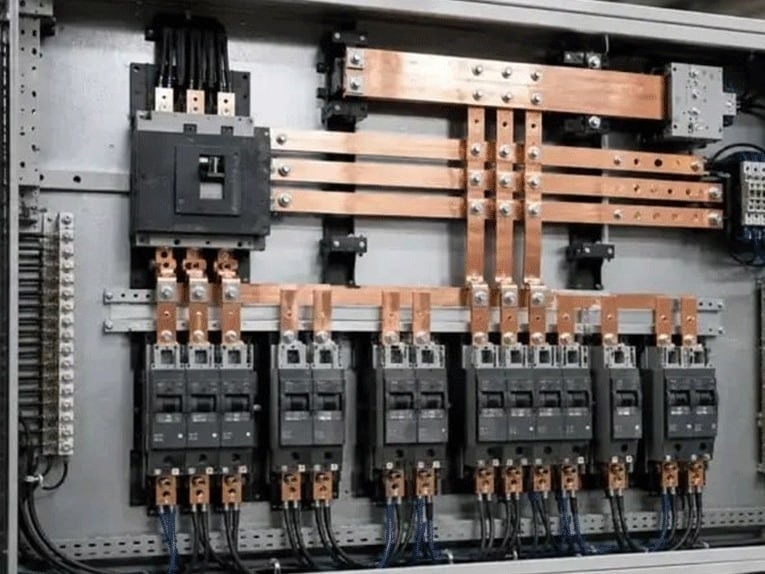
Main phase bars carry continuous phase current to the outgoing devices. They are typically rated from about 100 A to 6,300 A, often as three or four flat bars in parallel. The neutral bar collects return current and is matched to the phase rating, or made larger when harmonics are significant. The earth bar carries no current in normal service; it provides the protective bonding path during a fault and is therefore sized to fault duty rather than load.
Copper or aluminum
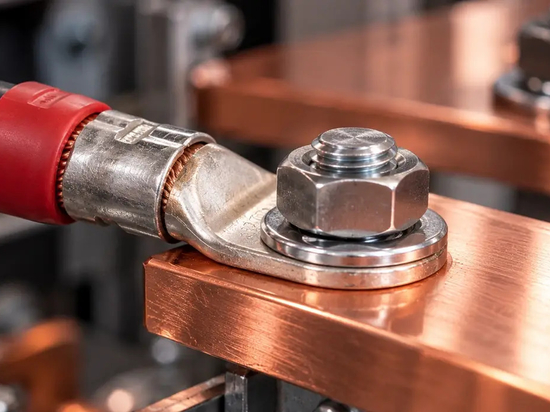
As a raw material, aluminum costs roughly 30 to 40 % of copper, but it needs about 1.6 times the cross-section for the same current. The result is a bar about 50 % lighter at a net material cost of about 50 to 65 % of copper. The trade-off lies in the joints: aluminum demands more care against oxidation and loosening, and more maintenance over the life of the panel. Copper remains the choice where space is tight and joint stability matters most.
How size is determined
The starting point is a simple ratio: required cross-section equals design current divided by allowable current density. That first estimate is then checked against ampacity, temperature rise and short-circuit duty, expressed as the short-time withstand current Icw and the peak current Ipk that drives electrodynamic force. The guide notes that a 1,600 A main distribution board feeding an MCC may need several parallel copper bars per phase, because clearance, short-circuit force and heat rise push the selection upward.
Busbar or cable
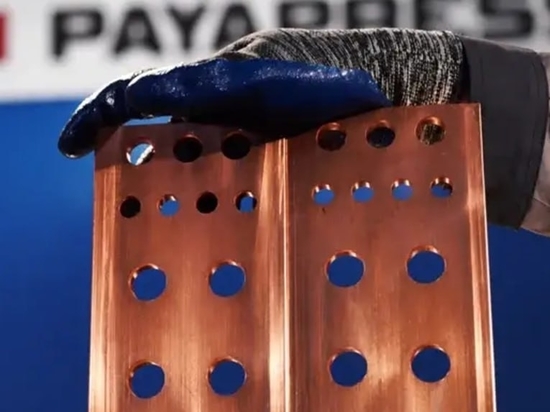
Compared with cable wiring, busbars save space, carry high currents with lower losses and make later expansion easier, which is why main switchboards, MCCs and busbar trunking systems rely on them. Cable remains suitable for flexible connections and small currents. Formats range from insulated comb bars for 63 to 160 A final distribution up to sandwich bars for 800 to 6,300 A in data centers.
Standards
Design and verification follow IEC 61439 for low-voltage assemblies, NEC Article 408 in North America and BS 7671 for installation rules in the United Kingdom.
The full guide, with format and material comparison tables, application examples and an FAQ, is available on payapress.com.