#Industry News
C11000, C10200 or C10100: Choosing the Copper Grade for Busbar Fabrication
Purity, oxygen content, conductivity and joining method compared, and why temper and thickness matter more than grade on the punching and bending line.
Choosing between copper grades for busbar comes down to one question: will the bar be bolted, or brazed and welded? A new technical guide from PAYAPRESS compares C11000 (ETP), C10200 (OF) and C10100 (OFE) copper by purity, oxygen content, conductivity and joining method.
Three grades at a glance
C11000, known as electrolytic tough pitch (ETP) copper, contains at least 99.90 % copper and about 0.02 to 0.04 % oxygen. C10200 oxygen-free (OF) copper raises minimum purity to 99.95 % and limits oxygen to 10 ppm. C10100 oxygen-free electronic (OFE) copper reaches 99.99 % with no more than 5 ppm oxygen. Conductivity barely moves between them: ETP and OF are both specified at a minimum of 100 % IACS, OFE at 101 % IACS.
Oxygen is the real difference
In ETP copper, oxygen is present as copper oxide particles. When the bar is heated in a hydrogen-bearing atmosphere, as in brazing, welding or some annealing processes, hydrogen reacts with that oxide to form steam, which cannot escape and cracks the grain boundaries. This hydrogen embrittlement is the reason oxygen-free grades exist. For a bolted joint that never sees such heat, the oxide has no practical effect.
Which grade to specify
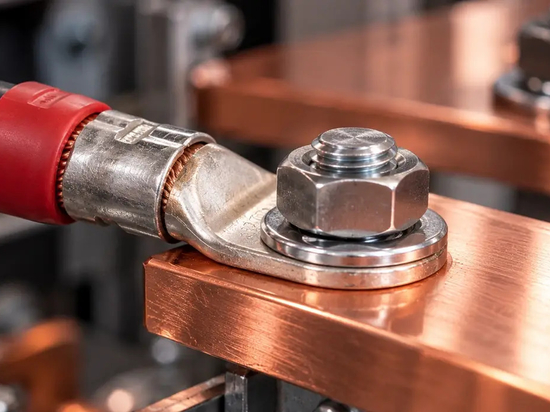
For standard switchgear and panel busbar joined by bolts, C11000 is the default choice, covered by ASTM B187 for bus bar. The higher purity of OF or OFE copper adds cost without a meaningful gain in conductivity. Oxygen-free copper becomes the right specification when bars are brazed, welded or used in vacuum assemblies, with C10100 reserved for vacuum and electronic applications.
One material, several names
The same material appears under different designations, which often causes confusion in purchasing. C110, C11000, CDA 110, EN CW004A and Cu-ETP all describe ETP copper. C10200 corresponds to CW008A or Cu-OF, and C10100 to CW009A or Cu-OFE.
Grade versus temper in fabrication
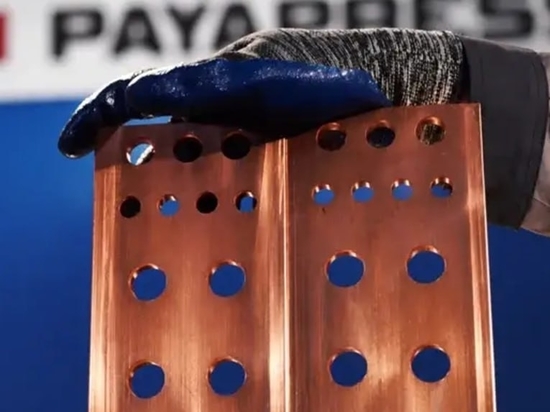
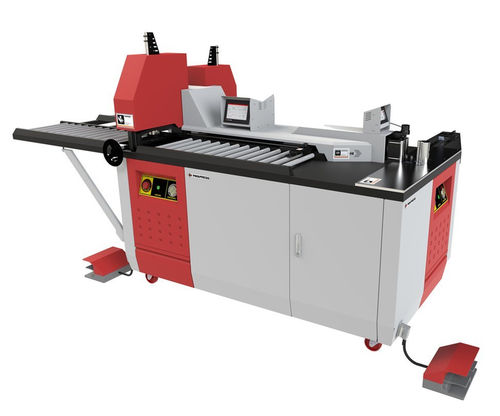
For punching and bending, temper and thickness matter more than grade. The guide gives a practical example: a 3/8 in bar in hard H04 temper needs more punching force and a larger bend radius than a 1/4 in bar in soft O60 temper, whichever of the three grades is used. Machine selection should therefore start from bar size and temper.
The full guide, with comparison and naming tables and an FAQ, is available on payapress.com.