
#Industry News
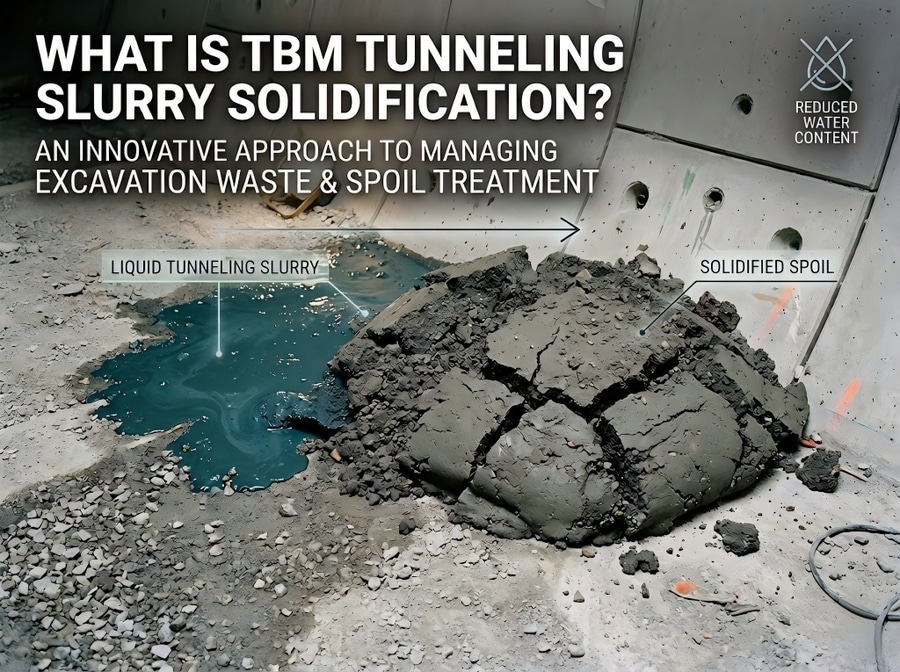
What Is TBM Tunneling Slurry Solidification and How Do I Use SAP to Fix Wet Spoil On-Site?
Transforming Liquid Sludge into Stable Solids with Superabsorbent Polymers
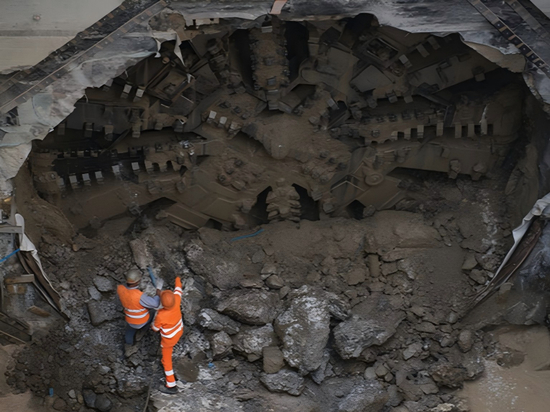
As a tunneling professional, I often face the same challenge on TBM and EPB projects: overly wet spoil that’s hard to transport, fails slump/solids standards, and risks environmental non-compliance. That’s exactly why I rely on super absorbent polymers (SAP) for tunneling and drilling sludge solidification. Based on my field experience and the solutions outlined by SOCO, here’s how I approach it to stay efficient, safe, and compliant—no matter where I’m working.
Why do I solidify tunneling slurry in TBM/EPB projects?
- To stabilize the face and maintain pressure balance in EPB mode.
- To convert fluid spoil into a stackable, non-flowing material that meets landfill standards.
- To cut logistics costs by reducing spill risk and improving transport efficiency.
- To avoid bulky equipment and save space on urban or constrained jobsites.
How does SAP help me turn “water into soil” within minutes?
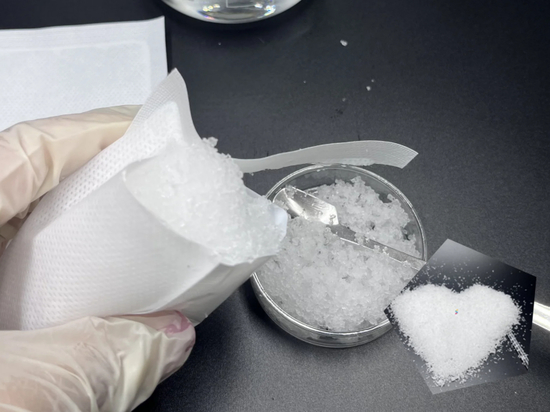
Rapid absorption: I mix granular/powdered SAP into the spoil; the particles absorb free water in seconds and swell into a gel.
Controlled plasticity: The slurry becomes a cohesive, plastic mass that doesn’t flow—ideal for conveyors, trucks, and compliant disposal.
Low dosage: I typically use about 0.5%–1.5% by weight of wet spoil, which keeps costs down and limits volume increase to under 1%.
Where do I apply SAP in my tunneling workflow?
1) Soil conditioning in EPB operations
- I combine SAP with foam agents to stabilize high‑permeability strata.
- The treated spoil forms a cohesive “plug” in the screw conveyor, helping me hold face pressure and reduce groundwater inflow.
- This reduces risks like spewing, washouts, and ground settlement.
2) Muck management and transportation
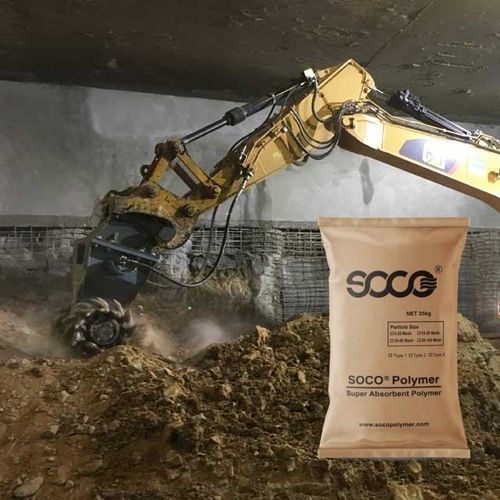
- At the screw conveyor outlet or muck pit, I apply SAP directly to discharged spoil.
- Within minutes, I get a stackable material that’s cleaner to handle and easier to move.
- I avoid lime/cement bulking and keep operations continuous.
3) On-site slurry dewatering and emergency response
- In tight urban sites, I skip large dewatering systems.
- I use SAP for rapid chemical dewatering so the material meets disposal requirements with minimal wait time or added equipment.
What benefits do I see on-site?
Effective moisture control: I stabilize fluid spoil quickly and safely.
Improved safety: Less flooding/spewing risk and cleaner handling conditions.
Operational simplicity: I feed SAP into existing belts or muck lines—no infrastructure overhaul.
Environmental compliance: The treated material is inert, non-toxic, and landfill-ready.
Reduced footprint and logistics costs: Fewer truck trips and no big dewatering rigs.
My practical tips for deployment
Calibrate by geology: In water-bearing sands and gravels, I pre‑plan higher SAP readiness for sudden inflows; in cohesive clays, I validate the minimum effective dose.
Stage application points: I set up SAP dosing both at the screw outlet and the muck pit for surge control and continuous throughput.
Verify disposal criteria locally: I align moisture/solids targets with regional landfill regulations to avoid rework.
Start small, then scale: I run quick bucket tests to fine-tune dosage per formation and groundwater conditions.
Keep it clean: SAP minimizes spillage during haulage, which helps me maintain good community relations in dense urban corridors.