#Industry News
New urban wastewater directive: how to adapt WWTPs to quaternary treatment and micropollutants?
The new Directive (EU) 2024/3019 tightens wastewater treatment requirements and places a stronger focus on micropollutant removal, water reuse, energy efficiency and circularity.
Water stress and increasingly frequent extreme weather events are forcing us to rethink the traditional wastewater treatment model. Against this backdrop, Directive (EU) 2024/3019 progressively raises the requirements for urban wastewater treatment.
One of the major developments introduced by the Directive is quaternary treatment, which will require larger treatment plants to remove contaminants that have traditionally escaped conventional treatment processes, including pharmaceuticals, microplastics and other emerging contaminants. The Directive also sets energy neutrality targets and extends certain requirements to smaller agglomerations.
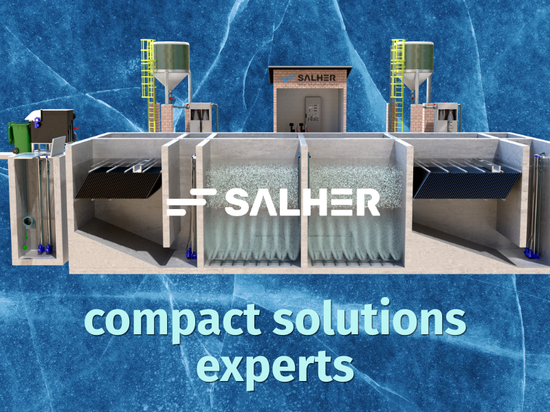
Each wastewater treatment plant requires a different combination of treatment processes, depending on the incoming water quality, the contaminants present, the intended use or discharge of the treated effluent and the conditions of the surrounding environment. Salher designs advanced and modular treatment technologies that can be used to upgrade existing plants or develop new treatment lines capable of meeting increasingly demanding requirements.
Quaternary treatment: an additional stage for micropollutant removal
In this new scenario, wastewater treatment plants will need to evolve into more comprehensive and flexible facilities. For WWTPs serving populations of 150,000 population equivalents (p.e.) or more, the Directive establishes progressive targets for the implementation of quaternary treatment. Smaller plants located in areas identified as sensitive to micropollutant pollution may also be subject to these requirements.
Different technologies can be combined to achieve these objectives, including:
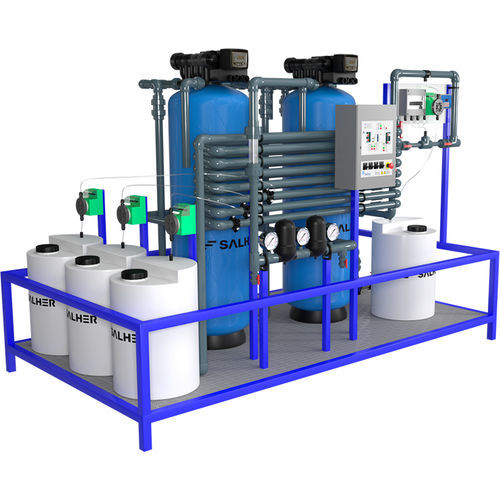
Activated carbon, using adsorption processes to remove certain organic contaminants.
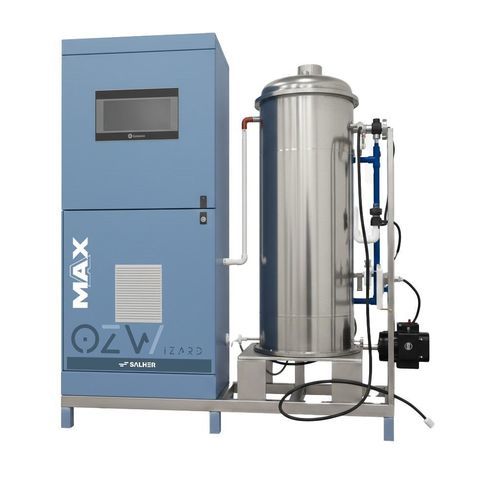
Ozonation, particularly suitable as an advanced oxidation process for the removal of certain micropollutants.
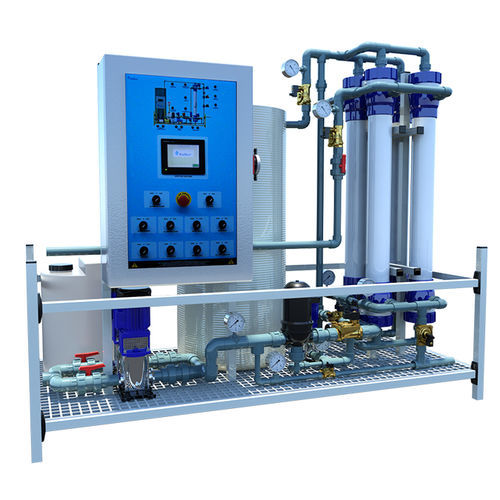
Membrane technologies, such as ultrafiltration, which provide a highly efficient physical barrier.
Hybrid systems, combining different treatment stages to achieve the required final water quality.
Salher’s experience in treating emerging contaminants also enables it to address challenges such as PFAS, for which the company offers solutions based on activated carbon and reverse osmosis.
Membranes: an additional barrier for high-quality water
Salher ultrafiltration systems, using membranes with a pore size below 0.1 μm, can produce high-quality effluents and be integrated into compact water reuse and tertiary treatment plants.
In addition, MBR technology combines biological treatment with membrane separation, achieving high removal efficiencies and producing an effluent suitable for further treatment or reuse, depending on the specific requirements of each project.
This configuration is particularly interesting when the objective is not only to comply with discharge limits, but also to prepare treated water for a new use.