#Industry News
High durability and stability of industrial PC Panel
High durability and stability of industrial PC Panel
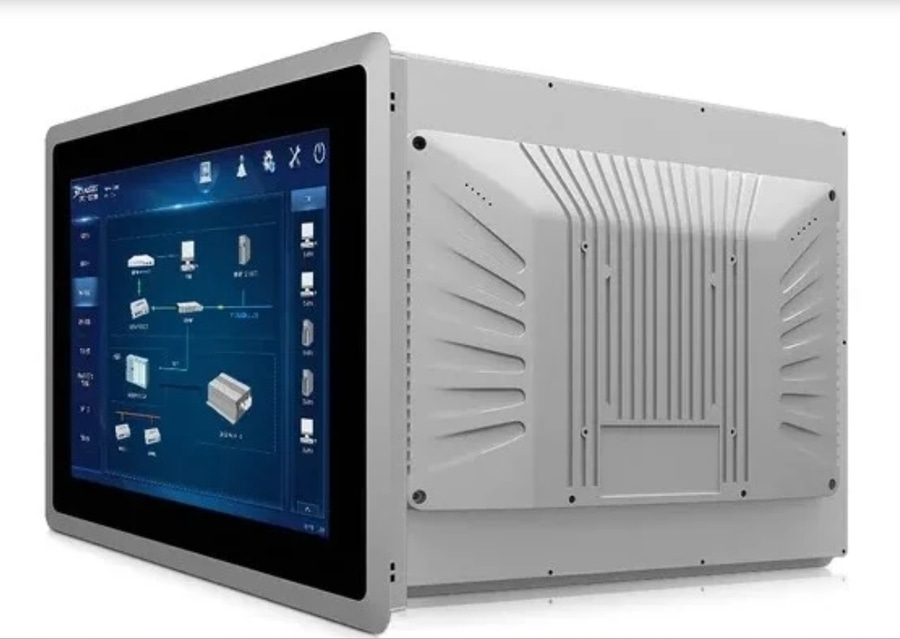
In the field of industrial automation, industrial PC Panel (industrial tablet computer) has more and more application scenarios. It is not only the core operation interface for production lines, energy management, logistics and transportation, but also an indispensable human-computer interaction device in manufacturing, energy, transportation and other fields. We all know that whether the equipment can operate stably for a long time is directly related to the continuity and data reliability of the entire system. Therefore, for industrial scenarios, its high durability and stability are one of the very important conditions.
The durability of industrial PC Panel is first reflected in the physical design. For example, it adopts a reinforced design. Most products adopt a fanless fully enclosed structure. The shell joints are sealed to effectively prevent dust and water, meet the IP65 level protection standard, and of course, higher levels of protection, such as IP67, can also be used. However, in order to avoid dust and water vapor intrusion, the protection level is usually IP65 or higher. This design means that even in high humidity, high dust, drastic temperature differences, or dust-intensive workshops and high humidity environments, the internal components can be effectively protected and the equipment can operate stably. At the same time, the equipment uses industrial-grade wide-temperature materials, supports an operating range of -20℃ to 70℃, and can adapt to extreme environments such as cold storage and high-temperature workshops.
Stability depends on hardware configuration and system optimization. Industrial PC Panels generally use highly reliable embedded motherboards, which can effectively avoid electromagnetic interference and have anti-electromagnetic interference and vibration resistance. In addition, when manufacturers make industrial panel PCs, they will pass electromagnetic compatibility (EMC) tests and vibration tests, which can further ensure that the equipment can respond stably in scenarios with strong electromagnetic interference or equipment vibration. In addition, in order to improve seismic resistance and data security, storage is generally equipped with solid-state drives (SSDs), which are more seismic-resistant than mechanical hard drives and have a lower risk of data loss. Some models also provide RAID disk array options to further ensure data security.
At the software level, manufacturers will customize operating systems for industrial scenarios, such as simplifying non-essential services and optimizing process scheduling mechanisms. Users can turn off functions such as automatic updates through BIOS settings to reduce the probability of accidental system restarts. Actual test data shows that the mean time between failures (MTBF) of mainstream industrial PC Panels generally exceeds 50,000 hours, and the maintenance cycle is usually calculated in years.
These features enable industrial PC Panels to continue to work under complex conditions such as moisture, oil, and temperature fluctuations, avoiding production interruptions caused by equipment failures. For automated production lines that need to operate 24 hours a day, this reliability is the key reason for their widespread adoption.