


#Product Trends
Ruicom HTS6 Dual-Axis Tilt Sensor Brings 0.001° Quantified Measurement to Power Tower Safety Tilt Monitoring
Gales, ice shedding, seismic events and slow geohazards — every threat to a transmission tower ends in degrees, and the HTS6 watches them all
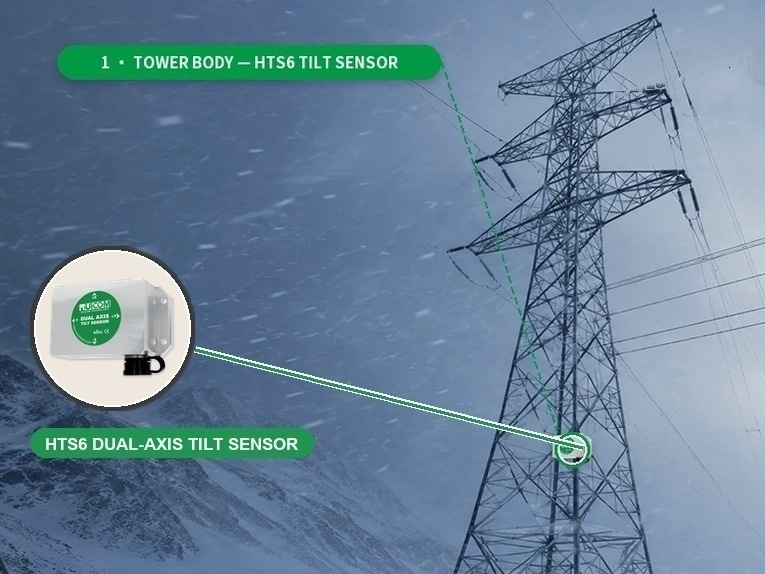
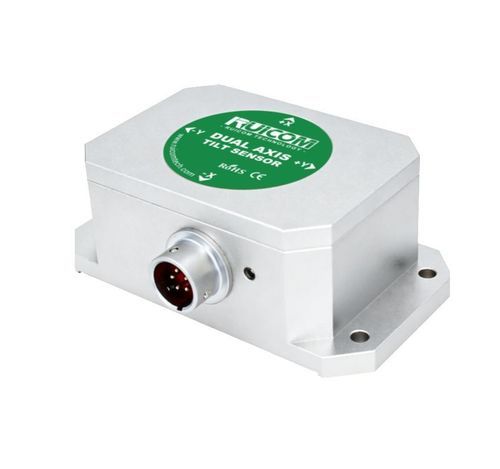
Ruicom today announced the application of its HTS6 high-precision dual-axis tilt sensor to safety tilt monitoring of power transmission towers. A tower leans for a living: slope creep, foundation scour, uneven ice shedding, gale-force wind and seismic events all end in degrees. The HTS6 watches those degrees continuously — so a few tenths of drift in terrain or structure reaches the control room long before the tower itself shows it.
Tower tilt is a slow signal worth watching
Tower tilt rarely happens all at once. Foundation scour, slope movement and frozen-ground heave walk a tower a few hundredths of a degree at a time — invisible to routine patrol and below the noise floor of coarse tilt switches. The HTS6 resolves 0.001° with a factory-compensated zero drift of just 0.0005 °/℃ across −40 to +85 ℃, so seasonal thermal swing never masquerades as structural movement. And when a gale, a wet-snow ice load or a seismic event does strike, the same stream gives the dispatcher an immediate, quantified lean value to trigger patrol, de-icing or load-shedding — before a second event decides for everyone.
Four signals between the tower and the grid
Extreme-weather safety watch — gales, wet-snow ice load and seismic events all end in lean; real-time tilt tells the dispatcher whether a tower took the hit and whether the line may stay energized.
Slow geohazard tracking — slope creep, frozen-ground heave and foundation scour show up as steady drift against the sensor's stable zero reference.
Ice-load event assessment — uneven conductor ice shedding unloads the cross-arms first; the tilt step quantifies residual asymmetry and guides de-icing priority.
Line-wide condition baseline — bracket-mounted on the tower body, each HTS6 reports over RS485 (MODBUS), so alarm thresholds are set in degrees against the tower's rated envelope, not in guesses.
Key specifications
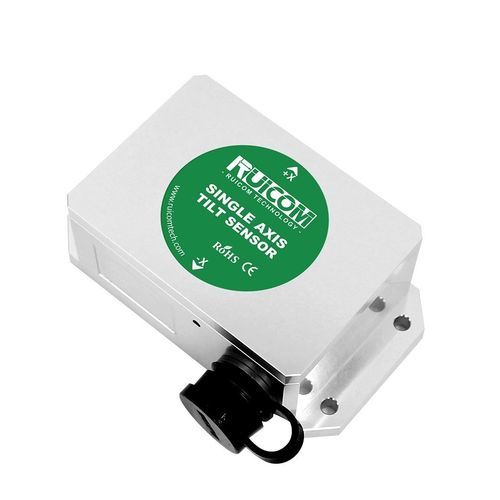
Measurement axis: single / dual-axis
Range: ±10° / ±30° / ±60° / ±90°
Resolution: 0.001°
Accuracy: 0.005° (MAE, small range @25 ℃)
Zero drift: 0.0005 °/℃ (−40 ~ +85 ℃)
Sensitivity drift: ≤100 ppm/℃
Response: 20 Hz (startup 0.5 s)
Interface: RS485 / RS232 / RS422 / TTL
Supply / protection: DC 9–36 V · IP67
Weight: ≤250 g (excl. cable)
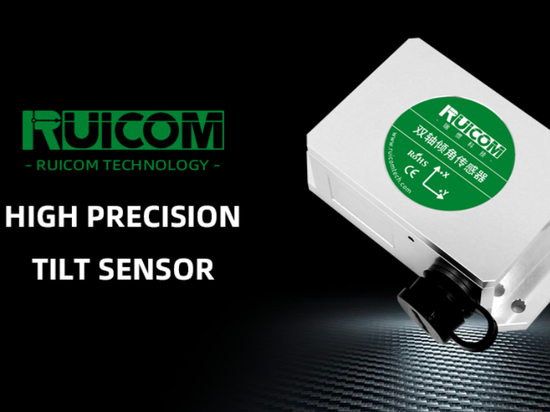
With 16-bit differential A/D conversion, fifth-order digital filtering and real-time temperature compensation, and a bracket mount made for lattice tower bodies, the HTS6 turns every lean of a transmission tower — from slow seasonal drift to the shock of an ice storm — into quantified, actionable data.
 鄂公网安备42018502009509号