#Product Trends
A comprehensive comparison of resin hoses, braided hoses, and nylon hoses from materials to applications
A comprehensive comparison of resin hoses, braided hoses, and nylon hoses from materials to applications
Hoses are essential components in industrial transportation, household appliances, machinery manufacturing, and other fields. While common types of hoses, such as resin hoses, braided hoses, and nylon hoses, all serve the purpose of conveying fluids or protecting cables, they differ significantly in material composition, structural design, and performance. A deeper understanding of these differences can help us make the most appropriate choice for practical applications.
1. Material and Structure: The Source of Essential Differences
Resin Hose: A Combination of Multiple Resins
Resin hoses are made from various polymer resins and come in a wide variety of materials, including polyethylene (PE), polyvinyl chloride (PVC), and polyurethane (PU). Their structure is relatively simple, often consisting of a single or multi-layer composite of resins. Their most notable feature is the lack of a braided reinforcement layer, relying entirely on the inherent properties of the resin to achieve their function. For example, common PVC hoses are made primarily from polyvinyl chloride through an extrusion process. PU resin hoses, on the other hand, leverage the excellent properties of polyurethane, making them suitable for applications requiring flexibility.
Braided Hose: A Representative of Reinforced Structures
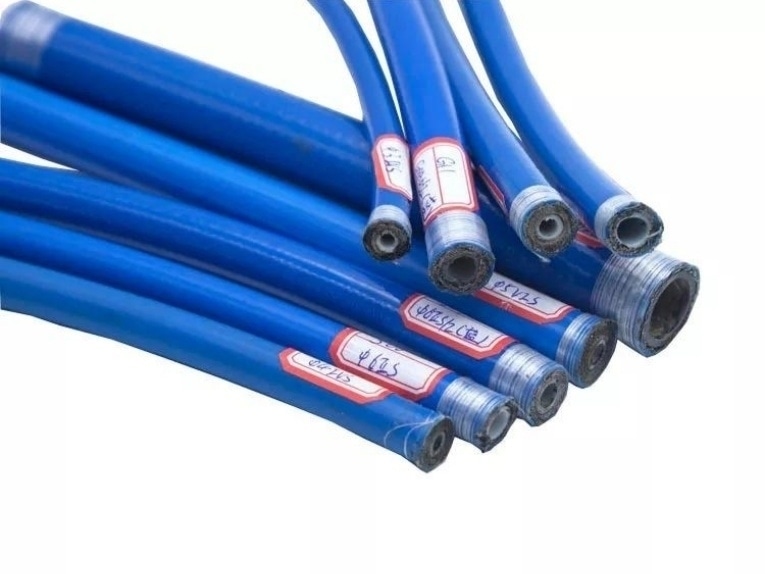
Braided hoses are more complex in structure, with their core feature being the braided reinforcement layer. It typically consists of an inner layer of rubber or resin (such as PVC or EPDM), with an outer or intermediate layer braided with metal wire (copper, stainless steel) or fiber (polyester, nylon). This braided structure acts like a "layer of armor" for the hose, significantly enhancing its overall strength and pressure resistance. For example, a stainless steel braided hose typically has a rubber inner layer and an outer stainless steel braid, which not only enhances pressure resistance but also provides explosion protection. A fiber-braided rubber hose utilizes a fiber braid to enhance its tensile strength while maintaining a certain degree of flexibility.
Nylon Hose: A Nylon Masterpiece
Nylon hose is a subcategory of resin hoses, made solely or primarily of nylon (polyamide, PA). Due to nylon's inherent strength, nylon hoses are typically constructed with a single or multi-layer nylon composite, typically without the need for additional braiding. These material properties allow nylon hoses to maintain a relatively simple structure while delivering excellent performance.
II. Performance Comparison: Advantages and Limitations of Each
Pressure Resistance
Resin hoses (non-nylon) have lower pressure resistance and are primarily suitable for low-pressure applications, such as general water transfer. This is because they lack a reinforced structure, and the resin's inherent strength alone cannot withstand high pressures.
Braided hoses, thanks to their unique braided reinforcement layer, offer higher pressure resistance and can be used in medium- and high-pressure applications. In hydraulic systems, high-pressure braided rubber hoses can withstand significant fluid pressure, ensuring stable hydraulic fluid delivery. Stainless steel braided hoses used for gas and tap water connections also prevent leaks under certain pressures, ensuring safe use.
Nylon hoses have medium-to-high pressure resistance, surpassing ordinary resin hoses. The inherent strength of nylon makes them suitable for medium-pressure applications, such as oil and gas transfer in industrial machinery.
Flexibility
Resin hoses (non-nylon) offer greater flexibility. Like PVC hoses, they can be easily bent, making them easier to deploy and use in complex environments. They are suitable for applications requiring flexible operation, such as gardening watering. Braided hoses have moderate flexibility. This is because the braiding layer, while providing strength, also restricts the hose's bending to a certain extent. However, its flexibility also varies depending on the braid density, with hoses with lower braid densities being relatively more flexible.
Nylon hoses offer excellent flexibility, maintaining a certain degree of flexibility even at low temperatures, making them suitable for use in some low-temperature environments.
Corrosion Resistance
The corrosion resistance of resin hoses (non-nylon) varies depending on the material. PVC hoses offer good acid and alkali resistance and can be used to transport mildly corrosive liquids, while PE hoses offer relatively average chemical resistance.
The corrosion resistance of braided hoses primarily depends on the material of the inner layer. If the inner layer is made of corrosion-resistant rubber or resin, the overall corrosion resistance is better, making it suitable for transporting corrosive media.
Nylon hoses offer excellent corrosion resistance, being able to withstand oils and most chemical solvents. Therefore, they are widely used in harsh environments such as the chemical and petroleum industries. Temperature Tolerance
Resin hoses (non-nylon) have a narrow temperature tolerance range. For example, PVC hoses are typically only usable within the -10°C to 60°C range. Exceeding this range can lead to aging and cracking.
Braided hoses have a wider temperature tolerance range. The combination of an inner rubber or resin layer and a braid allows them to operate in temperatures ranging from -40°C to 120°C, making them suitable for both high and low-temperature industrial applications.
Nylon hoses also have a wide temperature tolerance range, generally from -40°C to 120°C, with some models even capable of reaching 150°C, meeting the needs of various temperature conditions.
Abrasion Resistance
Resin hoses (non-nylon) have average abrasion resistance. Ordinary resin surfaces are easily scratched, resulting in a shorter service life in environments with severe friction.
Braided hoses have better abrasion resistance. The outer braid or rubber layer enhances the surface's wear resistance, reducing wear and tear due to friction and extending their service life. Nylon hoses offer excellent wear resistance. Nylon's surface is tough and highly resistant to abrasion, maintaining excellent performance even under frequent friction. They are suitable for applications such as wiring protection in automated equipment.
III. Application Scenario: Choosing the Right Material
Resin hoses (non-nylon)
Suitable for low-pressure, room-temperature applications, and applications without severe friction. In the home, they can be used for household water delivery (PVC hoses) and garden watering (PE hoses). In the industrial sector, they can be used to transport general industrial fluids (such as non-corrosive liquids). In the food industry, food-grade PVC hoses can be used to transport beverages and other foods.
Braided hoses
Suitable for medium- and high-pressure applications requiring structural strength. In hydraulic systems, high-pressure braided rubber hoses are core components, ensuring the transmission of hydraulic power. In gas and water supply, stainless steel braided hoses, with their explosion-proof properties, ensure the safe delivery of energy and water resources. In the automotive industry, fiber-reinforced hoses are used in critical areas such as oil lines and brake lines.
Nylon hoses
Suitable for medium-pressure applications requiring wear and chemical resistance. In industrial machinery, it can be used for oil and gas transportation (oil-resistant nylon hose). In automated equipment, it can protect wires, ensuring proper operation thanks to its wear resistance and aging resistance. Nylon hoses also provide reliable operation in outdoor and harsh environments, such as agricultural spraying and chemical solvent transportation.
IV. Summary: Scientific Selection for Optimal Performance
The differences between resin hoses, braided hoses, and nylon hoses primarily lie in their structural strength (whether they contain a braiding layer) and the performance of their underlying materials. When choosing a hose, for low-pressure, low-cost, and simple conveying operations, ordinary resin hoses (such as PVC and PE) are a good choice. For medium-to-high pressure applications requiring leak and explosion protection, braided hoses (metal or fiber braided depending on the medium) are more suitable. For medium-pressure applications requiring wear and chemical resistance, nylon hoses offer a more cost-effective option. Only by choosing the right hose type based on specific application needs can you maximize its performance and ensure smooth operation.